
Damaged 5 Warships in Novorossiysk During Drone Attack
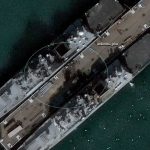
Two days passed since good birds visited Novorossiysk, and information appeared in open sources that can confirm the strike’s consequences. During the attack on Novorossiysk port on the night of March 2, Ukraine’s Defense Forces damaged 5 warships in Novorossiysk using drones — all vessels were stationed in the port. Enemy propaganda claims at least 200 strike UAVs participated in the attack.
According to open sources, the attack eliminated three russian sailors, while up to 16 more received injuries.
What We Know About the Strike Consequences
The attack also hit the 30N6E2 guidance radar of the S-300PMU-2 “Favorit” complex, Pantsir-S2 anti-aircraft missile and gun complex, and six of seven oil loading stands at the “Sheskharis” oil terminal. The fire in the port lasted all night. As of the evening of March 2, sources confirmed the damage to the terminal’s oil loading stands and the radar station from the russian S-400 air defense complex.
In the morning summary for the corresponding day, the AFU General Staff added one ship to destroyed enemy targets. However, they didn’t provide details about the vessel type and destruction location.
Which Russian Warships Took Damage?
The Orcs’ public “Spy Dossier” admits that two anti-submarine ships “Yeisk” (hull number 054) and “Kasimov” of project 1124 (NATO cipher “Albatross”, number 055) could have received damage from Ukrainian drone strikes, according to a post from the russian public “Spy Dossier”. They also say hits occurred on the mine countermeasures ship “Valentin Pikul” of project 266M (NATO cipher “Aquamarine”, number 770).
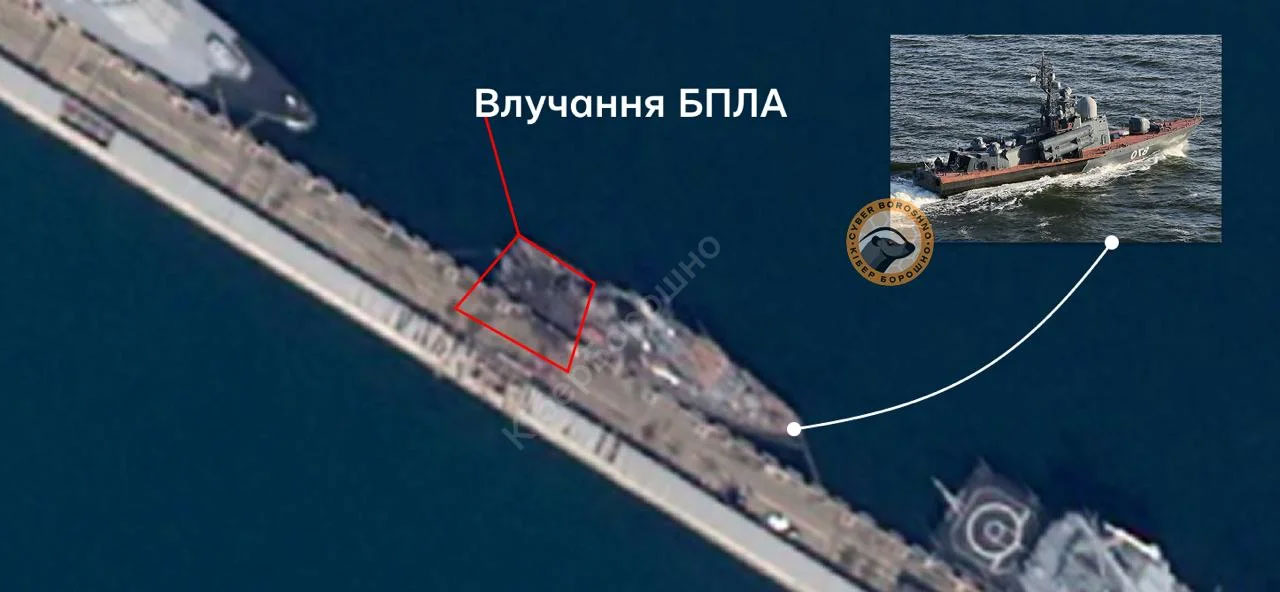
Ukrainian OSINT channel CyberBoroshno also confirms the damage to minesweeper “Valentin Pikul”:
The published image recorded damage to the aft section of the project 266ME sea minesweeper ‘Valentin Pikul’.
The aft section of ships of this type is the main working minesweeping zone. Equipment used for searching and neutralizing sea mines is located here: winches, drums and towing systems for contact and non-contact sweeps, plus mechanisms for lowering and raising them during mine-sweeping operations. The mine-sweeping team also works in this zone, ensuring the deployment and control of sweeping equipment during clearing the water area of mines.
Damage to this area essentially deprives the ship of the ability to perform its main task – searching for and neutralizing sea mines.
Overall, five russian occupiers’ ships came under attack.
What Damage Did Frigate “Admiral Essen” Receive?
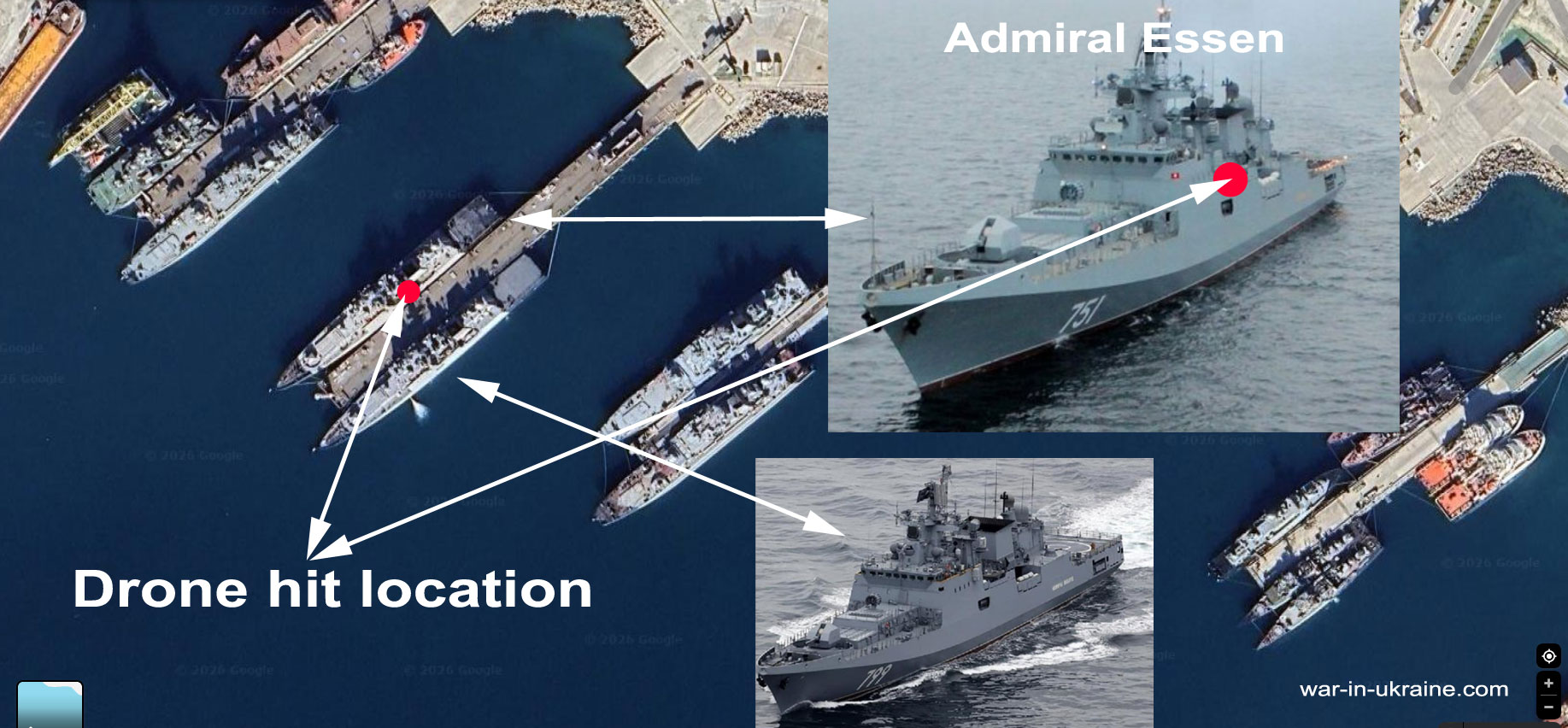
The strike caused detonation of PK-10 passive countermeasure launchers located on the superstructure sides and designed for firing chaff reflectors and heat traps. Admiral Essen was one of the 5 warships damaged in Novorossiysk that night — and among them, it carried the most firepower.
Among the damaged ship electronics elements – the TK-25 electronic warfare complex, which gets used to detect enemy radar radiation and create active radio interference.
Additionally, MR-90 “Orekh” target illumination radars suffered damage. These are part of the ship’s surface-to-air missile system guidance and provide illumination of air targets on the final section of missile flight.
Also, fragments probably damaged the ship’s main surveillance radar “Fregat-M2M”. This radar is responsible for long-range detection of air and surface targets and forming the primary radar picture for combat control systems.
Why This Attack Matters
Frigate Essen carries eight “Kalibr” cruise missiles. Currently it’s substantially damaged and cannot strike Ukrainian cities.
Ukraine doesn’t give russians the opportunity to return to yet another arena, another line of combat engagement, which is the Black Sea. After our successes on the combat engagement line, russians somewhat adjusted plans. Without the naval component, capturing Odesa or seizing the initiative in the Black Sea waters becomes impossible. Ukraine once again proved that the aggressor’s Black Sea Fleet today cannot return to the combat arena against our state. Novorossiysk is the enemy’s main base after a third of their capabilities got destroyed by Ukrainian forces.
The occupiers are completing corresponding infrastructure on occupied Georgian territory, in Abkhazia, where conflicts and clashes with locals arose as a result of construction. It seems they plan to further evacuate their fleet. Therefore Ukraine will continue the pressure. This is a large program. There are surface, underwater, and air drones. There are zeroed-in positions and laid routes to bypass enemy air defense. Now our state has reached the production pace to continue destroying the remnants of the russian Black Sea flotilla. The fact that Ukrainian drones damaged 5 warships in Novorossiysk proves the strategy works — russia’s Black Sea Fleet has nowhere left to hide.
Related posts:

Ukrainian Strikes on Russian Oil Infrastructure Continue
While the underwater drone strike on an enemy submarine in Novorossiysk has dominated headlines, other Armed Forces strikes on military and oil infrastructure haven’t stopped — they’re just [...]
Drones strike Shatura GRES in Moscow Region
Today, numerous friendly birds visited Shatura GRES in the Moscow region. Local Spielbergs don’t just film videos about their GRES but also comment on what’s happening. Obviously, they [...]