
Drone Strike on Almaz-Antey Plant: Impact on Enemy Air Defense
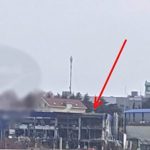
A few hours ago, video of the drone strike on Almaz-Antey plant. Our good birds visited temporarily occupied Sevastopol with an unofficial and definitely unfriendly visit. Actually, the birds’ flight goal wasn’t the entire city but its fragment where an Almaz-Antey concern enterprise sits. The videos show each bird sequentially, starting with the very first. Each subsequent one recorded the consequences of the previous bird’s arrival. As a result, the last little bird had to search for a nesting place because practically nothing living remained there.
Here is this video:
Overall, the video is very positive and life-affirming, after which we can describe what happened. Precisely in such a key, without speculation and with video confirmation, you can reason concretely about some strike. The rest, of course, can be commented on, but with a large share of assumption. Here everything is clear: there was a little plant, and in a few minutes it’s gone. Let’s just recall that a few days ago reports came about strikes on enemy plant. Overall, this is unconditionally good news.
We’re adults and understand that probably not all drones and missiles fired at enemy targets in deep rear reach where needed. Part of them don’t explode. Part of them hit the target but inflict absolutely non-critical damage that didn’t affect the enterprise’s operability.
Sometimes the public gets satellite images with holes in the roof. But what they managed to hit under the roof — unknown. If no fire arose there or the roof didn’t collapse, only guesses remain. Concrete information can surface later, most often through intelligence channels. But war’s meaning lies not in hitting where needed but in inflicting maximum damage on the enemy with minimum means. This very often doesn’t work out. So you have to wait for such video, for example, to already be able to talk about something, pushing off from facts.
Why This Strike Won’t Stop S-400 Production
After this video, a whole avalanche of messages went through social networks claiming the drone strike on Almaz-Antey plant means Russian air defense complex production will now stop. Therefore, we decided to bring certain clarity to what happened, as we see it.
The very first thing that comes to mind: this strike brings no problems with air defense means production in principle. You don’t need any special knowledge for this conclusion. Simply recall that S-300/400 got produced in the 90s, 2000s, and 2010s. This means Orcs¹ successfully produced these SAM systems long before Crimea’s occupation. It definitely wasn’t produced there.
Moreover, the word “concern” presupposes we’re talking about multiple enterprises, plus-minus one profile, under unified leadership. Almaz-Antey is no exception. In reality, about six dozen enterprises enter the concern, scattered across 18 federal units of the Swamps². Main enterprises sit in Moscow, where main air defense system developers sit — NPO Almaz named after Raspletin. Arsenal plants and Vector Research Institute from St. Petersburg produce radar and control systems. Plants of the Volga region and Urals produce components, assemblies, and units.
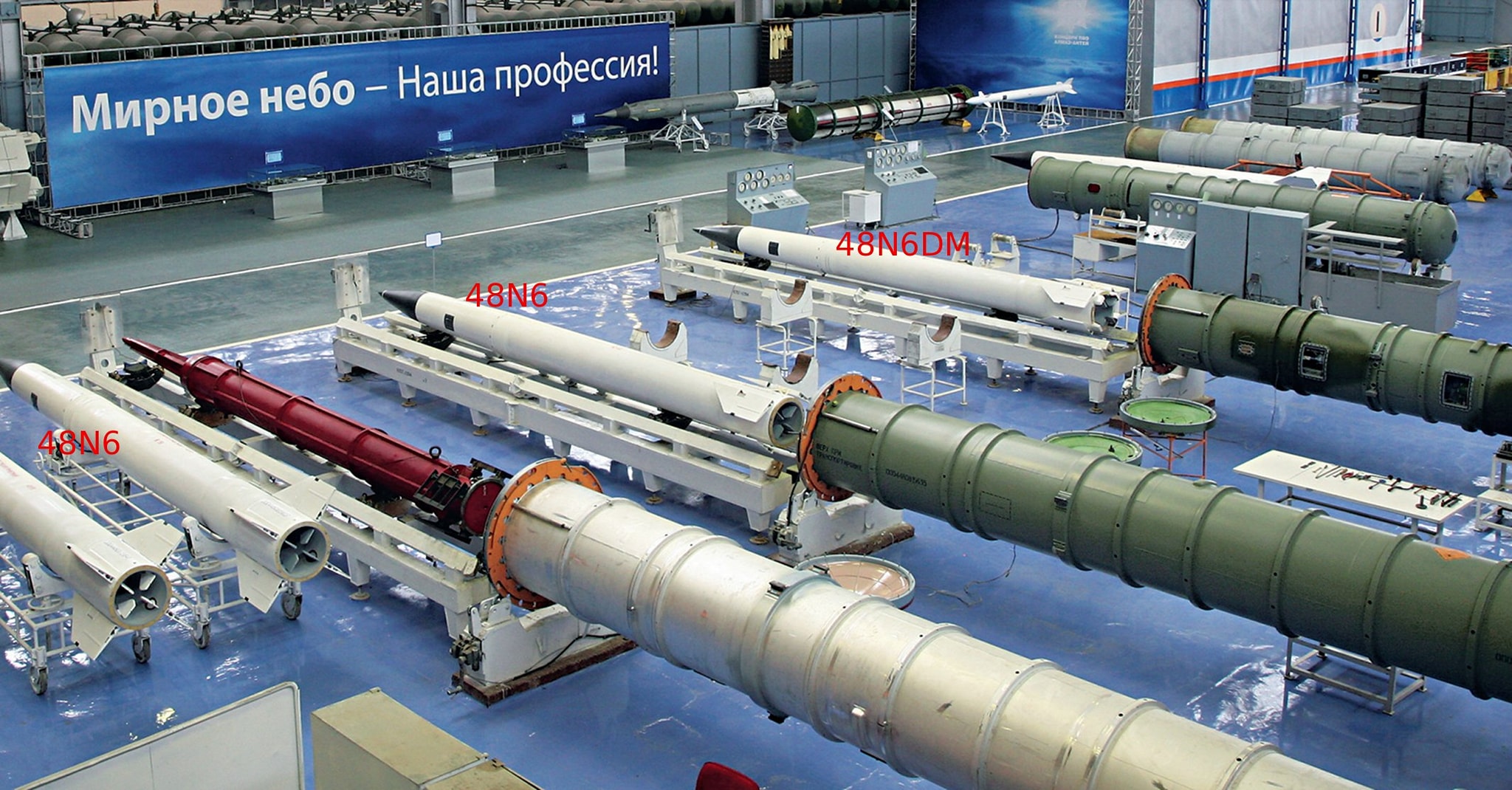
In the end, the concern supplies the occupiers’ army and for export the following product nomenclature:
- S-300P/PM/PM2 — long-range air defense systems;
- S-400 “Triumph”;
- S-500 “Prometheus”;
- “Buk-M2/M3”;
- “Tor-M2”;
- Radar stations (surveillance, altimeters, guidance radar);
- Automated air defense/missile defense control systems;
- Simulators and crew training complexes.
As visible, the Sevastopol plant didn’t produce and couldn’t produce in principle anything mentioned above. In such case, a question arises: why destroy it?
What the Sevastopol Plant Actually Did
Because precisely there they conducted repair of the above-mentioned product nomenclature. In Crimean realities, this enterprise’s significance is hard to overestimate. Considering that defeating anti-aircraft means there shifted to daily conveyor, the plant became the key for restoring what’s subject to repair. After all, we’ve already seen hundreds of videos where antennas or some other complex elements get hit without their complete destruction. This means in principle such damage can be eliminated. The combat unit can return to service.
It’s quite probable some air defense system parts survived several drone strikes but then got repaired and sent again on combat duty. Precisely repair is what the Sevastopol plant performed. Obviously, it now has very big problems with this. Understanding the consequences of the drone strike on Almaz-Antey plant requires grasping what made this facility irreplaceable for Crimean air defense restoration.
But in this entire plot there are very interesting moments worth paying attention to first and foremost. We observe attack video, which speaks to presence of drone and operator feedback. This also says the operator not only saw what was happening through the drone’s onboard camera but guided the drone to target. And this at 300 km distance from the drone launch location. Very likely in an environment of extremely dense enemy EW work. Moreover, not one video has even traces of their air defense work. We know Sevastopol has better anti-aircraft coverage than any other Swamps city except Moscow. This suggests the enemy didn’t see the drones and couldn’t suppress them. This in itself is an outstanding achievement.
The New Paradigm: From Hitting to Total Destruction
One more thing important to note here. In this example, we observe gradual change in Ukraine’s Defense Forces paradigm regarding defeating such large targets. Simply recall that at first they tried just to hit a military plant. With technology development, they started hitting not the plant in general but its specific, most critical place. Finally, the concept changed and we observed total enterprise destruction.
In other words, already at combat planning’s operation stage, the task got set precisely as plant demolition and no other way. Hence both ammunition calculation and strike sequence. It looks like they achieved the needed result with fewer ammunition. Therefore, the last drone’s camera clearly wandered over the plant’s building, searching for a not-yet-hit place.
It’s not excluded that right now we’re observing a new stage of drone warfare at long distances called “games are over”. The drone strike on Almaz-Antey plant marks this transition: Ukraine no longer settles for damage, only for complete annihilation of critical infrastructure in occupied territories.
¹Orcs – a common term for Russians who support or participate in the armed aggression against Ukraine. Dehumanizing? Yes. Accurate? Also yes.
²Swamps – an ironic name for Russia, emphasizing decay, stagnation, and filth. The Commander of the USF, Robert Browdie, and most soldiers use this word.
Related posts:

Russian Air Defense Collapse: Path to Hell Like Black Sea Fleet
Still cautiously, but nevertheless it’s possible to state that enemy air defense started the same path that russian tanks and the russian Black Sea Fleet previously traveled. The [...]
Strike on Kremniy El Military Plant Complicates Iskander Production
Messages appeared online that an exceptionally flammable disco formed in Bryansk at the Kremniy El plant and around it. Actually, this name appears not for the first time [...]