
Fighting for Light: Ukraine Survived the Hardest Winter
How did Ukraine survived the hardest winter of the full-scale invasion? This time there will be no personal emotions or analysis from us. Instead, we want to present the English translation of the Air Force Command of UA Armed Forces winter 2025-2026 report. This winter became one of the hardest tests for Ukraine’s air defense system. The occupiers once again tried to arrange complete blackout for Ukrainians and destroy the state’s critical infrastructure, using an unprecedented number of missiles and drones.
During three winter months, the Air Force in cooperation with Ukraine’s Defense Forces repelled 14 massive combined enemy attacks.
In December-January, the enemy carried out 7 massive strikes using missiles and drones of various types. During February, attack intensity doubled — Ukraine survived another hardest winter, withstanding seven more large-scale strikes.
The enemy combined launches of strike UAVs and missiles of various types, trying to complicate the air situation, overload the air defense system, and exhaust resources.
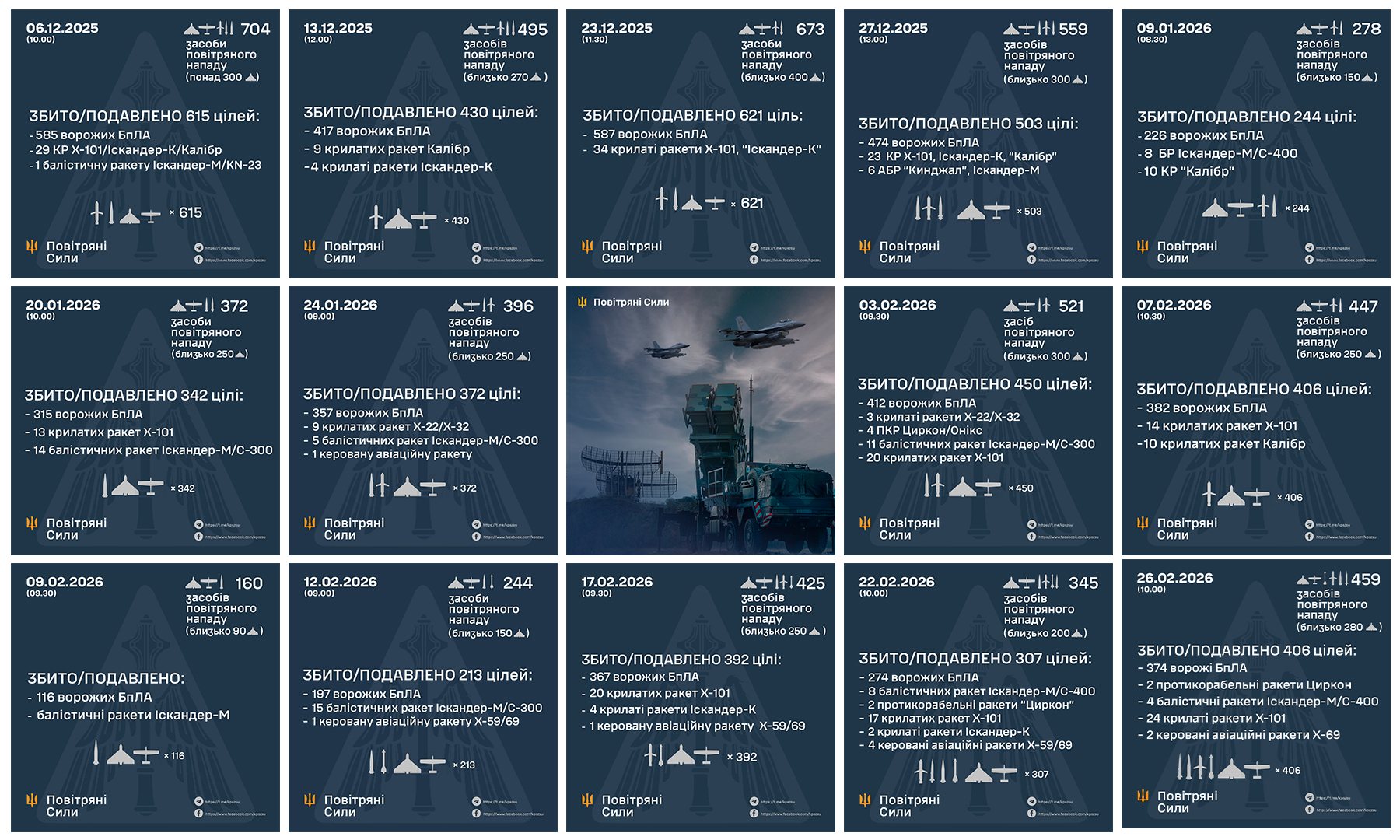
Chronicle of Resistance: Numbers and Facts
December 2025:
On December 6, Armed Forces Day of Ukraine, the enemy delivered one of the most massive strikes of the entire full-scale war period — 704 air targets, including 51 missiles. Subsequent attacks on December 13, 23, and 27 maintained an extremely high load level — from almost 500 to over 670 air targets.
January 2026:
Period of intensive ballistics use. On January 9, the main strike concentrated on Kyiv region (278 targets). They recorded use of a medium-range ballistic missile on Lviv region and “Zircon” use on January 20 and 24.
February 2026:
Month of peak loads. On February 3, the enemy fired the largest number of missiles in one strike for the entire winter — 71 units. Already on February 26, the enemy carried out a massive drone strike — 420 UAVs in one attack.
Ukraine Survived the Hardest Winter but Air Defense Holds
The enemy systemically increases use of both standard ballistics (“Iskander-M”) and missiles approaching targets on ballistic trajectory: “Kinzhal”, “Zircon”, Kh-22/32, S-300/S-400. Overall, during three months the aggressor fired over 700 missiles of various types.
Despite these challenges, Ukrainian sky held. The energy system survived thanks to professionalism of anti-aircraft missile troops, mobile fire groups, radio-technical troops, aviation, and unmanned systems units. Each intercepted missile proves we became stronger, more technological, and more experienced.
At the same time, we thank every power engineer and repair brigade who returned light under fire and kept the power grid alive. Combat work continues. We know the enemy prepares new attacks. However, each unit of our air defense remains in full combat readiness.
Combat operations in the Middle East naturally distract the world’s attention from Ukraine. From a full-scale war that’s been going on for a full four years now! Ukraine’s army is now one of the strongest and most experienced in the world. However, our defenders still need partner help — specifically regular supply of air defense missiles, aviation, and other weapons to protect Ukrainian cities from Russian ballistics, cruise missiles, and drones.
Robert Brody: “Arrived/Departed” Balance is NEGATIVE
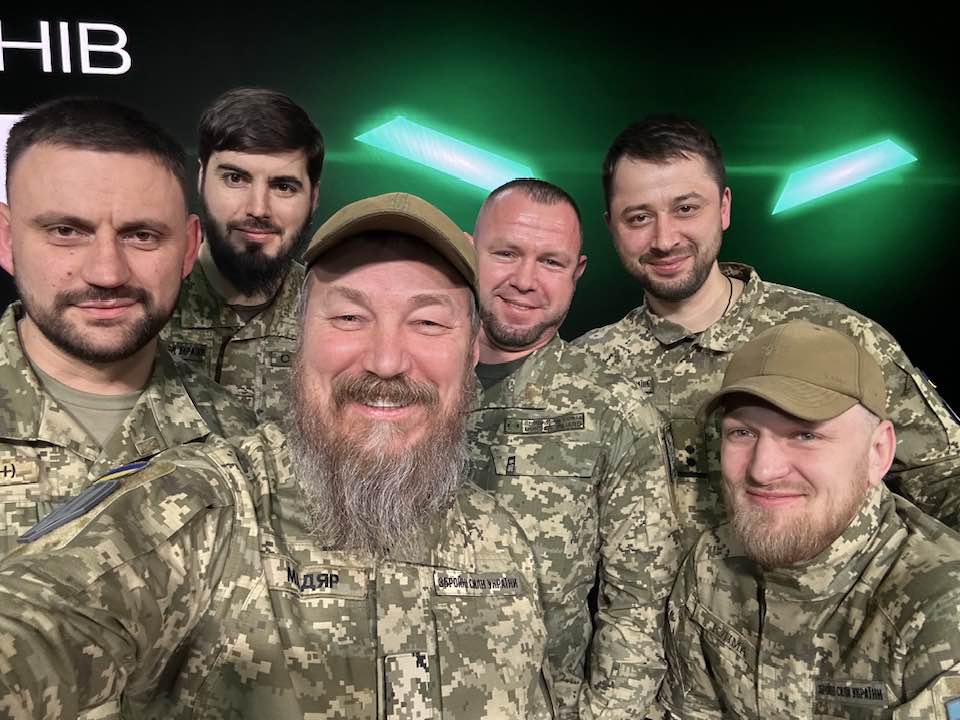
Regarding enemy combat losses, probably nobody says it better than Robert “Madyar” Brody, commander of Ukrainian Special Operations Forces. We quote his conclusion in English, trying to convey all of Robert’s sarcasm and contempt for the enemy as accurately as possible:
During winter 2025-26, Ukrainian SOF drones inflicted more confirmed¹ irreversible and medical losses on the enemy than the number of personnel mobilized into the enemy army during winter.
In numbers:
80,122 units — manpower mobilized by RF:
December +33,000 personnel
January +22,000 personnel
February +25,122 personnel
88,898 units — enemy personnel destroyed/wounded by Ukrainian Defense Forces unmanned systems (not just USF, but all unmanned units of Ukraine’s Defense Forces):
December -33,019 personnel
January -29,692 personnel
February -26,187 personnel
Negative balance for winter 2025-2026 results: minus 8,776 personnel units. 30,090 of 88,898 Khrobaks got pecked by USF Birds, which is 33.8% of the total result, or every third Khrobak departed from the “SVO”. Maintaining “arrived/departed” balance negative is one of the priority tasks for reducing enemy capabilities.
Task set by Defense Minister Fedorov among others: 50,000 destroyed/wounded units of enemy manpower monthly.
RF mobilization plan: over 400,000 personnel for 2026, and it’s unlikely to be disrupted or underfulfilled.
Therefore, to work, gentlemen.
Ukraine survived the hardest winter through coordinated air defense operations and systematic degradation of enemy forces. The winter 2025-2026 statistics demonstrate two parallel processes: interception of 700+ missiles preserved critical infrastructure, while unmanned systems eliminated more personnel than Russia mobilized during the same period. We fought and stood firm. We will win!
¹Confirmed – mean confirmed in the Delta military situational awareness system.
²USF – Unmanned Systems Forces, Ukraine’s newly established branch of the Armed Forces. No, not the U.S. Navy — in Ukraine USF means those who destroy Russian bombers, not those who park aircraft carriers.
³Khrobak – term used by Madyar and USF pilots for the Pidars. Literally “vile worm” or “maggot” in Ukrainian. In nature, worms are food for birds; in war, Madyar’s Birds annihilate the Khrobaks.
Related posts:

Ukrainian Strikes on Russian Oil Infrastructure Continue
While the underwater drone strike on an enemy submarine in Novorossiysk has dominated headlines, other Armed Forces strikes on military and oil infrastructure haven’t stopped — they’re just [...]
November 28 News Digest: ICBMs Fail, Elabuga Burns
Today turned out to be very eventful, and we have to mark events with bullet points. On one hand, there are no official confirmations yet. On the other [...]