
First in History: A Naval Drone Swarm Attack on the Enemy Fleet
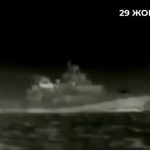
On October 29, 2022, the world witnessed the first successful naval drone swarm attack on an enemy fleet. But the operation itself began much earlier. In autumn 2022, Russia’s occupation army launched massive Kalibr cruise missile strikes on Ukraine — fired from warships sitting in the Black Sea. Ukraine’s Defense Forces needed ways to destroy or at least damage the Black Sea Fleet’s missile carriers. One answer came in the form of the naval drone “Sea Baby”. Yet the first drone swarm attack happened more than a month before the famous October strike.
The Night Everything Almost Failed
September 16–17, 2022. The world’s first group of naval surface drones moves toward Sevastopol. Watching their progress with intense focus are SBU Chief Vasyl Maliuk, Navy Commander Vice Admiral Oleksii Neizhpapa, Vice Prime Minister Mykhailo Fedorov, and the ideologist behind the entire surface drone program — a Brigadier General of the SBU Military Counterintelligence with the callsign “Hunter”.
The development team steers the drones into the very heart of Russia’s Black Sea Fleet — straight into Sevastopol Bay — hoping to strike the Russian missile carriers. One of the operation’s participants later shared this information:
We had 70 kilometers left to the frigate Admiral Makarov. Everyone was tense — we were about to hit it. And then our communications went dark. Elon Musk switched off the Starlinks we used to control the drones.
The target sat an hour and a half away. This was the very ship that carried out the terrorist strike on Vinnytsia on July 14, 2022. Yet the entire mission stood on the edge of failure — because of one American billionaire’s decision. The operators tried to return the drones to base — but only two made it back. Admiral Makarov remained intact in Sevastopol. Temporary.
From Wreckage to Data to a Second Chance
According to the developers, those two returning drones proved invaluable. They delivered critical data — on communications systems, navigation, hull performance, and more. A full military laboratory inside the SBU and the Navy studied every detail and accounted for every weakness. By the night of October 28–29, 2022, all the necessary pieces had fallen into place. The drones were modified, the weather at sea was perfect, and the team stood ready for a second attempt.
Four upgraded drones headed toward Sevastopol. Three more headed south of the peninsula, where the enemy frigate Admiral Makarov sat at anchor on the open roads.
The frigate cruised at medium speed, not expecting any attack. One Ukrainian drone found the correct trajectory and struck the frigate on the starboard side. Makarov’s crew was completely unprepared. After taking the hit, the ship turned and began making for Sevastopol Bay.
The Naval Drone Swarm Attack: Game-Changer on Sea
Two drones continued to pursue the damaged vessel but couldn’t close the distance, so they simply escorted it toward shore. Makarov couldn’t shake them either — the strike had knocked out part of its engines, leaving it unable to accelerate.
Then the minesweeper Ivan Golubets appeared in the operators’ sights. When operators spotted it on their screens, the attack order came immediately — and the drone loaded with explosives turned straight into the enemy hull.
At the same moment, other drones struck an oil transfer station. While the battle continued, the damaged Admiral Makarov limped toward Striletska Bay. Russian coastal artillery, unable to distinguish friend from foe in the chaos, then fired a salvo directly at its own flagship.
One drone slipped between two enemy patrol ships — Ladny and Admiral Essen — and damaged both, though neither suffered critical hits.
This was the first successful naval drone swarm attack on an enemy fleet in the history of warfare. Ukraine’s naval drones had received their combat baptism. As one member of the development team put it: “That was the moment we understood — naval drones need to be larger and carry more explosives to strike with real effect“.
Related posts:

Strike on Redkino Chemical Plant: Missile Fuel Production Halted
We’re observing consequences of the enemy strike on Ukraine’s energy system with our own eyes right now. Something similar was expected precisely last night, about which we wrote [...]
Ukraine long-range strikes: from Mediterranean to Caspian
Ukraine long-range strikes have reached a new level of sophistication. It seems Ukrainian security agencies launched a genuine competition to see who can deliver the most devastating blow [...]