
GRAU Arsenal Hit: Concrete Shelters No Longer Safe
Since the beginning of the year, our military has demonstrated readiness to take out oil and gas sector facilities daily. Every morning brings new data that strikes hit another oil refinery, landed on an oil depot, or targeted something similar. This night was no exception. Besides several oil depots, Ukrainian forces struck the Sterlitamak petrochemical plant. Along with aviation gasoline, the plant produces many other items that later feed the military-industrial complex. But the most significant news came from Kostroma Oblast. The GRAU¹ arsenal hit there marks a turning point in Ukraine’s deep strike capabilities.
But the strike also hit a gas compressor station near St. Petersburg. It’s been a long time since Gazprom assets got hit, and this strike says that Gazprom hasn’t been forgotten. Well, and if strikes in this sector continue, the city of the cruiser Aurora and Lenin’s armored car may very soon find itself without gas both for the population and for industrial enterprises. Overall, this is encouraging information. We simply hope that the attack plan for the “Yamal Cross” facility has either already been completed or is at the final stage.

Back to the Arsenals: A New Approach
However, there’s another item on the long-range strikes agenda that hasn’t delighted Ukraine’s information field for a long time. We’re talking about how strikes on the arsenals of the GRAU (Main Missile and Artillery Directorate) of enemy forces became regular at one time. We remember what a bright and colorful picture the detonation of ammunition gave. Accordingly, behind each such explosion stood a fat minus over what will no longer fly at our military and at Ukraine in general.
The last description of such a raid and subsequent detonation connected with the fact that at the moment of the strike, enemy forces were unloading a train with shells, bombs, and missiles there. Clearly, at this time the storage facilities into which they were loading all this stood open. Thus, they achieved the needed effect. Let’s simply remind you that the first strikes on arsenals were effective because the enemy arranged ammunition deposits in the open air. It was enough to hit these stacks with a drone with a 50-kilogram warhead for a “chain reaction” to begin. The drone explosion detonates the target stack, then another. Then the power of the explosions becomes so significant that ammunition stored in shelters explodes.
However, such ideal conditions couldn’t last too long. Not even because the Orcs² draw conclusions from such raids, but also because the surplus ammunition lying in the open air simply ran out. That’s precisely why the last raid, when Ukrainian forces caught the enemy unloading a train, on one hand pleased us with the result. On the other hand, it became clear that attacking arsenals according to the old scheme won’t work anymore. The enemy no longer stores anything in the open air.
From this it follows that you can’t reach concrete shelters with light strike weapons like drones. And if so, then you can hit such a target either at the moment of loading-unloading ammunition. Or Ukrainian forces must use more serious strike weapons — cruise or ballistic missiles.
The GRAU Arsenal Hit: Serious Arguments
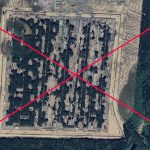
And the GRAU arsenal strike delivered this night on the 100th GRAU arsenal in the area of Neya settlement in Kostroma Oblast seems to hint that the Armed Forces of Ukraine have moved to serious arguments in working with such facilities. Something flew there that can first pierce a layer of reinforced concrete and explode already inside the storage facility. As a result, sounds of secondary detonation are heard from the arsenal’s direction. Smoke covered half the sky. Local residents were evacuated from the settlement.
Clearly, on the Swamps³ data about what and how much the arsenal stores will remain classified. An idea of what’s exploding there can only come from indirect data. From what we managed to find out, this arsenal definitely contains such a nomenclature of ammunition:
- Artillery shells of various calibers;
- Rocket projectiles for MLRS;
- Tactical missiles (Tochka-U, Iskander — at some arsenals);
- Aviation ammunition;
- Engineering ammunition;
- Small arms ammunition;
- Explosives and components;
It’s not excluded that they brought something more important there. This location is located farther from Ukraine’s borders than other arsenals in the European part of the Swamps — at a distance of slightly more than a thousand kilometers from Ukraine’s nearest border in a straight line. And this means that if ballistics were used, the missile flew 1,100-1,200 km, because the launch couldn’t be carried out near the border.
What Weapon Can Do This?
If these were cruise missiles, then in addition to this distance, you need to add the maneuvers necessary to bypass known enemy air defense centers. Thus, the cruise missile must have a range of at least 1,500 km. This is not Storm Shadow and not SCALP, which have three times less range. In that case, it’s something of ours, but it has the combat properties of Storm Shadows. Let’s simply remind you that the Anglo-French product has a warhead capable of piercing an obstacle with a preliminary charge, and the main charge already explodes behind it. This is exactly what’s needed for striking arsenals.
Again, here we’re going into the realm of assumptions. It’s not excluded that Ukrainian forces used the old scheme. Namely — the enemy exposed himself during loading-unloading, and at that moment something flew at the train. But there are two points that cast doubt on this option. After all, if the enemy drew conclusions from previous raids on arsenals and removed ammunition from the ground, then probably cargo work there happens as quickly as possible. It’s doubtful that this will happen during the dark time of day. To leave a train loaded with ammunition for the night within the arsenal could only be done by alternatively gifted patients. After all, if someone detects this, everything possible will fly there.
So very carefully we’ll still assume that our military operates something that can fly fifteen hundred kilometers and hit targets like the GRAU arsenal hit demonstrates. At a minimum, this means that the enemy’s most expensive and rarest aviation is now available for strikes. The enemy intensively built reinforced concrete hangars precisely for such equipment. But now they may turn out useless. Let’s simply assume that the Armed Forces of Ukraine’s cruise or ballistic missile has a price in the range of 3-5 million dollars. An aircraft costs at least an order of magnitude more. And if we’re talking about AWACS aircraft or something similar, their price is two orders of magnitude higher. Therefore, using even two or three missiles on one target will be quite justified.
Beyond Military Targets
But reinforced concrete masses cover not only aircraft but also the carcasses of various important figures. Probably pootin himself can hardly be reached if he’s hidden in the Yamantau bunker. But there aren’t many such shelters, and only a few can afford such things. But to other high-ranking Pidars⁴ and russian war criminals, the Armed Forces of Ukraine can say: “Don’t forget to shave before you go to hell”.

The GRAU arsenal hit marks a new chapter in Ukraine’s long-range capabilities. It demonstrates that concrete shelters no longer guarantee safety for russia’s most valuable military assets.
¹GRAU (ГРАУ) – Russian military abbreviation for the Main Missile and Artillery Directorate.
²Orcs – a common term for Russians who support or participate in the armed aggression against Ukraine. Dehumanizing? Yes. Accurate? Also yes.
³Swamps – an ironic name for Russia, emphasizing decay, stagnation, and filth. The Commander of the USF, Robert Browdie, and most soldiers use this word.
⁴Pidar (pronounced “pidar”) – Ukrainian military slang for a Russian service member. In radio communications, the word “Pidar” sounds shorter and clearer than “Enemy” especially under EW.
Related posts:

Ukraine answers the February 17 strike: Refineries & Plants Hit
Today brought a rare — perhaps unique — event connected not just to Ukrainian air defense work, but to an adequate response to the enemy. Ukraine answers the [...]
Ukraine Has Resumed Deep Strikes: Arsenal, Oil, and Military Plant
It seems that Ukraine has resumed deep strikes. TToday there was news that the good birds are visiting enemy arsenals, oil refineries and military facilities. But let’s get [...]