
June 24 Cruise Missile Strike: Inaccurate mean a War Crime
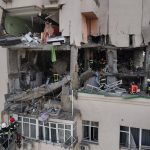
Tonight proved so saturated with events that choosing where to start becomes difficult. Clearly, air-launched missiles participated in the June 24 cruise missile strike, but Kinzhals can’t be ruled out either. This thought comes from the fact that Tu-95 and Tu-22 bombers took off separately from two airfields. The latter can carry Kinzhals. Moreover, for some time now, air defense work above the capital hasn’t been visible — suggesting targets were successfully intercepted somewhere outside the city. This time the “light show” happened on location. The salute was simply impressive. With such layout, what gets shot down falls within city limits. This time, exactly that happened.
As Armed Forces of Ukraine reports state, debris falling on a multi-story building in the Solomyansky district of the capital killed three people. Judging by photos from the scene, debris or missile fragments had very high kinetic energy — determined by quite large mass and, most importantly, very high speed. Without warhead detonation, only a very high-speed target could cause such destruction. Therefore, suspicion falls on Kinzhal. If the hit had occurred on a panel building, consequences would have been even more tragic.
No Direct Hits, But Debris Still Kills
In general, capital air defense did everything it could. We have no direct hits, unlike Dnipro. There, as visible from reports, two hits occurred — on private sector and on an industrial object. Civilians suffered there too, but information remains very preliminary. Something more concrete will be clear closer to noon. From what I personally saw and heard, Shahed sounds didn’t exist. This time (from my direction) no sounds of missile engine work could be heard. Those who heard at least once both easily distinguish these sounds from any others.
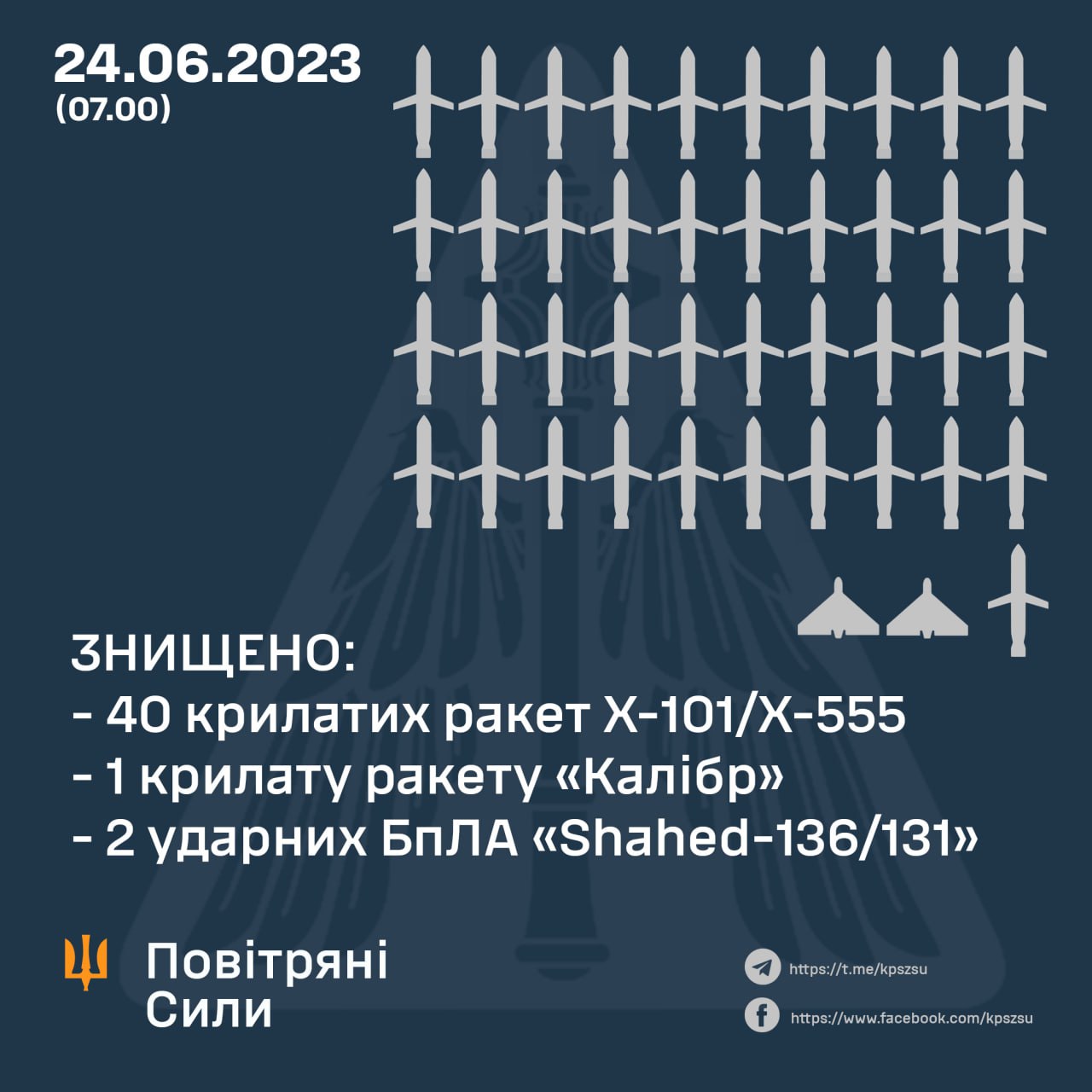
Additionally, the enemy struck Kharkiv with S-300 missiles and heavy artillery on Kherson and Mykolaiv oblasts. Ukraine’s Air Force reported the night raid was carried out mainly with cruise missiles. We remember they have some kind of deranged shelling algorithm — when the cycle start marks a massive drone raid, then a massive raid using cruise missiles. This operates now too. The previous massive raid involved Shaheds. Now the enemy fired 51 cruise missiles, of which the Armed Forces of Ukraine shot down 41. The report says they shot down 40 Kh-101 and Kh-555 missiles, plus one Kalibr missile.
Kh-22: Anti-Ship Missile Used Against Cities
We haven’t yet seen official information on missiles that couldn’t be intercepted. But as far as can be understood, most of them relate to Kh-22 missiles launched from Tu-22 aircraft. So far, no indications exist of intercepting this missile type. But something tells us that debris from precisely such a missile hit the building in the Solomyansky district of the capital. Because in photos and videos, the scale of destruction somehow doesn’t really correspond to explosion of a massive cruise missile warhead. If we’re talking about falling debris, they must have possessed very high speed.
If ordinary Kh-101 and Kh-555 fly at roughly passenger aircraft speed, the Kh-22 possesses far greater speed at 3.5 Mach. Obviously, even a missile intercepted at such speed — or rather, its remains — can cause much trouble. In general, debris from precisely a missile flying at such speed can cause similar destruction. All this represents our subjective reasoning. Therefore, it remains a version, since the Air Force didn’t record a single such missile in its tally.
Regarding these missiles, several clarifications exist besides their high speed. These products were originally designed as anti-ship missiles. Therefore, they have small range relative to other cruise missiles — 300 km. Moreover, these missiles were probably supposed to be equipped with nuclear warheads, since they have extremely low accuracy, which can be hundreds of meters or even a kilometer.
When Inaccuracy Equals War Crime
Clearly, with a conventional warhead, the missile doesn’t work on a specific target but in a certain direction. This means using such a missile against a populated area is pure terrorism and a war crime. Because this isn’t a precision munition applied against a specific military target. Such a missile has accuracy sufficient for hitting a city. Where exactly in the city — the enemy doesn’t care.
Thus, attention should be drawn to the fact that using such missiles not against ships but against cities constitutes a separate war crime. Right now, materials must be prepared for transmission to the International Criminal Court. Very soon all this will receive its procedural movement. Look, certain events may help extract from the federation those accused of these crimes. This flows from the product’s specifications, with which hitting military targets in a city is impossible.
Judging by the situation development logic, if nothing completely unusual happens, we should expect the next massive shelling in the form of ballistic missiles and/or Kinzhals. At least, such shelling cyclicality repeats several times already. The June 24 cruise missile strike with cruise missiles completely follows previous cycles. The terror fits the pattern Russia has established: Shaheds, then cruise missiles, then ballistics. And each cycle demonstrates the same contempt for international law and civilian life.
Related posts:

March 7 Massive Strike: Russian Terrorists Hit Apartment Building
Today the enemy launched a combined massive strike on Ukrainian territory, and Kharkiv suffered especially severely. When the message arrived that ballistics hit an apartment building entrance, it [...]
Air Defense Performance Analysis: US, Israel, Russia, China
The Middle East is now engulfed in combat operations. Against this backdrop, moments emerge that allow viewing our war from a somewhat different angle and seeing certain details [...]