
Nine Months of Big War: How Europe Changed Its Mind
Tomorrow marks exactly nine months since Pootin’s federation launched its full-scale invasion of Ukraine — nine months of big war that changed both the Ukrainians and the world watching war. We all saw how it began and what it looked like from the inside. What it looked like from the outside, we could only guess. Let’s just recall that the first lethal weapons came to us from Britain. Back then air travel still operated normally, and military transport aircraft landed directly at Boryspil, unloading batches of anti-tank and anti-aircraft missiles. Then planes from the US followed, and even a single aircraft managed to arrive from Lithuania and Slovakia.
We’ve grown used to all this now. Few people know that we’ve just received a new batch of Brimstone-2 missiles from Britain. The previous model was widely discussed in detail. This one, however, is a deeply modernized variant with, among other things, twice the target engagement range. That will be an unpleasant surprise for the enemy — ground targets can now be struck at distances up to 60 km when launched from an air platform, and up to 12 km when fired from the ground. Given that the missile uses a laser guidance system, it handles even fast-moving targets with ease.
What France and Germany Said in February
But the key point here is this: Boris Johnson, then Prime Minister of Britain, chose a firm and uncompromising position of support for Ukraine. The epithets are warranted, because in a CNN interview he himself explains how France and Germany were positioned back in February:
The French were denying everything until the last moment. The Germans thought it would be better if Ukraine just collapsed.
We’ll leave his words without comment — we wrote roughly the same thing at the time. And it showed in everything those countries did at the very start of this big fight. However, the situation now looks completely different, and that deserves a detailed description — if only to see what kind of journey Europe has made. Today, the statements and, more importantly, the actions of Germany and France increasingly resemble the speeches Johnson delivered and the moves the British government demonstrated.
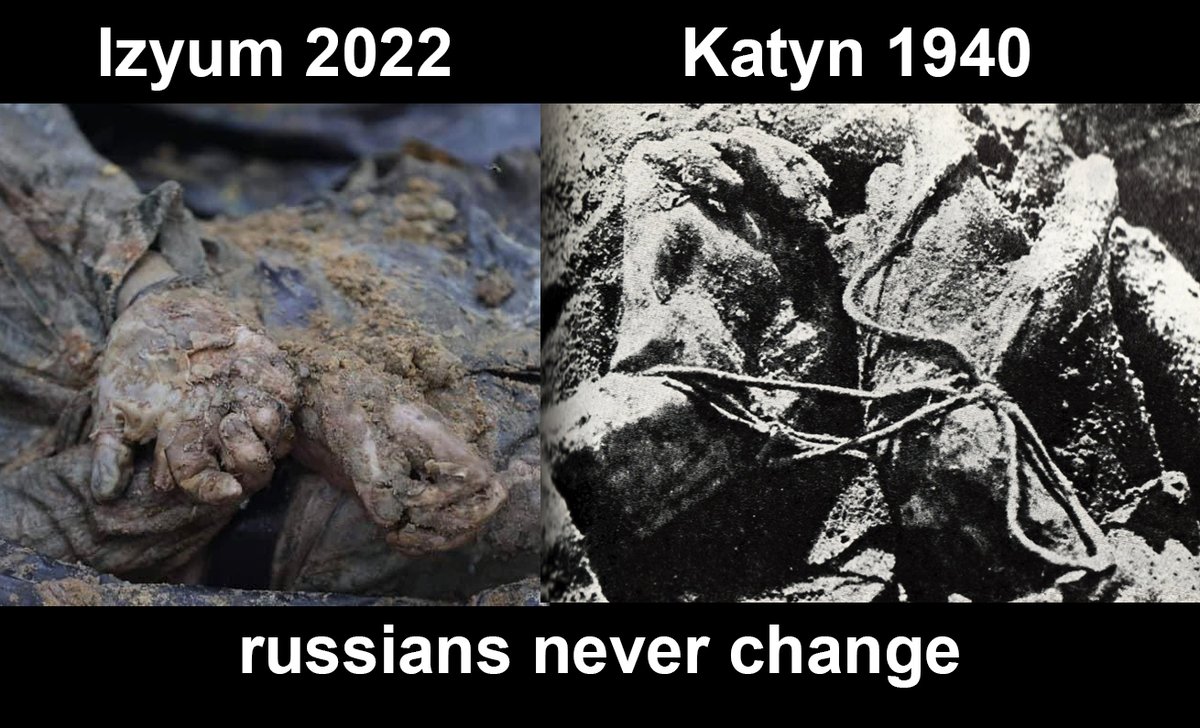
These nine months of metamorphosis didn’t happen on their own. They happened because the people of Ukraine and the Armed Forces of Ukraine resisted fiercely and showed simply extraordinary resilience. Most importantly, they began liberating occupied territories. And the world could see both the true nature of the “russian world” and of Pootin as its individual embodiment. Bloody atrocities involving mass executions, torture, rape, looting, and destruction usually remain undocumented because the occupier continues to hold the territories and gradually destroys evidence of its crimes.
Here, that didn’t work. Europe saw the bloody face — not just of Pootin’s regime, but of the population of his sick country. After all, Pootin personally didn’t kill, rape, or rob anyone there. The “great russian people” did that — as they always have.
Nine Months of Big War: From “Friend Vladimir” to Tribunal
So right now, the process of formally establishing Pootin’s regime as a terrorist entity is underway. Once that status is legally cemented, it triggers the creation of an international judicial body to assess the actions of war criminals — starting with Pootin himself. Several European parliaments and international parliamentary organizations have already recorded this position. The process is gaining momentum but remains far from complete.
For example, just this week Beth Van Schaack, US Ambassador-at-Large for Global Criminal Justice, commented directly on this situation and said the following:
Torture, killings of civilians, executions of prisoners of war and civilians, sexual violence against women and children, forced displacement, filtration camps where Ukrainians are subjected to physical and psychological abuse. All these actions by Russian forces are systemic in nature… Responsibility for organizing these crimes lies with Russia’s top leadership…
Such rhetoric was simply impossible nine months ago. Now this position is gaining international recognition and gradually moving into practical implementation. To get there, it only took one thing: accepting as a given that Pootin is a criminal. One who committed crimes of the kind the West considers an indelible mark — drug trafficking and money laundering, specifically.
Yet to reach that point, people had to make an effort and abandon the strange habit of calling him “friend Vladimir” and praising his “great people”. As we know, some figures — including Pope Francis — still haven’t managed to do that. Which raises the question of why exactly the Pope remains unmoved by what has shaken the entire world. For people like Pope Francis, Beth Van Schaack spells it out plainly:
The aggression against Ukraine is a clear violation of the UN Charter, and we have an ever-growing body of evidence that this aggression is accompanied by systematic war crimes committed in every region where Russian troops were deployed. Such crimes include deliberate, large-scale, and disproportionate attacks on civilians and civilian infrastructure… When we see such systemic actions — including the creation of an extensive network of filtration camps — it becomes very difficult to imagine how such crimes could be committed without direction from the very top of the chain of command.
The Legal Noose Tightens
Right now, several national and international organizations are investigating war crimes in Ukraine — the International Criminal Court in The Hague. European countries have formed a joint investigation team. A month ago, Germany’s Justice Minister Marco Buschmann announced that the German Federal Prosecutor’s Office launched an investigation in March under international law into crimes committed on Ukrainian territory, and created two additional units in the autumn to work in this area.
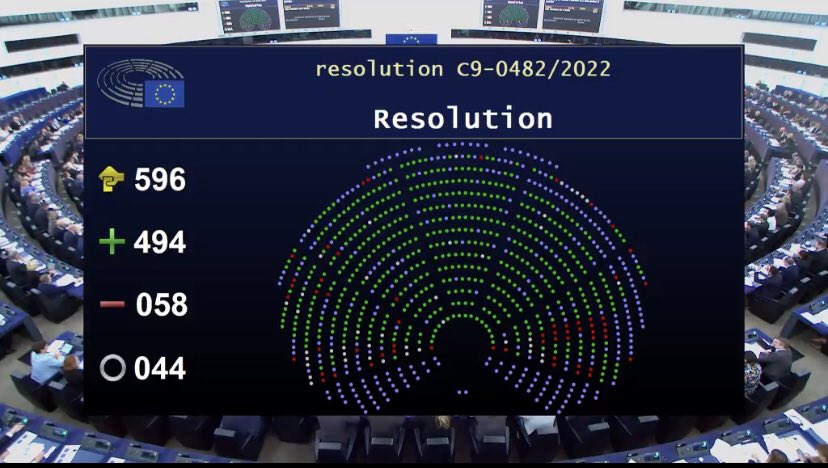
Meanwhile, the European Parliament just voted on a resolution recognizing the federation as a state sponsor of terrorism. According to the European press, 494 members voted in favor, 58 against, and 44 abstained. We don’t know which political forces and which countries those who voted against came from — but I think it’s not hard to guess.
Nine months of big war have taken ruSSia to the very bottom — and it keeps sinking deeper. But let’s note once more: none of this would have happened without the resilience of the Ukrainian people and the selfless courage of the Armed Forces of Ukraine. That is what made it possible to drag Europe out from under its warm blanket and bring it back to reality. And for the Russian Federation, a very different reality has already begun. For decades to come.
Related posts:

Russia-Ukraine War 2025: Russian Casualties and Historic Firsts
The Russia-Ukraine war 2025 brought unprecedented intensity to the battlefield. Today it makes sense to turn to the year’s results that our military has compiled. Indeed, the intensity [...]
Drones Over French Nuclear Base: Investigation Launched
On Thursday evening, drones over French nuclear base Île Longue near Brest triggered a major security alert. According to Agence France-Presse (AFP), 5 UAVs of unknown origin appeared [...]