
Red Army Day Truth: Lenin’s Army Ran without a fight
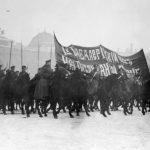
The official Bolshevik version of Red Army Day sounds like this: “On February 23, 1918, under pressure from enemies, the workers’ and peasants’ government proclaimed the need to create Armed Forces“.
Independent researchers cite Lenin’s decree from January 15, 1918. But on January 24, the Bolsheviks already adopted a decree to switch to the Western European Gregorian calendar — meaning after January 31 came immediately February 14. Later they planned to celebrate on February 17, the so-called “Day of the Red Gift”. On this day, according to the Bolsheviks’ plan, the population was supposed to voluntarily donate gifts for Red Army soldiers. But it turned out that in that year, February 17 fell on a Monday. So they moved the celebration to the nearest Sunday — February 23.
We describe our own version of how “Red Army Day” emerged. But we warn: reading it is contraindicated for people without a sense of humor.
Always has existed a problem: well-fed, provided-for young scoundrels who couldn’t earn money and didn’t want to do anything useful became so embittered that they started biting the hand that fed them. Wild animals don’t do this, but overfed and spoiled people do it almost always. This is how trustafarian Vova created what Russians now call Red Army Day — though they have no idea what really happened.
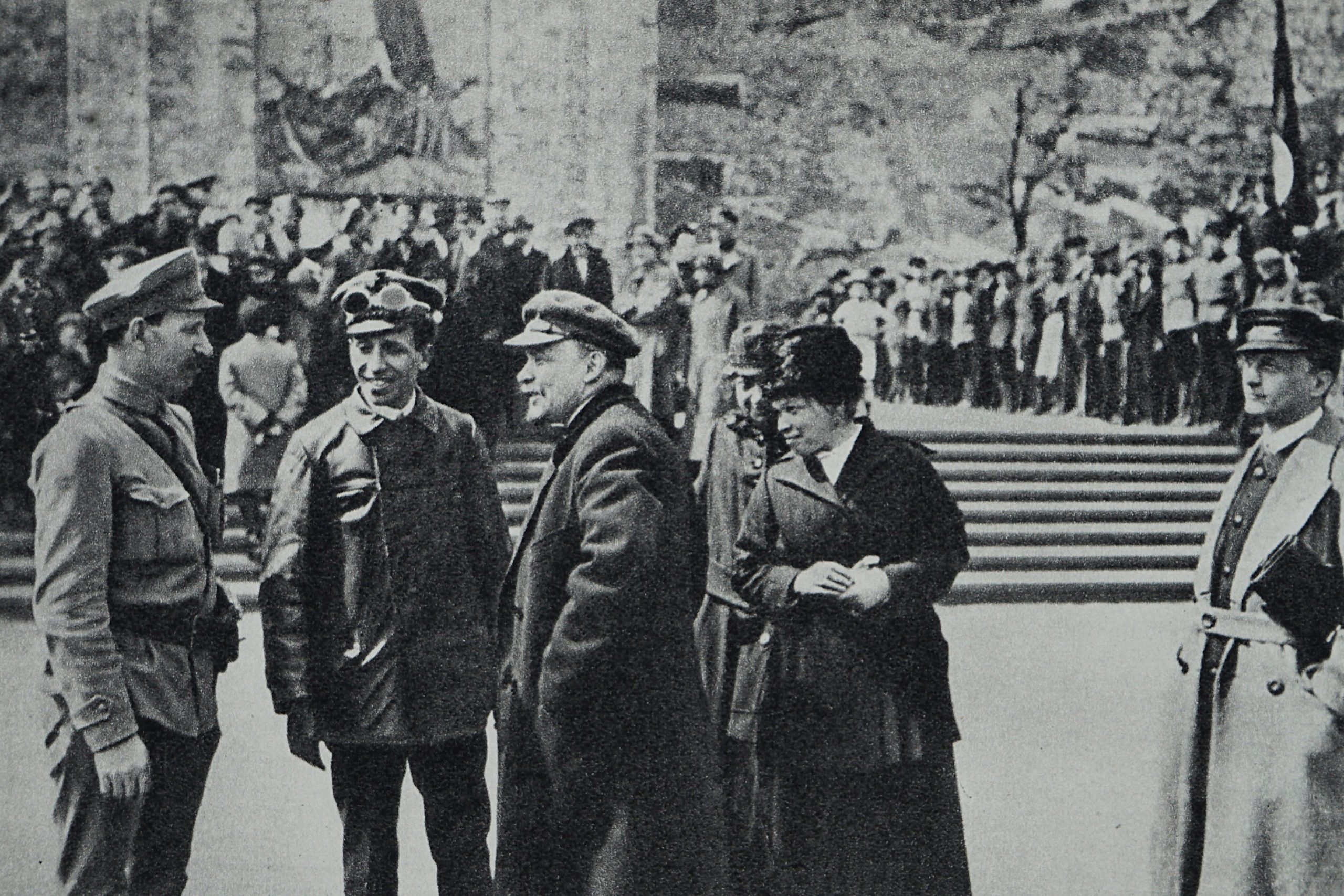
In the Russian Empire, in the distant and remote town of Simbirsk, a family existed where two trust-fund kids, Sasha and Vova, were lucky enough to be born. As teenagers, these slackers — unburdened by work or responsibility — decided to protest. The older one, Sasha, protested his way to the point where they grabbed him by the scruff and sent him to the world of eternal protesters. But Volodya got lucky. He got off with a minor scare and, to avoid trouble, left for Europe. There his character as a malicious dependent finally formed — someone who believed everyone owed him something. Although he didn’t swell from hunger (mama regularly sent money), Volodya could have done something useful. But taverns and brothels attracted him, where he studied the depths of the proletariat. This required more money than mama sent.
So he got seriously involved in revolutionary-party activities. There wasn’t much to do: push a speech here, write a paper there, and most importantly — squeeze closer to the party treasury. Some philanthropists and the party’s combat wing replenished this treasury. The combat wing robbed banks, engaged in kidnapping and racketeering. It must be said, the fighters worked gloriously. As he matured, Volodya already tasted the life where he could do nothing concrete but have plenty of bread, butter, caviar, booze, and of course — girls in brothels.
Stalin Hated Lenin: The Brawler vs. The Freeloader
Various memoirs and Bolshevik party literature occasionally revealed evidence of Stalin’s fierce hatred for Lenin. And it must be said, there were reasons. Stalin was one of those fighters who replenished the party treasury. The lazy Lenin squandered these risky funds. One quite plausible version says that grandpa Lenin passed away not of his own initiative, but with Stalin’s help. But that came later.
With the start of World War I, the emigrant wing of the Bolsheviks found itself in very difficult straits. Patrons became fewer. It became harder for fighters to work, and even harder to send money to Lenin.
So Vladimir Ilyich came forward with a slogan-wish: defeat for the Russian Empire in this war. He justified his thought this way: the chaos that inevitably comes after defeat is the best environment for revolution. Here he was only partially right. However, at this very time the party was already earning money from another sponsor — the intelligence service of the German army general staff. Finances flowed from Berlin.
How Germany Bought the Revolution: Ludendorff’s Investment
World War I erased the boundaries of what was permissible for the first time. The sides dared for the first time to use all means that would weaken the opponent. Erich Ludendorff later formalized this state — the author of the term “total war”. At the war’s start, Ludendorff advocated the idea of quickly removing Russia from the war to avoid fighting on two fronts. He expressed this thought at every step of his career growth. He especially pushed it from 1916, when he became deputy chief of the field general staff, headed by future German leader Hindenburg. At that very time he got the opportunity to use all available agents to collapse the Eastern Front.
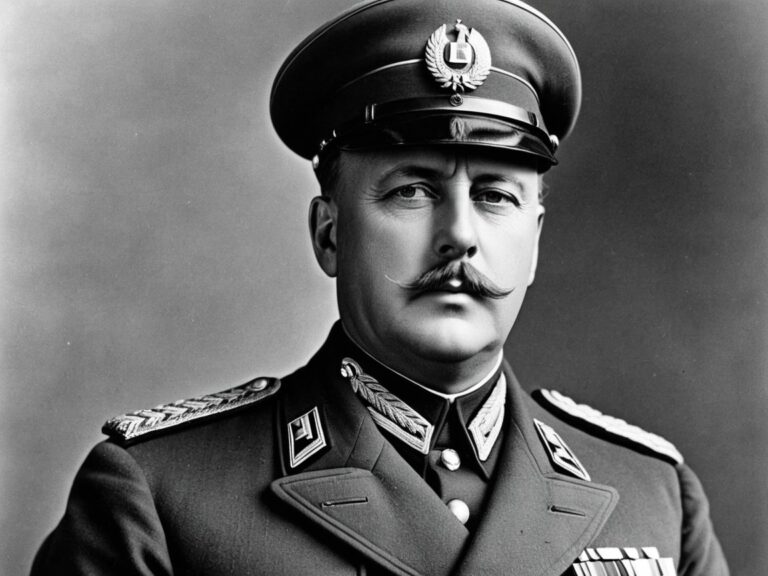
In early 1917, after Emperor Nicholas II abdicated the throne, a power vacuum arose in Russia. They could try to fill it with their agents. At this very time, Ludendorff gave the command to return the entire Bolshevik pack to Russia. That’s when the sealed train with Lenin and other comrades passed to Russia’s borders. An unknown and provincial party began deploying vigorous activity against the Provisional Government and — oh wonder — against the war! They managed to gain unprecedented momentum almost from the start. This happened because they arrived not empty-handed, but with an enormous sum of money for agitation, newspapers, bribing officials, and purchasing weapons. This very circumstance allowed the Bolsheviks to become a serious force. In October they managed to seize power. As easy to guess, Lenin’s first decree became the decree “On Peace”. In other words, Lenin fulfilled his promise and collapsed the Allies’ Eastern Front.
Red Army Day: The Day They Ran
Then a completely expected thing happened. The Bolsheviks started robbing everyone indiscriminately and Lenin achieved significant success in this. His personal courier rushed to Switzerland like crazy.
After some time, the Germans became concerned. They gave Lenin a lot of money, but it was a loan — meaning with repayment. This point didn’t work out for Lenin. While they stuffed their own pockets, nobody particularly thought about repayment. They hinted to Vladimir Ilyich several times: Vova, enough gorging, time to return the money! But Vova rode his wave. So they had to hint more harshly. German troops didn’t go on offensive — they simply marched on Petrograd, where Vova was celebrating. As far as can be understood, German troops were to enter Petersburg and help Lenin return the debt. There was no other goal.
The Red Army appeared in the path of German troops and the Germans managed to fire several times. After that, Red Army soldiers activated their personal reactive thrust, based on diarrhea, and rushed to flee. Telegrams flew to Lenin that the Germans were marching on Petrograd.
This very day is February 23, Red Army Day. On this very day, the “invincible and legendary” exhausted its opponent by running. It must be said, Lenin understood the hint. He informed Berlin that he personally and his party were collecting money to settle the old debt. They just needed to clarify how much to return. From Berlin they explained they were ready to discuss the debt amount and scheduled a meeting in Brest-Litovsk.
Exactly a week later, negotiations began in Brest-Litovsk. Well, negotiations? The Germans explained to the leader of the world proletariat what he should bring. The Bolsheviks strictly and powerfully agreed to this and on March 3, they signed the treaty. Reparations flowed to already almost defeated Germany. But the whole trick in this story wasn’t the money, but who came to collect it. As should be expected, the one who gave the money came to collect it — Erich Ludendorff.
Flee on Feb 23, Surrender on March 3
Thus, Russians can celebrate their army’s day not only on February 23, when it ingloriously fled without firing a single shot. But also on March 3, when they signed the shameful peace that trampled Russia’s reputation into shit.
In short, trust-fund Vova played around and put half the world on edge only because he didn’t want to work but wanted to have everything. He instantly forgot fairy tales about freedom, the proletariat, and other nonsense as soon as he got power. It turned out he hated the proletariat just as much as the tsar and his associates. The trust-fund kid hated everyone. His stroke hit him only when the courier who transported gold and diamonds to a Swiss bank disappeared along with Lenin’s treasure.
So drinking vodka today, Russians drink precisely to this — not to the delusional tales their own propaganda tells them. They celebrate their army’s greatest humiliation without even knowing it.
Related posts:

1418 Days Ukraine Resists: Longer Than “Great Patriotic War” Lie
Today, 1418 days have passed since the full-scale phase of the Swamps’¹ war against Ukraine began. The war has now equaled in time the duration of the USSR’s [...]
Russian Reaction to Tanker Seizure: Officials Cry Piracy
The Russian reaction to tanker seizure is pure theater. Right now another act of the drama “emperor’s collapse” is unfolding, and this is in the middle of the [...]