
Russian Spetsnaz Losses: From Hostomel to Bakhmut
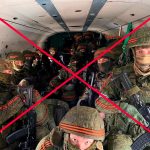
Today, several media outlets, citing The Washington Post, published conclusions from Western military experts on the state of affairs with enemy special forces units. The findings show that Russian spetsnaz losses, including GRU Spetsnaz, reached 90-95% of personnel. Moreover, experts obtained this data using various indirect counting methods, since they couldn’t acquire direct casualty reports from these units. Let’s put it this way — even obtaining personnel rosters of GRU Spetsnaz units would be extremely difficult, whether through technical intelligence methods or through agents.
Since Soviet times, these elite units were classified at the highest secrecy levels. Therefore, practically no one could hear anything like this from a specific person.
What “Elite” Really Meant Before the War
To understand the status of such units more precisely, we should recall that, for example, the well-known VDV (Airborne Forces) were considered the Defense Minister’s personal reserve. On one hand, they had blue shoulder boards, collar tabs, and berets, thereby seemingly demonstrating their affiliation with the Air Force. But in reality, everything was the opposite. Each VDV division had a corresponding military transport aviation detachment under its operational command. Aviation acted exclusively in the interests of paratroopers and to achieve the goals set before them.
But paratroopers didn’t belong to ground forces either. Therefore, the VDV commander reported directly to the Defense Minister, without the intermediate step of the commander of branches of service. And if the VDV had the status of the minister’s reserve, you can only imagine what status GRU Spetsnaz forces had. This is despite the fact that Spetsnaz units also existed in ground forces and the VDV.
Already after the USSR’s collapse, the GRU abbreviation became public, and accordingly — the presence of Spetsnaz in this structure also ceased to be a secret. But the number of personnel, and especially its composition, remains secret to this day. All this means that directly counting such Spetsnaz losses is very difficult — you need to know precisely the number of personnel and the exact number of casualties. As we know, they definitely don’t leave their KIA on the battlefield if there’s even the slightest possibility to evacuate them. And if it’s impossible and they have to leave the dead, you can be sure they’ll take all measures so they can’t be identified as Spetsnaz.
How GRU Spetsnaz Recruited — And Why That Matters
We should note separately that GRU Spetsnaz, unlike ground forces Spetsnaz, formed differently. If some conscripts served in ground forces Spetsnaz, although there were far more officers and warrant officers there, GRU Spetsnaz had only officers and warrant officers. That is, they selected the most experienced military personnel who had already proven themselves at their previous duty station. All of them went through intensive screening.
This means that soldiers who got there already had certain service experience in units adjacent to this. That is, they have solid skills in their military specialty, and possibly combat experience. Only having this base, which most keep for life, do they start training them as elite GRU Spetsnaz specifically. This takes quite a long time. There’s data that “cadets” secretly get taken around the world, where they pass survival and combat courses from jungles to deserts, both arctic and tropical. In general, if we now hear about how much time it takes to train a modern fighter pilot, for example — that’s nothing compared to such specialists. In such a case, you can imagine the damage the AFU inflicted on the enemy precisely in terms of destroying the “piece goods” described above. Russian Spetsnaz losses in this category represent years of investment vaporized.
Hostomel: Where the Myth Started Dying
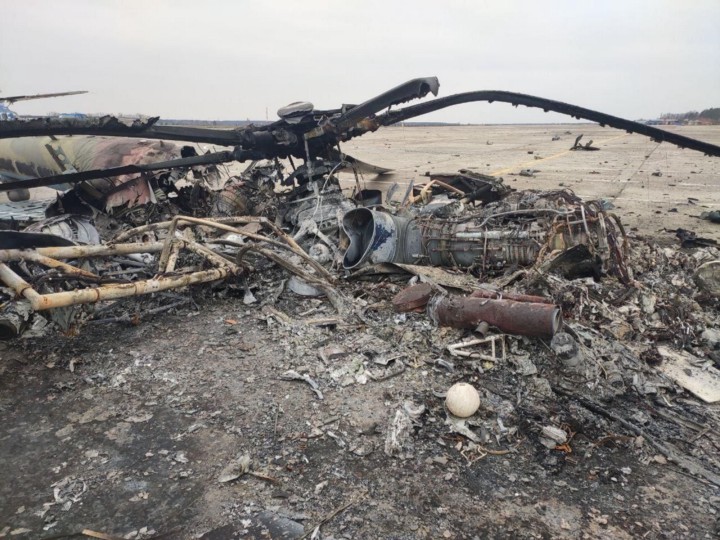
And here we should recall those cases where enemy special forces got packaged wholesale without much hesitation. They landed in Hostomel, for example, and probably thought flowers would greet them there. But it didn’t work out. Until our SOF pulled up, “Pions” met them, working from the Troyeschina area. Well, then the fight went spec against spec, where Ukrainian SOF and Spetsnaz checked whose balls were tougher. Our SOF’s balls turned out harder. It’s a pity that russian Spetsnaz will probably never tell about this, since they’re either feeding crabs at the bottom of the Kyiv Reservoir or feeding worms in Ukrainian fertile land.
Snake Island and Boyko Towers
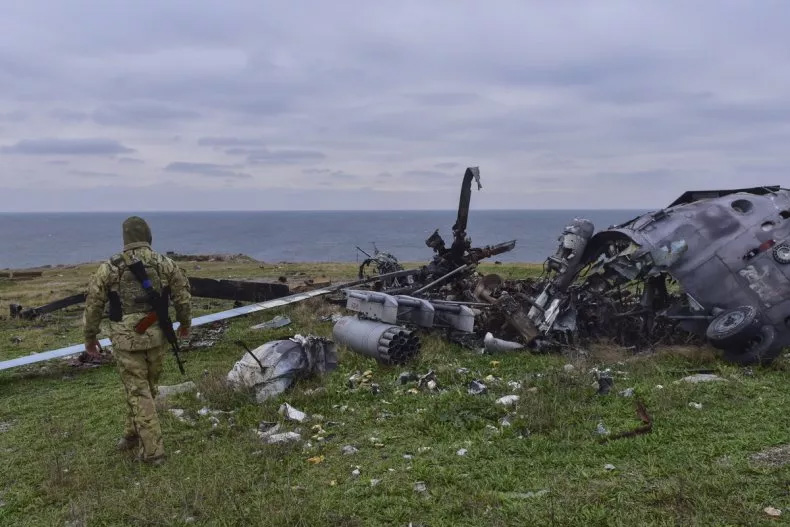
Everyone knows well that Spetsnaz bases were on Snake Island and the Boyko Towers. From there, they conducted raids to our shore and prepared the ground for a large landing operation. Russian Spetsnaz losses accelerated dramatically after these bases got hit. Landing operation didn’t happen because a year ago, the Black Sea Fleet flagship, the missile cruiser “Moskva,” went exactly where it got sent. After Black Sea fish and crabs arranged a disco in the new restaurant, our military struck the island and towers. Again — our SSO landed on Snake Island, where they not only destroyed all enemy equipment but also entered quite a tough firefight with the enemy’s elite fighters. This epic had several episodes, and the enemy returned there in particular to evacuate the corpses of destroyed specs.
On the towers, everything turned out somewhat simpler, since there’s much less space there. When missiles arrived there, everyone immediately went to feed the crabs. It’s understandable, since there wasn’t particularly anywhere to hang around there, and therefore from a missile that flew in, Spetsnaz got very hot. Counting KIA among Spetsnaz precisely doesn’t work out for objective reasons — they went underwater. But there were only special forces operators and the highest-class technical specialists who ensured the work of spy equipment and EW systems.
The Numbers Don’t Lie — And They’re Catastrophic
There were several such cases. Somewhere our SSO worked, as they say, “knife to knife.” Somewhere rocket troops and artillery worked. In some cases, air defense worked very successfully. But if this doesn’t get publicized, there are probably some good reasons for that. Meanwhile, the press now writes approximately like this:
Of the five russian separate special purpose brigades that returned from combat operations in Ukraine in late summer 2022, all except one suffered significant losses… According to US intelligence estimates, losses in the 22nd and two other separate special purpose brigades reached 90-95%.
And this is about the Spetsnaz that was so shrouded in legends that this word is well understood worldwide without translation. Until recently, it was synonymous with quick death for whoever is its target or whoever was unlucky enough to be in its path. The Orcs themselves positioned these units exactly this way, and they fiercely believed that these are ultimate units with the highest training, the best equipment, gear, and weapons. They believed that no one and nothing could oppose their Spetsnaz. Russian Spetsnaz losses on this scale were simply unthinkable to them before Ukraine.
Elite Units Like Cannon Fodder
For this reason, commanders threw them forward in the first hours and days of the full-scale invasion. Since everything had to be done quickly, the main goal was capturing the capital. For this, specs had to ensure troop passage and capture of airfields — Hostomel first of all, Zhuliany, Boryspil, Vasylkiv, and Bila Tserkva — which should have ensured a circular coverage of Kyiv. Therefore, russian Spetsnaz got used massively and wholeheartedly. But at the very beginning, even not AFU regular troops ground them up, but territorial defense, National Guard, and civilians who happened to be nearby. Ours didn’t know then that they were putting the enemy army elite under the knife — and the knife worked tirelessly. Later our regular troops and SOF approached, after which the elimination of Spetsnaz in close combat began.
The second wave already went with Spetsnaz of military branches and simply “elite” Orc troops, like naval infantry and VDV. From all this, you can conclude that the enemy had no particular illusions about its regular troops, motorized rifle troops, and even bright tank divisions. Forward went these most trained troops. As it later became known, besides GRU Spetsnaz, heavy losses also hit all other “elite” troops. Just recall the 155th Naval Infantry Brigade, which already lost its third composition near Vuhledar. They got nearly zeroed out twice before getting torn to shreds the third time.
Bakhmut: Where the Last Elite Dies
And right now, the remains of the elite storm Bakhmut. A tough fight goes on there. Those who follow events from verified sources know the enemy destroyed almost all urban development and ours withdrew. The enemy occupies that terrain which ours considered impossible to hold without major losses, since there’s practically nowhere to take cover. And the enemy enters this terrain, and our artillery mixes it with concrete dust.
There are far fewer shelters than there were before the Orcs themselves destroyed everything there. The situation is very difficult, but ours say our artillery works divinely. Just today we received reports from Bakhmut: our artillery worked them over so hard that an enemy group ended up crammed into a half-destroyed basement. We later pulled them out from there as material for the exchange fund.
Considering that Western experts say that restoring combat capability of exactly such units takes five to eight years, in their opinion, the AFU did something impossible. Moreover, the fact of eliminating the commander of the 14th Spetsnaz Brigade, Sergei Polyakov, is confirmed. That is, somewhere ours managed to cover not only the brigade’s personnel but also its command post. About this, Orcs write such things:
If such a high-ranking commander is on the front line, something is apparently going wrong. Either this unit has too many losses, or they have to do what they shouldn’t be doing.
We return to the beginning of our story. Such military formations should be used as a sharp and well-tuned instrument. As far as we can judge from various information, our SOF gets used approximately this way. That is, they work behind the front line, sometimes far behind it. In general, this doesn’t mean they don’t take losses, but they act exactly in their key, as it should be. As our specs say, “came quietly, left quietly.” With the enemy, it happened differently.
Why Elite Units Became Cannon Fodder
Apparently, they decided that precisely the most trained and experienced units should ensure the breakthrough point of our defense or, conversely, hold the most important points of the front line — which happened more than once or twice. This means they perform the role of infantry, albeit experienced and well-trained. Russian Spetsnaz losses mount precisely because they lost what made them special — maneuverability. The main feature of exactly such forces is maneuverability. As soon as they lost maneuver and lit up, artillery, aviation, and everything else that works on infantry starts working on them. And here they start having simply stunning losses, since infantry is more resistant precisely to shelling by aviation or artillery.
This says the following: Russians can ensure assault actions either with Wagner’s endless meat ribbon or with Spetsnaz with VDV and marines.
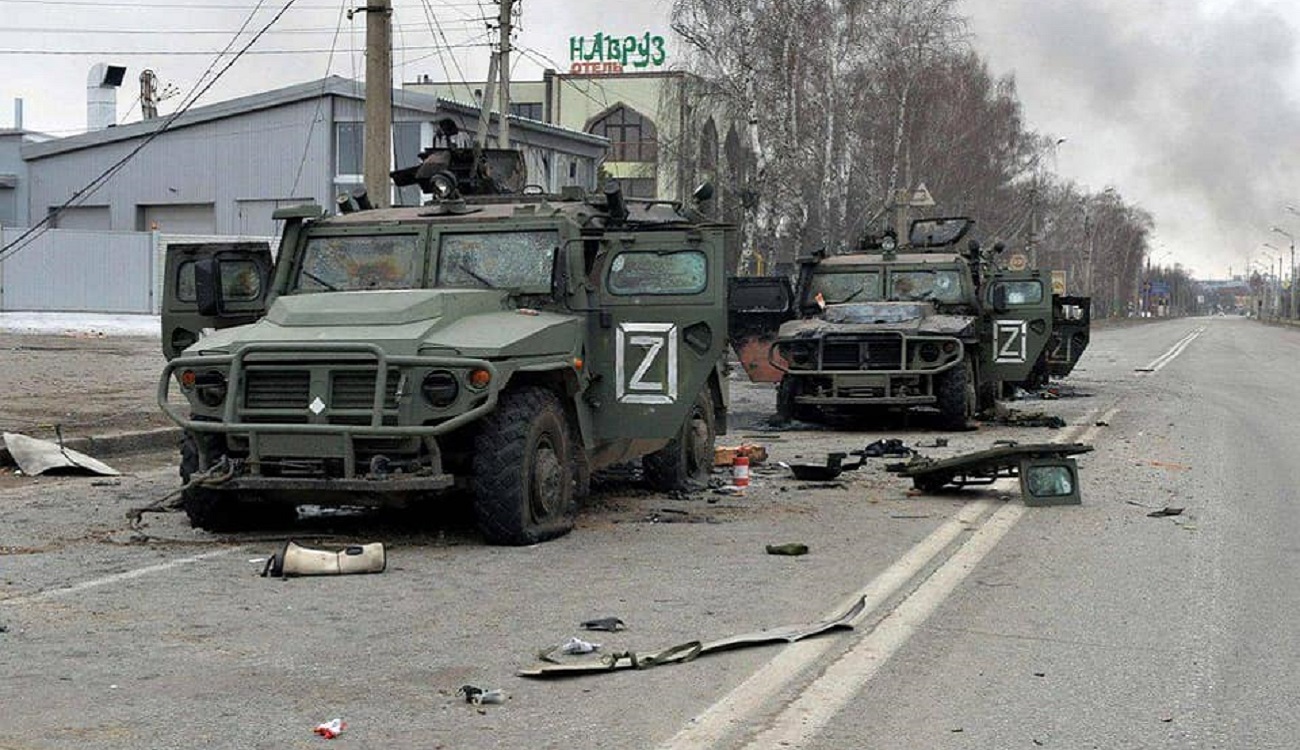
In our view, this is too simple an interpretation of events. Gerasimov and his first main directorate of the General Staff are unlikely already so stupid that they don’t understand this. Most likely, pootin sets both tasks and deadlines for their execution that are simply impossible to even try to fulfill with the forces of that mass mentioned above. To give the process the necessary dynamics, they throw into battle those forces and means that are in principle capable of something. As a result — they bear such losses that precisely they, in principle, shouldn’t have occurred. Most likely, military leadership understands that unrealistic tasks get set before them. But since they’re set — they must be executed. Most likely, they understand what this will eventually lead to. They act within the framework of those possibilities they have — and these are getting fewer.
What the AFU Actually Accomplished
Therefore, when someone says that only scum dies on that side — not quite so. Such statements are incorrect in relation to our military. The AFU destroyed several tens of thousands of Wagner trash. But they also destroyed all professional Spetsnaz and a large part of the combat composition of VDV and naval infantry. This cannot be forgotten. What the AFU already did defies any rational explanation. In essence, they broke the backbone of the scarecrow from which the West had it bad for several decades in a row. Russian Spetsnaz losses represent the collapse of a carefully constructed myth — and Ukraine did that with determination, skill, and Ukrainian balls of steel.
Related posts:

Bucha Massacre: Russian War Crime Against Civilians
Before we turn to the Bucha Massacre, we want to briefly explain how this small town in Kyiv Oblast was occupied and later liberated. So, the third day [...]