
Ukrainian Heavy Bomber Drones: Baba Yaga Review and Tactics
I think time has come to tell about Ukrainian heavy bomber drones and lay out information on shelves. No secrecy in this publication exists — everything is in open access. Here information is simply collected. We’ve used heavy bombers for a long time. If you follow the war in Ukraine, you probably heard the name “Baba Yaga” – precisely this is what Orcs¹ call these drones. But the thing is — this isn’t one drone but an entire class of heavy quadro- hexa- and octocopters (4, 6 or 8 motors).
The name “Baba Yaga” appeared because these drones work mainly at night and produce a specific loud sound through large propellers. Also they take occupiers from cozy warm trenches and transport them to the very hell. Rumors go that some ruSSian soldiers said they allegedly saw with their own eyes a witch with a broom riding a copter.

Common Characteristics
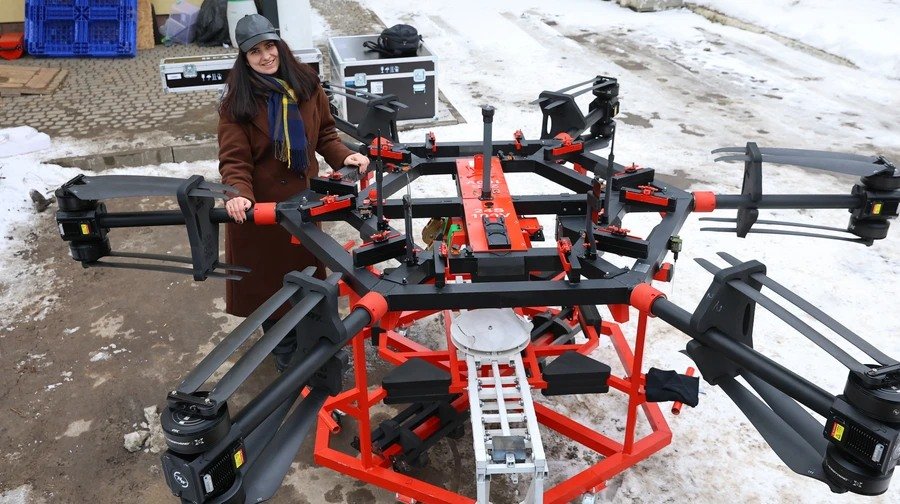
Worth noting that in 4 years of war, Orcs never created even a single remotely comparable heavy bomber. Meanwhile, Ukraine’s Defense Forces in 2026 use an entire lineup of strike copters capable of carrying significant combat payload. All heavy strike copters, regardless of manufacturer, have common similar characteristics:
- Large combat payload (15-30 kg);
- Bombing range from 15 to 30 km;
- Universal drop systems that quickly adjust to different ammunition types;
- Mandatory digital day and night thermal imaging cameras with large zoom;
- EW-resistant control and navigation system. Equipped with CRPA antenna for flights under GPS suppression or spoofing conditions. Most copters now fly on Starlink;
- Quick battery replacement and ammunition reloading capability.
The lineup of these copters constantly updates and expands. Here only main most mass-produced models will be listed. Manufacturers aren’t secret — they advertise themselves. We’ll help — who knows, maybe countries that purchased Ukrainian anti-air drones will also get interested in heavy bombers?
Ukrainian Heavy Bomber Drones Fleet
1. Heavy Shot. Manufacturer — Gurzuf Defence company. Heavy quadcopter with combat payload up to 30 kg. Combat radius up to 25 km with maximum load, control through several channels — including Starlink.
2. Nemesis. Manufacturer — UFORCE company. Initially developed for 412th separate SBS brigade “Nemesis”. Heavy quadcopter with combat payload up to 20 kg. Combat radius up to 25 km with maximum load, control through several channels — including Starlink.
3. Vampire. Manufacturer — SkyFall company. Probably the most famous heavy bomber, with which the author is personally familiar. Heavy hexacopter with combat payload up to 20 kg. Combat radius up to 20 km with maximum load, control — digital system protected from EW.
4. Kazhan. Manufacturer — Reactive Drone company. Combat payload — up to 20 kg. Combat radius up to 25 km with maximum load, control — digital system protected from EW.
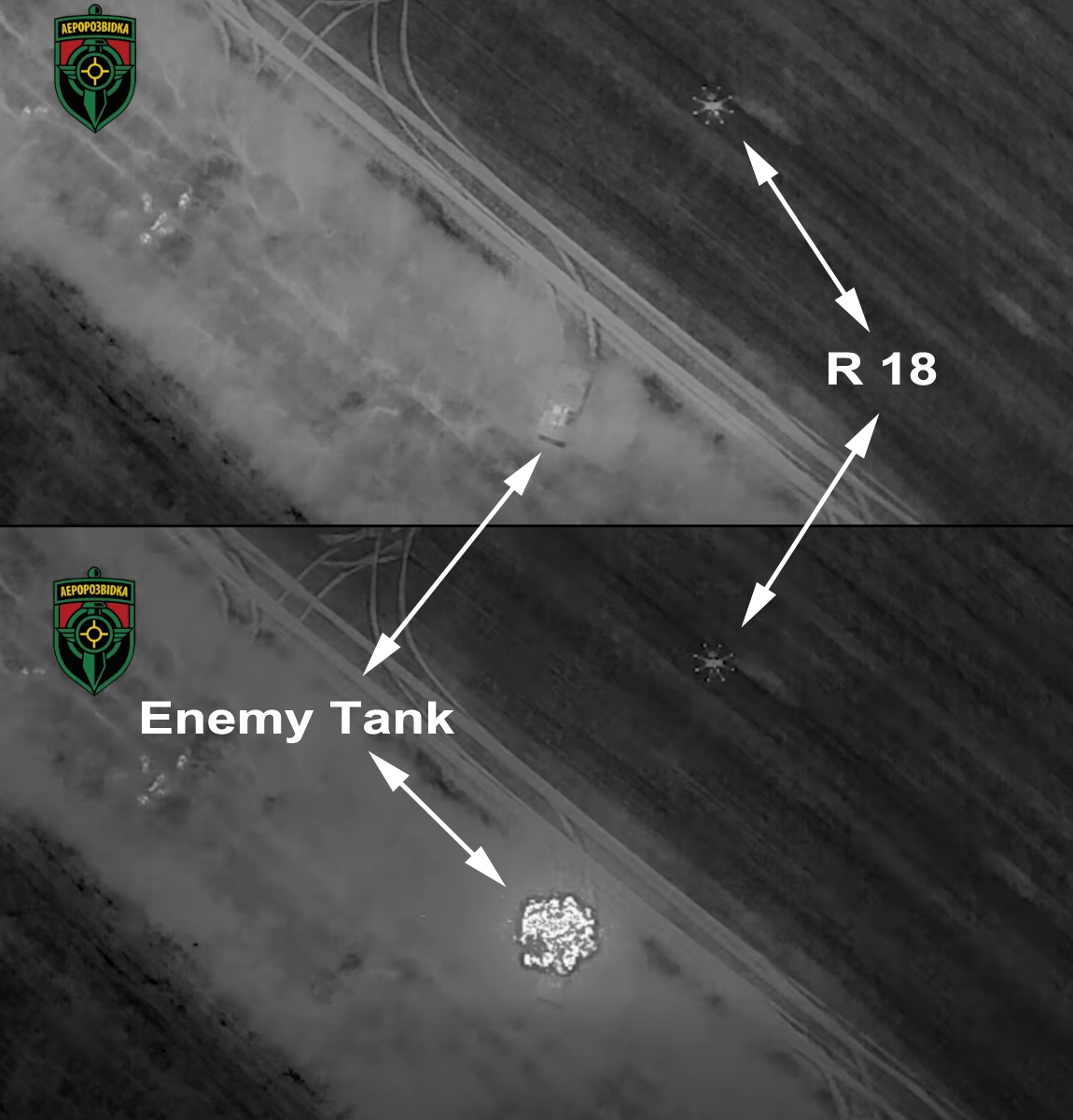
5. R-18. Development and production — “Aerorozvidka“. Significantly smaller than all previous ones, but this is the first Ukrainian heavy bomber. It started fighting even before full-scale invasion, in 2019. Combat payload 5 kg. Combat radius up to 12 km with maximum load, control — digital system protected from EW.
Manufacturers constantly improve their drones, competing among themselves. Changes happen hundreds of times more dynamically than in any previous war. For example, quite possibly when you read these lines — Vampires will befriend Starlinks.
Economics and Ecosystems
One heavy copter’s price fluctuates in the range from $10,000 to $25,000. This is just the copter, without spare battery set, spare propellers, without ground station and antenna equipment. Ground station with antenna equipment costs from $15,000 to $25,000. Prices are conditional, so the reader understands. Also price depends on configuration. For example, a dual-band digital camera (day and thermal imaging channels) on gimbal (special suspension) depending on zoom (digital or optical) and image quality can cost from $3,000 to $12,000.
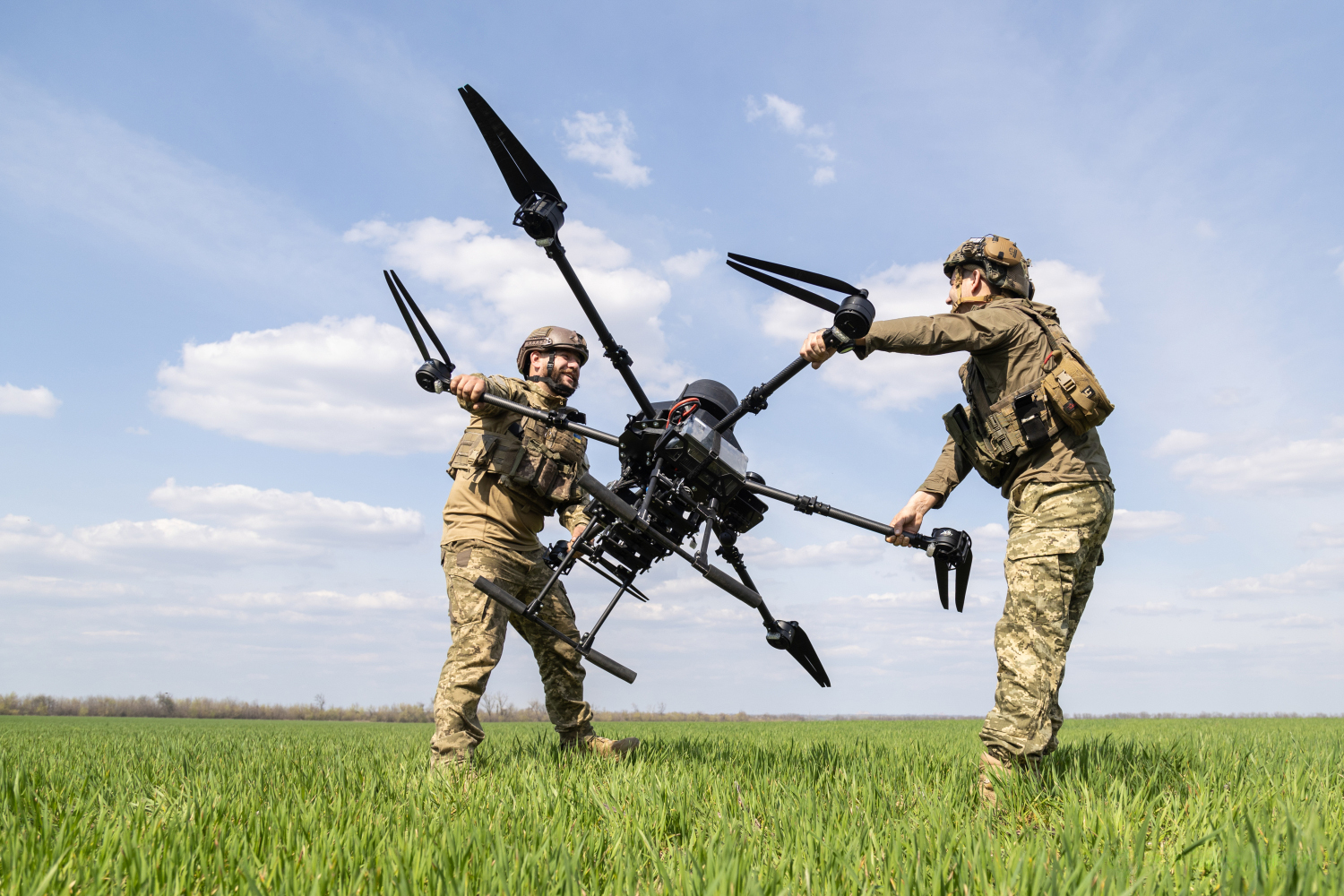
Ukrainian heavy bomber drones require specialized training. Each bomber is like part of its own ecosystem. You can’t give Vampire to guys working on Heavy Shot and expect them to immediately fly it. Because different ground stations, control systems, ammunition mounts, ammunition requirements and everything else. Even if you give guys the complete complex, drone plus ground station, they still need time to master piloting and control on new equipment. To teach an adequate and motivated warrior to fly a heavy copter takes from two weeks to a month and a half, depending on basic knowledge and skills. And training equipment.
All heavy copters drop on the enemy a very wide lineup of gifts, both standard and unique, specially developed for them. Standard ones — 122mm shells, TM-62 anti-tank mines, 82mm mortar mines, RKG-3 hand-shaped charges. Unique ones are developed and manufactured by almost all USF² units, from simple high-explosive or fragmentation bombs to mines with magnetic sensors and motion sensors. Also unique gifts containing napalm, thermite and pyrogel mixtures.
Combat Statistics and Tactics
According to statistics, average heavy bomber lifespan on the front comprises 60 combat sorties. In winter at night, the crew can accomplish up to 25 combat tasks. So the board lives on average three days in winter with intensive combat work. Orcs invented countless tricks and means destroying our heavy boards, from night thermal traps on the ground with camouflaged sniper position nearby to dropping grenades, bombs or even nets from Mavic above onto our bomber. These night witches don’t drop gifts “on the fly.” To hit the target precisely, the bomber needs to hover in the air for at least a few seconds and aim at the target. This is a vulnerable moment of combat work.
A case got recorded where the enemy managed to shoot down our Heavy Shot. But before falling, it managed to drop 2 ammunition pieces and fell precisely on Orcs’ Uragan MLRS.
Worth understanding that destroying the enemy isn’t the only task of heavy bombers. For example, in Kherson region they delivered water to guys holding positions. In the hottest cities like Kupiansk or Pokrovsk, they deliver literally everything — from ammunition and medicine to spare batteries for radios and food. Ukrainian heavy bomber drones serve as critical supply lifelines in contested areas where ground delivery is impossible.
Since 2025, very rapid development of medium bomber drones on various FPV platforms started (13-20 inch frames). They’re capable of carrying combat payload 4-10kg for distances up to 20 kilometers. But that’s probably already a topic for another publication.
¹Orcs – a common term for Russians who support or participate in the armed aggression against Ukraine. Dehumanizing? Yes. Accurate? Also yes.
²USF – Unmanned Systems Forces, Ukraine’s newly established branch of the Armed Forces. No, not the U.S. Navy — in Ukraine USF means those who destroy Russian bombers, not those who park aircraft carriers.
Related posts:

Ukraine Has Resumed Deep Strikes: Arsenal, Oil, and Military Plant
It seems that Ukraine has resumed deep strikes. TToday there was news that the good birds are visiting enemy arsenals, oil refineries and military facilities. But let’s get [...]
Ukraine long-range strikes: from Mediterranean to Caspian
Ukraine long-range strikes have reached a new level of sophistication. It seems Ukrainian security agencies launched a genuine competition to see who can deliver the most devastating blow [...]