

Ukrainian Kitchen Drones — Innovation, Revolution, or Evolution?
No filters. Just war as it is. Reader-supported.
Support →

A few days ago, The Atlantic published an interview with the CEO of Rheinmetall, who weighed in on Ukraine’s so-called “kitchen drones” and claimed that its defense industry lacks innovation. According to him, the widespread belief that Ukrainian manufacturers are among the most advanced in the field has nothing to do with reality. If you’ve been following the war in Ukraine, you’ve definitely heard about the “LEGO game”, “housewives with 3D printers in the kitchen”, and probably seen the hashtag #MadeByHousewives.
We initially ignored the whole thing. Twelve years of war, five of them in full-scale invasion mode, give you a perspective that simply isn’t available to people living in countries that haven’t seen war in generations. Once you understand that gap, there’s no point arguing with statements like this. None at all.
Some Things You Can Only Know From the Inside
There’s a of hunger or thirst — not the kind where you just want a snack, but the kind where there’s simply no food, no water, and no idea when either might appear. That experience creates feelings that words can’t reach. You can try to explain it to someone who’s never been there, but they won’t even get close to understanding it — no matter how hard you try. Our soldiers who’ve been through absolute hell know this better than anyone. Whatever they say about what it feels like, the listener will never truly grasp what the storyteller survived.
Everything we’ve been through — as a nation and as individuals — didn’t just give us understanding. It gave us certainty. We know how things work because we’ve seen what happens when they don’t. If it works, there’s a chance to survive. If it doesn’t — there’s nobody left to tell the story. Given that kind of lived experience, arguing with those who don’t have it is pointless. If they end up in our situation, then we can talk about drones and cooks.
The Hashtag Went Viral
So we kept quiet. It doesn’t matter what people say about Ukrainian “kitchen drones”. What matters is that our drones work. But since this has gone viral on social media, it’s worth laying out a few things that Rheinmetall’s CEO seems to have missed — not out of bad faith or contempt, but simply because he lacks firsthand experience. And we’re not dismissing the genuinely high standards of German engineering here. We’re just filling in the missing pieces.
Modern weapons systems are indeed packed with cutting-edge technology. That’s fine — but weapons are a very specific product. By their nature, they exist to destroy the enemy’s weapons and, ideally, to survive as long as possible. A country that hasn’t fought a war in a long time — or has only fought wars it could walk away from at will — inevitably develops a blind spot. And it’s very visible from the outside.
The Vietnam Lesson
Think about the US war in Vietnam. America jumped in with energy and confidence, then got completely bogged down. But what matters here is how and why it ended. The US president decided to end it, he gave the order, the war stopped, the troops came home. That answers the “how.” The “why” is simpler: casualties, equipment losses, and the financial cost became too heavy to carry. The war got too expensive, so the president pulled the plug.
That example shows the difference between a country that can choose to start and stop a war whenever it wants — and a country that has no such choice. We know this from our own history. We see it every single day. And we have an extra multiplier in the equation: the Orcs¹ are a barbaric enemy that makes no secret of its goal — to wipe us out entirely. That means our survival depends entirely on maximizing the effectiveness of Ukraine’s Armed Forces and everything they fight with.
The Cost Problem
Here’s the first thing that trips up Americans and Western Europeans. They build weapons using the latest technology — which means those weapons end up incredibly expensive and completely impossible to scale. The F-22, widely considered the most advanced fighter jet in the world, was built in fewer than 200 units and ended up too expensive even for the United States. The current war with Iran has already exposed shortages in air defense ammunition — and as it turns out, ramping up production quickly isn’t possible.
This isn’t about lacking the technical capacity to produce more Patriot missiles. It’s about the fact that modern high-tech missiles cost enormous sums — a million dollars and up. To sharply increase production, you need to sharply increase funding. And that’s where the real measure of a weapons system’s effectiveness appears. It’s not just about the hit rate of a given missile. It’s about whether there’s enough money to keep making them.
Let’s keep going. A plane, a tank, any piece of equipment stuffed with the latest technology will still take losses — and even the best air defense can’t intercept 100% of targets.
The more intense the conflict, the higher the attrition rate. When expensive, overpriced equipment breaks down or gets destroyed, the question becomes: how do you replace it? And the answer involves a staggering amount of money and time. Intensive military conflict demands maximum replacement speed. So it turns out that super-weapons get burned through fast, and troops end up fighting not with the peak of technology, but with whatever can be replaced quickly after inevitable losses.
Kitchen Drones: The Logic That Actually Works
And that’s exactly where kitchen drone production makes sense — in an intensive war, mass production needs to happen in kitchens, garages, with farms of 3D printers running 24/7, churning out components that can be spent in large numbers because they’re cheap and they work. The math is simple: ten FPV drones at $2–3K each will reliably destroy a tank worth $3–5 million, or an air defense unit worth $15–20 million. And this is not lost on the US military. American officers are studying Ukrainian expirience closely, and battalion-level formations are increasingly being equipped with 3D printers to produce the same kind of disposable components.
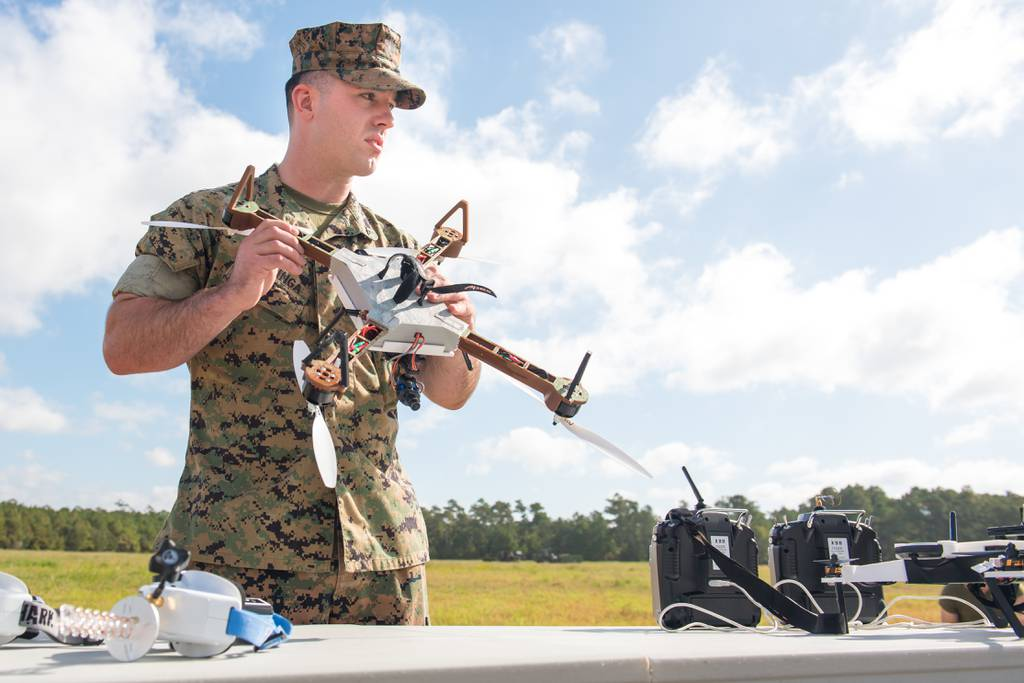
The kitchen drones concept launched in 2023. The effect was enormous — it brought tens of thousands of specialists into the industry, opened hundreds of production sites, and built up engineering and repair capacity both in the rear and at the front. It laid a massive foundation for Ukraine’s military-technology culture. And with those “kitchen” technologies, we’ve eliminated more of the enemy than Rheinmetall has in its entire history. It’s also worth noting that the enemy doesn’t stand still — GPS-guided Western munitions like Excalibur and GMLRS, which were highly effective in 2023, no longer work today because of Russian electronic warfare.
The War That Drones Already Changed
Our kitchen drones — built by housewives and volunteers — decentralized warfare. You will never again see a modern war with columns of tanks and armored vehicles. The only way to survive on the battlefield now is the Frodo Baggins strategy: stay invisible, move alone. Armin Papperger isn’t accounting for the fact that in an intensive war, Rheinmetall as we know it simply has no future. Every large industrial facility becomes a high-precision target. But 3D printers survive — printing away in kitchens and garages.
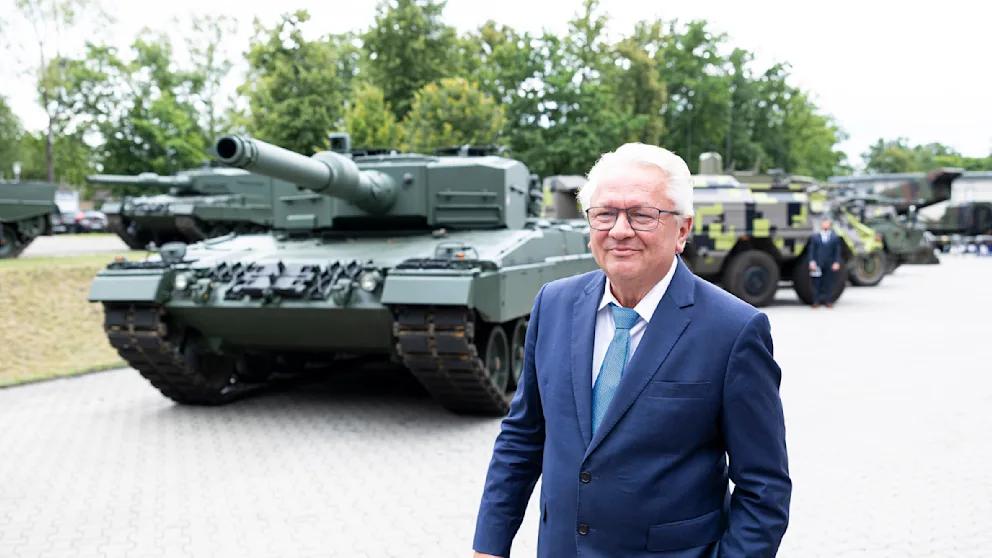
The CEO of that respected company isn’t factoring in battlefield losses and the cost of mass-produced equipment. Consider this: before the full-scale invasion, the Bundeswehr had around 300 Leopard tanks — virtually all of them the latest iteration, packed with modern technology. Excellent machines. But how long would they have lasted in a war like ours? A month? Two? Three? And after that — what? Fight with tanks fresh off the assembly line?
Rheinmetall produces 58 tanks a year. Fifty-eight. And no matter how well-protected a tank is, an enemy using 20–30 drones worth $100K total will take it out — a tank priced at €29–32 million. Replacing just 100 such tanks would cost close to €3 billion. That’s the whole logic, right there. If you’re building weapons without accounting for losses and the need to replace them — that’s one conversation. If you’re talking about actual war, the effectiveness of a weapon depends enormously on how cheap and simple it is to produce — even if that means doing it in a kitchen.
Postscript: An Apology and an Invitation
Two important things happened as this was being written. First, Rheinmetall publicly apologized. That’s a strong move. Second, the commander of Ukraine’s USF (Unmanned Systems Forces), Robert “Madyar” Brovdy, publicly invited Armin Papperger to a conversation. His words:
A little late, but still — you’re right, Mr. Armin Papperger (Rheinmetall), even if you said it as a cry from the soul. The freedom-loving Ukrainian Bird is no innovation — it’s a revolution in warfare. A competition of firmware and frequencies. The democratization of precision weapons through kitchen wire and sticks.
Among other things — it’s a ‘cloud’ factory that can’t be stopped by striking it with a missile or a drone, the way Ust-Luga was struck. And the speed of iteration is measured in MAX.
The gigantism of dinosaurs that once ruled the planet didn’t save them. A new doctrine, a new kind of war. Hit us up — we’ll show you around.
It would be genuinely interesting to see what comes out of a meeting between two professionals. Rheinmetall might very well be capable of creating something based on decentralized production—something affordable and scalable.

And here’s our takeaway: we have no reason to be offended by the CEO of Rheinmetall’s comments, no reason to argue, no reason to prove anything. Kitchen — fine. It’s the kitchen, and they’re kitchen drones. Housewives — sure, housewives. We know it works. More than that — we know nothing else works. The Orcs started from exactly the same logic the CEO is using now. They know how that turned out. We’ll keep doing what we do.
¹Orcs – a common term for Russians who support or participate in the armed aggression against Ukraine. Dehumanizing? Yes. Accurate? Also yes.
Related posts:

Conclusions After Four Years of Full-Scale Invasion
Today at 5 AM, four years of full-scale invasion have passed, and the fifth year of the large-scale phase of war against the rabid gas station has begun. [...]
Drones Over French Nuclear Base: Investigation Launched
On Thursday evening, drones over French nuclear base Île Longue near Brest triggered a major security alert. According to Agence France-Presse (AFP), 5 UAVs of unknown origin appeared [...]