

Iran-US Ceasefire: First Conclusions — A View From the Trenches
No filters. Just war as it is. Reader-supported.
Support →
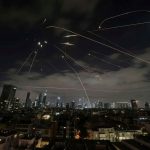
A two-week Iran-US ceasefire took effect overnight, halting hostilities in the Middle East and reopening tanker traffic through the Strait of Hormuz. Before we assess the situation, one clarification: what actually happened here is the implementation of a plan designed entirely by Pakistan. Beyond that, this is not a full end to the military confrontation as it existed yesterday — and it’s certainly not the end of regional tensions. The next two weeks are meant for Iran and the US to work through their mutual demands under cover of a ceasefire. What emerges from those talks will define the picture after those two weeks are up.
The Victory Parade Begins
In short — this is a pause. It could lead to de-escalation, or it could end with a resumption of hostilities. The first thing worth noting is the inevitable festival of self-congratulation that’s already underway. Iran’s day started earlier, and America was still asleep, so Tehran moved first — declaring the ceasefire its own victory. No surprises there. The IRGC will absolutely convert this into a boost for the regime. Expect a heavy emphasis on the theme of wise bearded regime that helped the nation withstand the blows of “American imperialists” and “Israeli Zionists”.
When morning arrives in the US, the most beautiful president with the most beautiful ginger hairdo will perform the same routine — along with all his lackeys. They’ll bend over backwards to sell this ceasefire to their audience as proof of Donnie’s wisdom and, quite possibly, his unbearable love of peace. Hegseth, hair immaculately styled, will probably suggest immortalizing this “victory” by renaming something after Trump. Midterms are six months away, and you go into midterms with wins only. The first takes from Trump’s bootlickers have already reached the press. Here’s what White House Press Secretary Caroline Levitt said:
This is a victory for the United States, achieved by President Trump and our incredible military. From the very beginning of the operation, President Trump anticipated it would last four to six weeks. President Trump facilitated the reopening of the Strait of Hormuz. One should never underestimate President Trump’s ability to successfully advance US interests and mediate peace negotiations.
We’ll get to what this “victory” actually looks like in a moment. But the part about Donnie “facilitating the reopening” of the Strait of Hormuz is particularly rich — Madam Levitt says it as though the strait closed by itself, and Trump had absolutely nothing to do with blocking it in the first place.
Israel Gets the Bill
Both sides put forward mutually exclusive demands and will spend the next two weeks arguing about them. Those two weeks may well stretch into two months or two years — that’s just how Donnie operates. But what matters here is that the ceasefire mechanism itself came from Pakistan, which just dramatically elevated its international standing amid the decline of US credibility. And that credibility took a hit not just because Washington let someone else take the chair — but because this entire configuration had no place for Israel.

Israel wasn’t just left out of the negotiations. Nobody even told Israel what was on the agenda. Donnie wiped himself with his most loyal ally at the very first opportunity. And right now it’s worth appreciating the wisdom of other US allies — including NATO partners — who clearly and firmly distanced themselves from the ginger grandpa’s reckless military operation. Imagine if they’d answered his call and sent their own troops, only to have Donnie cut deals behind their backs. The Israel example shows exactly what “friendship” with Trump is worth.
Meanwhile, Israeli opposition leader Yair Lapid posted on X:
There has been no political catastrophe like this in all our history. Israel wasn’t even at the table when decisions affecting the very foundation of our national security were being made.
Israeli politician and IDF Major General (ret.) Yair Golan commented on the “ceasefire” this way:
Netanyahu promised a ‘historic victory’ and generational security. What we actually got is a strategic failure. The IDF did its job with energy and delivered results, but the Netanyahu-Smotrich-Ben-Gvir government once again failed to turn those results into victory. The nuclear program is intact. The ballistic threat remains. The regime emerges from this war stronger. The IDF won — Israel lost.
What Were the Goals, Exactly?
Now, as promised — let’s look at what Iran-US ceasefire and Trump’s “victory” actually looks like. The demands on Iran were straightforward:
- Abandon the nuclear program, dismantle uranium enrichment equipment, and hand over those 400+ kg of highly enriched uranium to the US — with verifiable compliance mechanisms.
- Dismantle the ballistic missile program, including the relevant production facilities.
- End support for proxy movements like Hezbollah and the Houthis.
- Abandon the program oriented toward war with Israel and its physical destruction.
These were the stated objectives of the military operation. So regardless of what Epstein’s ginger friend posts on his own social network about “victory,” success or failure can only be measured against those objectives. That’s it. Nothing else.

A genuine victory means achieving all stated goals. Falling short on some requires a careful assessment of each point individually — where did it work, where didn’t it. Achieving nothing means the operation failed. Another word for that is defeat. Everyone can look at the interim results and score each point themselves. We’ll do it the way it looks from Ukraine — from the perspective of people who’ve heard explosions for five years straight.
Goal 1: Iran’s Nuclear Program
At the moment Trump declared Iran-US Ceasefire and “victory”, Iran’s nuclear program hadn’t just stayed where it was — it moved forward. A few key points matter here. Those 400+ kg of highly enriched uranium — enough for 10 to 12 nuclear warheads — stayed with the bearded regime. Once they assemble that material into actual devices, Iran crosses the threshold of a nuclear state. At that point, an operation like “Epic Fury” becomes impossible. Exactly as it’s impossible against North Korea right now.
From that moment, no strikes on Iranian territory happen — because any such strike instantly risks nuclear exchange, and nobody wants that. The motivation for Iran to build nuclear weapons is now beyond question. And during the fighting itself, the last formal barrier against that step got removed.
Until February 2026, Khomeini’s fatwa — a religious ruling in Islam — was still nominally active, declaring nuclear weapons a product of Satan and forbidden. That fatwa has now been annulled. Nuclear weapons are no longer considered an instrument of the Devil, which means they can and should be built. So instead of resolving this critical issue, everything is moving in the opposite direction. Iran will very likely become a nuclear power before long — which will probably freeze the bearded regime in place for decades. As of right now, goal one isn’t just failed. It’s failed spectacularly.
Goal 2: Iran’s Missile Program
The second goal — dismantling the missile program — is at best partially achieved. Air strikes on industrial facilities caused enormous damage to the missile sector’s production base. But one crucial factor distinguishes Iran’s situation from that of the Rabid Federation.
Russia lost access to Western technology four years ago, and before that had built key industries around equipment from the US, EU, Japan, and other Western countries.
Iran has been in its current situation since 1979. Its defense industry — the part serving the nuclear and missile programs — has essentially zero dependence on Western equipment or technology. After 47 years of bearded regime rule, the entire military-industrial complex runs on either domestically produced equipment or non-Western alternatives. China supplies the bulk of it now, and virtually every key production facility relies on Chinese hardware. The Orcs* contribute something, but China dominates. In other words, Iran’s industrial recovery potential is significantly higher than Russia’s.
With high confidence: the beardeds will rebuild their key facilities — and they’ll do it smarter, positioning new plants to maximize protection from air and missile strikes.
There’s more. A substantial arsenal of missiles, launch systems, and related equipment survived the bombing campaign intact. According to Israeli and American intelligence, Iran retained roughly half its missile capability. That means right now Iran can do what it demonstrated during the fighting — at least one more time. And the bearded regime shows zero enthusiasm for destroying any of it.
So this goal is either partially achieved or not achieved at all. The industry can recover relatively quickly, and the existing missile potential may already be sufficient for military tasks.
Goal 3: Proxy Support
Both the Houthis and — especially — Hezbollah backed Iran by striking Israeli territory. The Lebanese group Hezbollah, despite repeated IDF announcements about seriously degrading its military capability, delivered a volume of fire that Iran itself couldn’t match.
Given that, there’s no doubt the relationship between Iran and its proxies has not only survived — it’s strengthened significantly. This goal is also failed.
Goal 4: Abandoning the Destruction of Israel
This point of the Iran-US ceasefire barely needs analysis. This point that Donnie abandoned halfway through gives additional motivation to exactly those Iranian forces who made the anti-Israel course their defining mission. Despite all the damage inflicted on Iran during the operation, the threat to Israel grows in the medium term, not shrinks.
Israel also took significant losses. All that confidence about an Iron Dome capable of stopping anything the bearded regime throws — that confidence is gone. Israel now has a much more sober view of the actual state of affairs.
The Bonus Humiliation
Reports that Donnie agreed to allow Iran to charge fees for safe tanker passage through the Strait of Hormuz represent an unprecedented level of disgrace. Donnie didn’t just finish off the US role as guarantor of freedom of navigation. He changed the legal status of the Strait of Hormuz itself. Supposedly this condition lasts two weeks — but that’s a very open question. And if anyone in the US tells you Donnie “unblocked” the strait, that’s the humiliation multiplied by two.
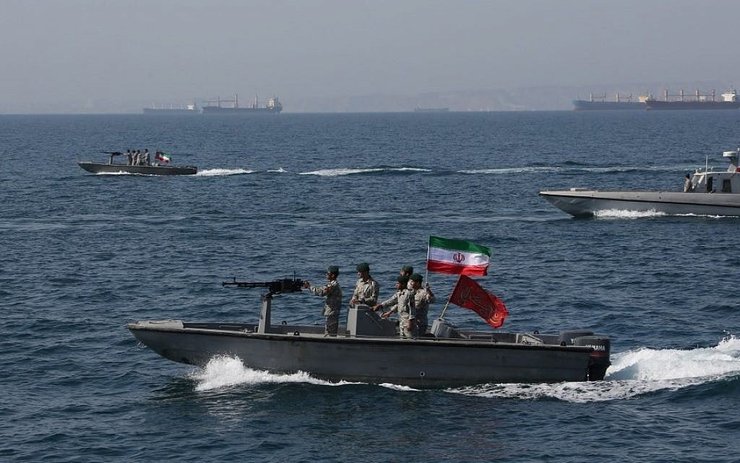
The interim results of the Iran-US ceasefire aren’t encouraging. Not one of the goals Donnie cited as justification for the military operation has been achieved. On the contrary — despite all the damage from the air strikes, Iran has significantly elevated its standing as a country the United States couldn’t break. And the formalization of that status is America’s recognition of Iran’s right to charge tolls on tankers.
Related posts:

Air Defense Performance Analysis: US, Israel, Russia, China
The Middle East is now engulfed in combat operations. Against this backdrop, moments emerge that allow viewing our war from a somewhat different angle and seeing certain details [...]
Military Operation Against Iran — What It Means for Ukraine
Today at 8 AM local time, Israel and the US launched a military operation against Iran — the one you’ve been reading about all day. As far as [...]