

Russian Contract Soldiers Through the Eyes of The Economist
No filters. Just war as it is. Reader-supported.
Support →
In early April, the British magazine The Economist published the results of an investigative report that pulls back the curtain on the true nature of the Rabid Federation’s military “might” — and the ambitions behind its claims to military supremacy over practically the entire world. The journalists went straight to primary sources: Russian contract soldiers who signed up to fight in Ukraine. The authors say their conclusions draw on personal interviews, along with extensive copies of military and banking documents, photographs, videos, and screenshots of correspondence between contract soldiers and their commanders. In other words, the picture they paint comes from multiple independent sources that corroborate each other without coordination.
For Ukrainians, none of this is a revelation. But it’s worth imagining the reaction among European and American readers of the magazine — people who don’t carry our particular baggage of lived experience.
The Frontline Marketplace
Every single contact the authors spoke with described the front line as a market — where everything has a price. Drones, medals, leave to go home, and life itself. The Russian contract soldiers fighting in this war understand, at some level, that their entire “SVO¹” is one enormous marketplace. Everything is bought and sold. The engine driving this colossal trade is state contract funding, where every new recruit represents a wallet walking through the door.
The Economist traced the roots of this situation and concluded that after the forced mobilization attempt in autumn 2022 triggered a mass exodus of potential recruits from Russia, the Kremlin stopped repeating that mistake. This is likely the brake that keeps putin from ordering new mobilization waves. Russia’s border is vast and impossible to fully control — there’s simply no way to stop a mass flight across it.
That scenario is entirely plausible now. Because the situation at the front, the state of the Russian army, and the enormous cemeteries spreading across Russian cities — cemeteries that can no longer be hidden — are radically different from what they were in autumn-winter 2022. Back then, the Orcs² were riding high on the inevitability of their victory. The retreat from several occupied territories read as temporary difficulties caused by fighting at maybe half their real strength. The general mood: push a little harder and it’ll all be over. So contract soldiers weren’t just chasing money — they came to loot, and ultimately to stand on the winning side.
None of that exists anymore. Except the money. What remains is mutilation, death, torture, or the anticipation of all three — at admittedly high pay.
Raising the Stakes
The Economist notes that Orc losses at the front have risen significantly, and the flow of people willing to fight for money has shrunk accordingly. At least 12 Russian regions have increased payments, and in some of them signing bonuses for contract soldiers already exceed four million rubles. The logic is straightforward: “What you can’t buy with a lot of money, you can buy with even more money.” As long as the money holds out, the bidding continues.
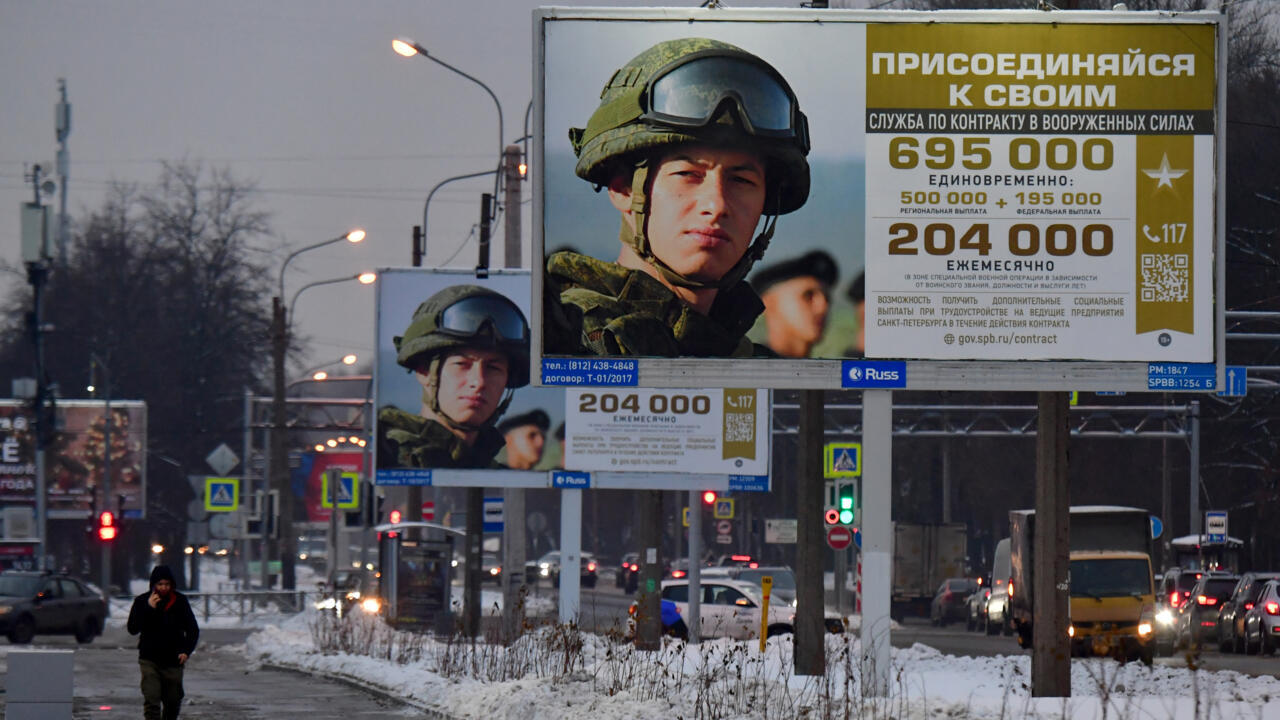
The people signing contracts now roughly understand where they’re headed — but greed or genuine desperation pushes them forward anyway. And given the pace at which the non-military part of Russia’s economy is collapsing, a military contract is the only fast route to serious earnings. So it still outweighs the enormous risk to life and limb.
Serfdom With a Salary
Anyone with any familiarity with the Russian army knows that officers in the Soviet and Russian military have always treated soldiers as their personal serfs. Combine that tradition with paid service, and you get a “blood and money economy”. A comprehensive system of extortion and racketeering, pumping state payments meant for contract soldiers into the pockets and accounts of career officers. For those who hold power over personnel, the personnel exists to be “slaughtered or sheared” — and that’s exactly what happens, on an industrial scale.
One of the magazine’s sources described signing his contract in Moscow — because Moscow’s signing bonuses are higher than in his home region. He also had a personal incentive: the alternative was real prison time for drug possession. When he arrived at his unit, the commanding officer greeted the recruits with an “encouraging” speech. He told them that twelve previous rotations of the unit were already dead and buried, and that this one — the thirteenth — would soon join them in Ukrainian black soil.
The next day, the same officer explained the simple rules to the slightly stunned newcomers. Life at the front can be purchased — “it’s not a question of luck, it’s a question of solvency.” As a result, 75% of the contract payment immediately went toward buying the commander’s goodwill and acquiring the gear needed to survive. In other words, the large sum a new Russian contract soldier receives gets redistributed almost from day one. If he decides that money belongs to him personally, he’s effectively signed his own death warrant. He executed in the very first assault, with his money ending up in the officers’ hands regardless, whether he dies by drone or otherwise.
How the Scheme Works
The whole thing runs on a banal, long-established template. The Economist holds a specific list of Russian officers running extortion operations — two of their call signs appear in the article. The magazine documents various forms of extortion and bribery. One Russian officer had soldiers build him a house near Luhansk — with the men personally purchasing all the building materials. A common practice, according to multiple sources: commanders steal money from the bank accounts of killed assault troops. Before sending men into an attack, they demand the soldiers hand over their bank cards along with their PIN codes for “safekeeping”.
Ukrainians have seen countless examples of extrajudicial executions by Russian forces — our drones have filmed many of them. These usually appear to be punishments for refusing to assault or for retreating. But the reality is often simpler and more mercenary. The real capital offense isn’t cowardice — it’s financial insubordination.
A mother told that her son was tortured and shot for refusing to share his injury payment with an officer.
A woman named Olena said her husband was shot for attempting to file a complaint about the extortionists with the military prosecutor’s office.
If the fact of the execution reaches higher command, the explanation is straightforward: the man was a deserter, or refused an assault order. That explanation satisfies the Russian higher command completely. The contract soldier gets written off like a broken stapler in an office supply room.
Why This Matters Beyond Ukraine
For Ukrainians, this publication contains nothing new. But material like this, published in major Western outlets, serves a crucial purpose. It brings the true nature of the Rotten Federation directly to Western readers. If this is how they treat their own citizens — their own soldiers — imagine what russian contract soldiers would do on the territory of Poland, Latvia, or France, if it ever came to that. Perhaps someone reading this will remember the name “Bucha” — a name that European and American audiences have nearly forgotten.
¹SVO – abbreviation of “Spetsialnaya Voennaya Operatsiya” (“special military operation”). Since 2022, this is the euphemism used by Orcs to describe their full-scale war against Ukraine.
²Orcs – a common term for Russians who support or participate in the armed aggression against Ukraine. Dehumanizing? Yes. Accurate? Also yes.
Related posts:

Will Russia Respect the Energy Truce?
It’s long been known that any war proceeds according to its own, long and well-known rules. Therefore, trying to do something while ignoring these rules, you’ll definitely get [...]
December 6 Massive Strike: 653 Drones, 51 Missiles Hit Ukraine
As everyone already knows, Donnie received the FIFA prize “for peace” and a golden boot, as a sign of exactly how he achieves such impressive results. And just [...]