
Ukraine Delivered Repeated Strikes on Primorsk and Ust-Luga
No filters. Just war as it is. Reader-supported.
Support →
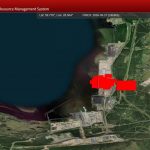
This night, St. Petersburg’s outskirts somewhat resembled Brazil during carnival. Mass of fires, loud sounds, and incendiary pictures were present. As we remember, this week Ukraine’s Defense Forces delivered strikes on local oil transshipment ports. This night Good Birds¹ executed repeated strikes on Primorsk and Ust-Luga. Probably to consolidate success and make it harder for Orcs² to report about resuming oil loading. At minimum, satellites showed numerous fire sources at both these locations.
Meanwhile, a quite reasonable question arose in enemy publics: what will happen next night? After all, if such a festival of fires continues some more time, the only thing these ports will be good for is decorations for action films. Again, enemy publics write that even those with good hearing and decent vision somehow didn’t notice air defense work. In other words, from the moment of the first strike on Primorsk port infrastructure, they still haven’t managed to transfer something there from available anti-aircraft means. This suggests that for such exercises you already need to undress Valdai and/or Moscow.
Where Was the Baltic Fleet During All This?
Behind all these events looms a quite concrete and extremely relevant question that either remained outside attention or Orcs fear to pose to their masters. This question comes from the geography of places where events unfold — the Baltic Sea coast, more precisely the Gulf of Finland. In this place, in just a few days, Primorsk and Ust-Luga ports received two powerful air strikes each, and Vyborg port received one strike. In other words, less than a week saw five strikes on ports in this location.
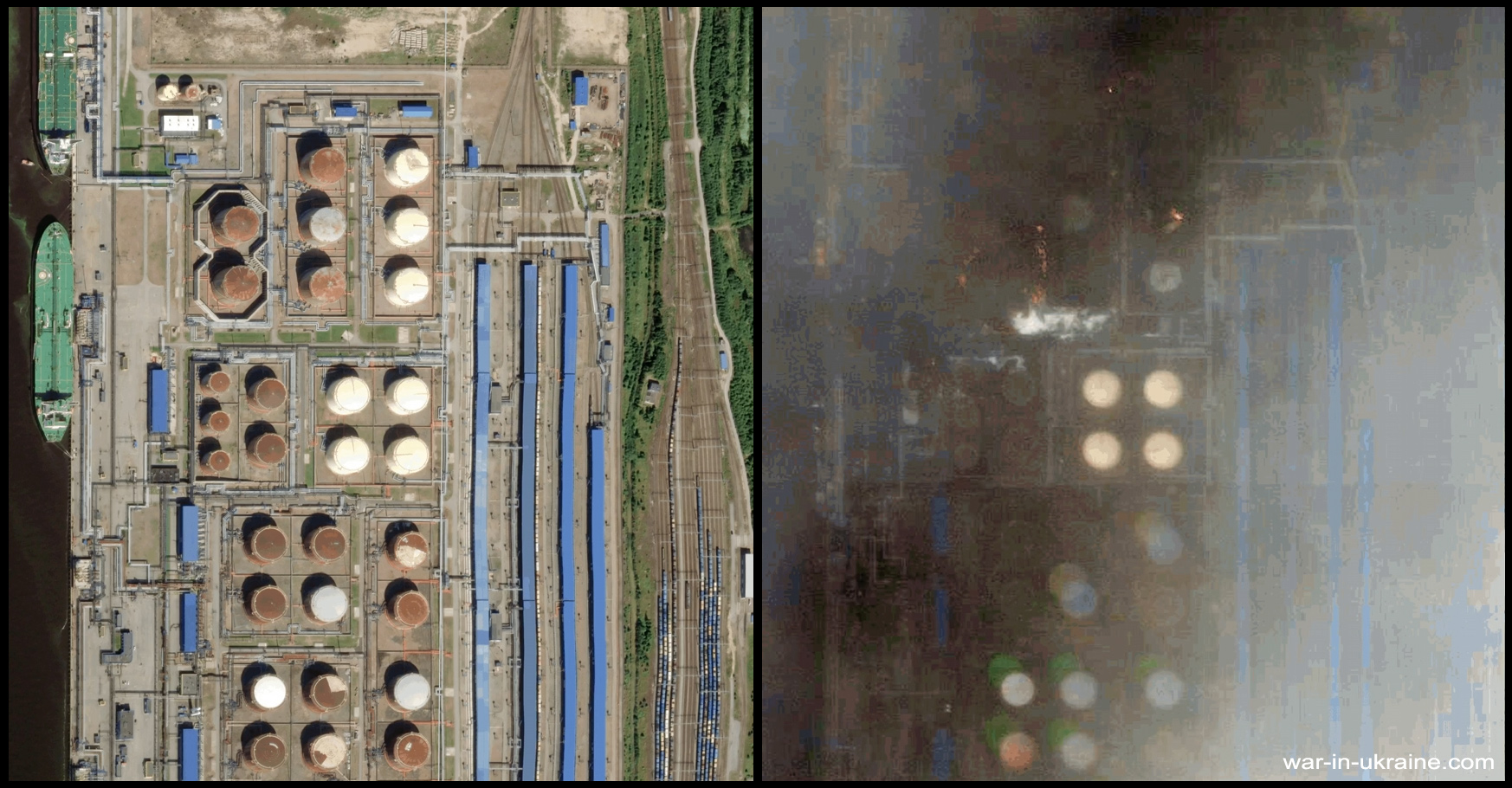
Now let’s simply turn to world practice and determine in whose zone of military responsibility are seaports? Practically without doubt they are in the responsibility zone of naval forces. In this case, the Rabid Federation’s Baltic Fleet. After all, the fleet wasn’t created only to sail beautifully before leaders at parades but to perform its regular functions. First of all, the fleet is obliged to ensure coverage of all coastal infrastructure, primarily its own ports. Only secondarily does it ensure sea communications security or perform some offensive functions. But first and foremost, coastal zone defense lies on it.
In the fleet’s responsibility zone, besides its own base and other coastal objects of military or dual purpose, are other strategic objects. Therefore precisely the fleet is obliged to ensure port coverage and all the more so shipyards where military vessels get built. There can be no other opinions in principle. When talk goes about air defense that didn’t turn up at the event location, probably you need to keep in mind not Pantsirs, Buks, and Tors, but first of all those anti-aircraft means that exist on Baltic Fleet ships. Over these few days of port infrastructure beating, ships could have pulled up from any place in the Baltic.
But as visible, nothing similar happened. Baltic Fleet ships didn’t arrive at the fight location at all. This is the Rotten Federation’s smallest fleet and according to open data, it has about 75 ships including two submarines. In modern fleet scale, this isn’t that much. But to cover three ports, especially ones located several dozen kilometers from each other, this should be more than sufficient.
Why Modern Air Defense Systems Failed Completely
Because open sources talk about the fleet having frigates, corvettes, and boats in armament, you can confidently say at minimum most ships or even all of them have short-range and probably medium-range air defense means in armament. Put simply, these are precisely those means capable of working on low-flying slow targets. However, the fleet didn’t appear at the fight location and as a consequence, it didn’t perform its main function — defending its own shore. If regarding ground air defense means you can talk about them being removed and transferred somewhere, for example to temporarily occupied Crimea, this version absolutely doesn’t fit maritime platforms.
But if ships after the first strike on Primorsk port weren’t deployed for some technical reason, after the strike on Ust-Luga they were obliged to stand in defensive position. But if a third strike passed too, nothing similar happened this time either. In such case, this must have some explanation of its own. Even taking into account the fleet command’s mediocrity and mindlessness, in this case this isn’t sufficient for satisfactory explanation. Therefore, reasons have different nature. We have our own version for explaining such state of affairs. It can clarify everything, though doesn’t claim to be indisputable.
Our version relies on two history blocks: ancient and already newest. So, the Baltic Fleet has ancient history, most of which consists of disgrace or simply indecent events. Regarding disgrace, it’s sufficient to look at how this fleet acted during two world wars. Not having serious maritime opponent, Baltic Fleet sailors performed not only not a single sea battle but didn’t demonstrate a single raid. Instead, they showed escape master classes.
The Black Sea Fleet Precedent
The second block is newest history, but already of the Black Sea Fleet. It too has stable traditions of running and hiding. But after full-scale invasion into Ukraine, hiding doesn’t particularly work out for it. As result, half the combat composition of the fleet that entered war got either destroyed or seriously damaged. In our case this matters because precisely in the Black Sea, Orc fleet tried to perform its functions — for example, ensuring air defense in the operational area or in ports. What came of this, cruiser “Moskva” knows better than others, because it first started aqua-disco with crabs.
Proceeding from everything described above, you can conclude that despite fairy tales Orcs so love to tell about their Anala Govnet³ weapons, they themselves already realized and accepted reality. Reality is that their air defense systems absolutely don’t fit modern war conditions. Ships banally can’t repel attack on themselves. Putting them to defend the same Ust-Luga port is futile and dangerous.
We all saw hundreds of videos of hitting enemy ground air defense means and know what consequences look like. In the most peak case, SAM system missiles detonate and equipment parts lie hundreds of meters around. But we know exactly that if not for video from surveillance cameras of the drones themselves, Orcs would never admit hitting their SAM system. If our military announced hitting a target without video recording, Orcs would prove it’s fake and nobody hit anywhere.
Why Baltic Fleet Watches in Silent Sadness
With a ship, different matter. If its SAM system missiles detonate, as happened on cruiser “Moskva”, at minimum this will be a blown-apart hull impossible to hide. More likely, the ship simply sinks, and this too can’t be hidden. After we cut down the Black Sea Fleet, the Orcs cannot afford to lose the Baltic one. Precisely therefore, in our opinion, the Baltic Fleet watches the repeated strikes on Primorsk and Ust-Luga with silent sadness.
¹Good Birds – slang for strike drones. Why “good”? Because they bring “warmth and light” to enemy military factories, ammunition depots, and oil refineries. Sarcastic? Of course. Effective? Even more so.
²Orcs – a common term for Russians who support or participate in the armed aggression against Ukraine. Dehumanizing? Yes. Accurate? Also yes.
³Anala Govnet – wordplay in Russian language: “analagov net” / “anala govnet”. Depending on spacing, it can mean either “no analogs” or “anal sex with shit”. Used ironically for Orc things that never live up to the hype. Example: Lada cars.
Related posts:

Drone Strike on Ust-Luga: Oil Terminal Fire and Ships Hit in Vyborg
Let’s figure out what connects the drone strike on Ust-Luga with Ukraine’s Security Service. What we watched yesterday — a massive aerial attack on Ukrainian territory — several [...]
General Staff Confirms Strike on Primorsk Oil Terminal
The strike on Primorsk oil terminal made it into the General Staff’s official report by midday — unusually fast. Normally, there’s a gap between a high-profile strike and [...]