

Russian Z-Channels: Not Quite Panic Yet — But Hope Is Gone
The unfiltered truth from Ukrainian soldiers and volunteers. Just war as it is. Reader-supported.
Support →

Lately, scrolling through Russian Z-channels gives a distinct impression that panic has set in — and the only variable is how well each channel manages to hide it. Some avoid the topic entirely, offering vague remarks about the front being “difficult” without specifics. We’ve been waiting for a moment when one of the flagship channels would speak plainly — and that moment has arrived.
For those who prefer to protect their sanity rather than watch Russian propaganda nonsense, here’s some context. In 2022, dozens of these channels built their audiences by commenting on the war in “Hooray! Victory!” mode. Nobody among the Orcs¹ doubted that their “special military operation” would end in Ukraine’s swift destruction. They poured all their hatred of everything non-Russian into their content. Then the war dragged on, and talk of a quick victory turned into “we’re not fighting at full strength yet — but once the army is allowed to use everything, we’ll win for sure”.
From Blitzkrieg to Attrition — and Now What?
Next the Kremlin clearly signaled a new direction: the war isn’t against Ukraine, it’s against NATO. Only mercenaries fight against Russia. For a while, Russian Z-channels published, as if from a template, “frontline soldier stories” about hearing nothing but Polish, Lithuanian, German, and occasional English on the radio — never Ukrainian. The point was to explain to their audience why there were no major victories and why the mounting losses could no longer be hidden.
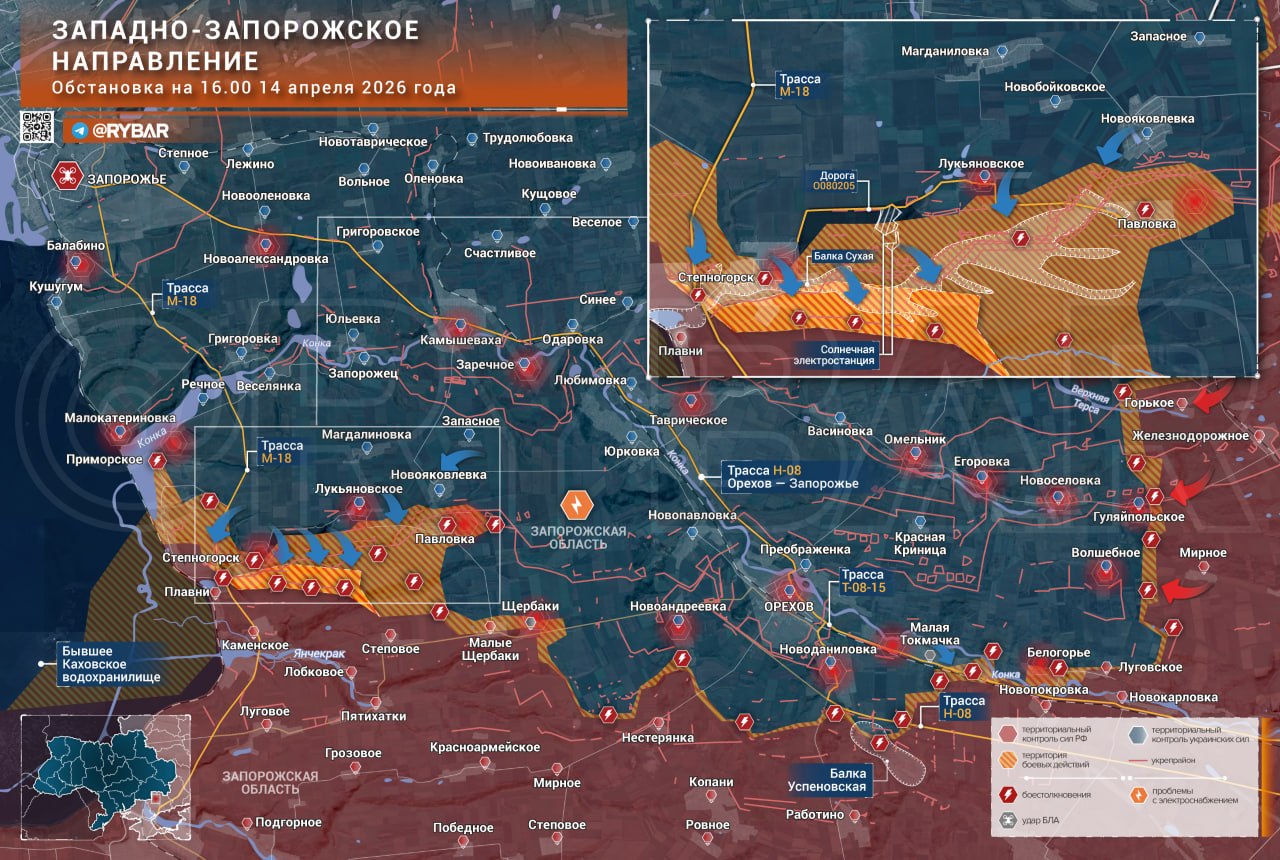
The tone simply shifted from blitzkrieg to resource war. And they ran with that framing for over two years — until it became a dead end, because their own resources started running out. The front-line updates grew steadily grimmer. Anyone who monitors Russian propaganda knows the channel names: “Dva Mayora” or “Rybar”. That last one is known for its distinctive, widely recognized infographics — maps of the front line with directional arrows. Right now, those maps look bleak. The blue arrows marking Ukrainian strikes keep multiplying.
These channels — and most other self-important sources — now have to acknowledge that Ukraine’s Armed Forces have started hitting back hard and tearing through Russian defenses. The breakthroughs are still shallow — two to three kilometers, sometimes ten — but they keep coming. Several Russian Z-channels note that the AFU adopted Russia’s own infiltration tactics, then refined them to lethal effect, backing small groups with massive drone support on the ground and in the air.
When the Maps Tell the Story
Rybar deserves special mention because visual information lands faster and deeper. Those maps once promised a successful military campaign. Now they show, if not the opposite, then a clear turn in a different direction. The channels themselves aim their content at domestic Russian audiences — and those hundreds of thousands of subscribers now see and read things they never expected to find, from Russian sources. On top of that, they see their own cemeteries. They know how many acquaintances have died in a war that was supposed to end in victory three years ago.
Over the past few months, Russian Z-channels have increasingly covered losses from deep-strike and especially mid-strike attacks — the kind Ukraine’s Defense Forces are applying with growing intensity. They’ve mentioned this before, but always carefully, without conclusions, to avoid prison under laws against “discrediting” the Russian military. Now something more explicit has appeared — a long post on “Kontorskaya Tabakerka”, a flagship Kremlin propaganda channel. The post cleared FSB review, which makes the numbers and the barely concealed panic between the lines all the more revealing:
Many war correspondents have noted how dramatically the situation has changed with the enemy’s new AI-guided drones. To summarize: we have genuinely and rapidly lost the so-called middle-strike domain. The enemy can now destroy our logistics with impunity at depths of up to 300 kilometers. Why does this matter? Everyone in Moscow expects breakthroughs at the front. But how to achieve them with compromised logistics — that’s the question. Russian equipment is barely used at the front anymore. The infiltration tactic followed by personnel accumulation is producing extremely limited results. Even captured trenches need someone to hold them.
Military personnel are voicing growing complaints against the Ministry of Defense, Andrei Belousov, and his Rubikon project. How did we end up losing — despite having a cutting-edge center with a billion-ruble budget? Where are the promised battlefield robots? They exist in very small numbers. So the money was allocated, but there are no results? An explanation would be welcome. Or at least an internal audit. Otherwise, any summer offensive campaign is simply out of the question.
What This Admission Actually Means
The enemy’s own acknowledgment that logistics problems now extend 300 kilometers deep is significant. That means Ukraine’s strikes on Russian supply chains already reach halfway between the Ukrainian border and Moscow — regularly.
The logic of the Z-channel propagandists is transparent. Blaming the Führer directly isn’t possible yet. But only the blind miss the trend — and propagandists know it. In a few months, they may watch Moscow getting shelled from their own windows, the way Ukrainians have watched Kyiv get shelled for four years. As the “Kontorskaya Tabakerka” quote makes clear, Defense Minister Belousov is being groomed as the designated scapegoat.
This isn’t a system collapse yet. But Russian Z-channels write with bitter irony and a low hum of panic — because they can see that Ukraine also has limited resources, yet moves in the right direction. And the result is a steadily expanding zone of confident strike capability — not just against troops, but deep into logistics.
Remember the stir HIMARS caused when Ukraine could strike accurately at 70–80 kilometers? That range now stretches to 300 — delivered by Ukrainian-made systems, far cheaper than anything in Western arsenals.
¹Orcs – a common term for Russians who support or participate in the armed aggression against Ukraine. Dehumanizing? Yes. Accurate? Also yes.
Related posts:

Z-Bloggers Unhappy with Oreshnik Strike on Ukrainian Garages
Hard to say what exactly the enemy expected from the Oreshnik strike and other means of destruction. However, right before the attack, they had already worked themselves into [...]
Ukrainian Drones in Moscow Changed How Muscovites Think
Yesterday’s Good Birds¹ over Moscow caught the city’s finest completely off guard. And really, why would they worry? They never made a secret of the fact that the [...]