

April 16 Massive Strike: Russia Used S-400 Missiles as Ballistics
The unfiltered truth from Ukrainian soldiers and volunteers. Just war as it is. Reader-supported.
Support →

The April 16 massive strike came in two waves — a combined attack on Ukraine using multiple missile types and strike drones. Kyiv, Dnipro, Kharkiv, and Odesa all took hits. The first wave ran until 10:00 PM on April 15. Russia launched 20 Kh-101 cruise missiles from the Caspian Sea, 1 Iskander-K from the Rostov region, and 361 drones. By 10:00 PM, air defenses intercepted 19 Kh-101s, the Iskander-K, and 349 enemy drones.
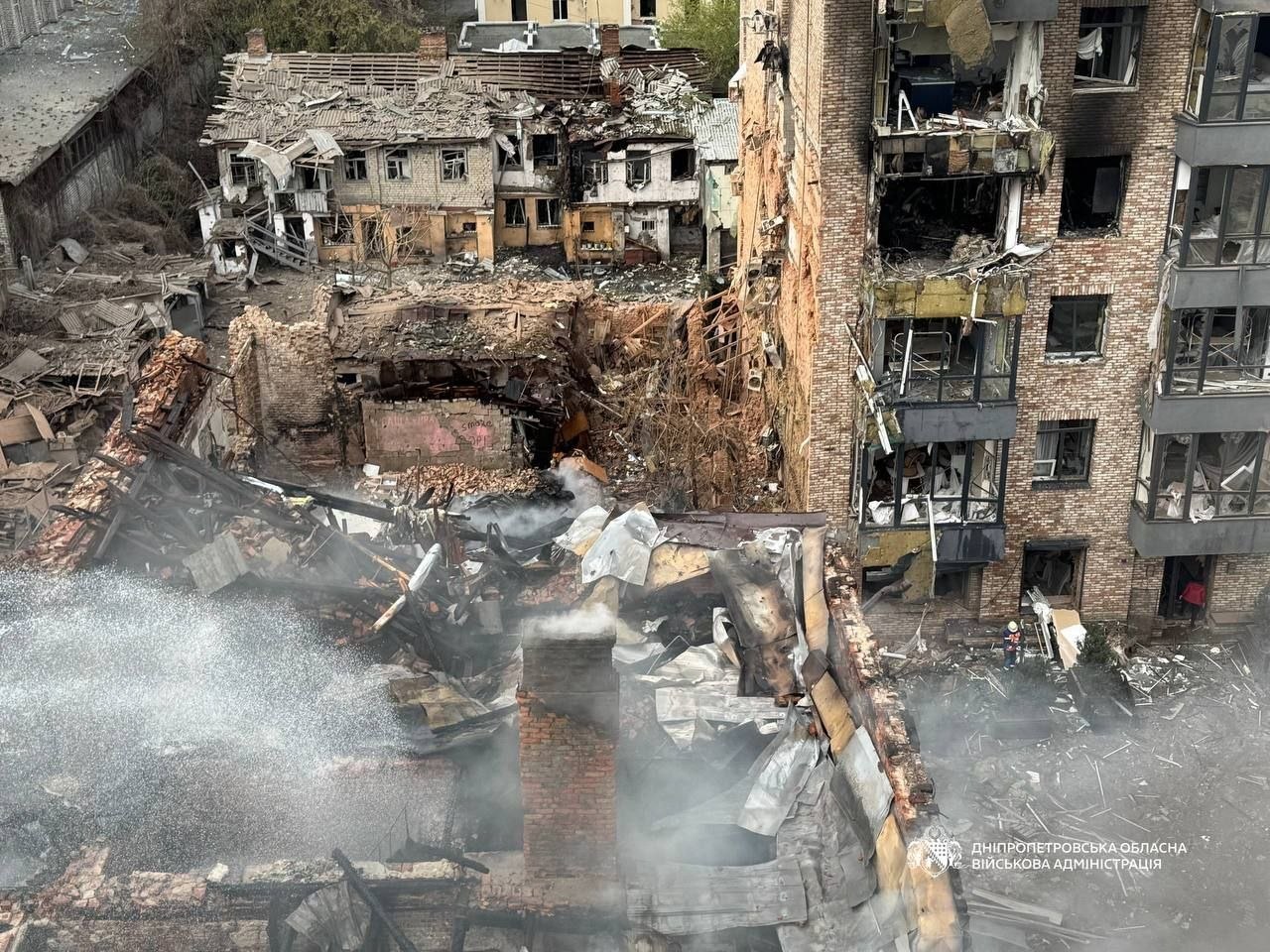
In Dnipro, a school and college dormitory took damage, along with a care home for elderly residents and an eight-story residential building. In Odesa, facade walls and glazing collapsed in at least three apartment blocks, with a dormitory and adjacent buildings also damaged. Kharkiv was also hit, with Shaheds striking residential areas and a courtyard near an apartment building, setting civilian vehicles on fire.
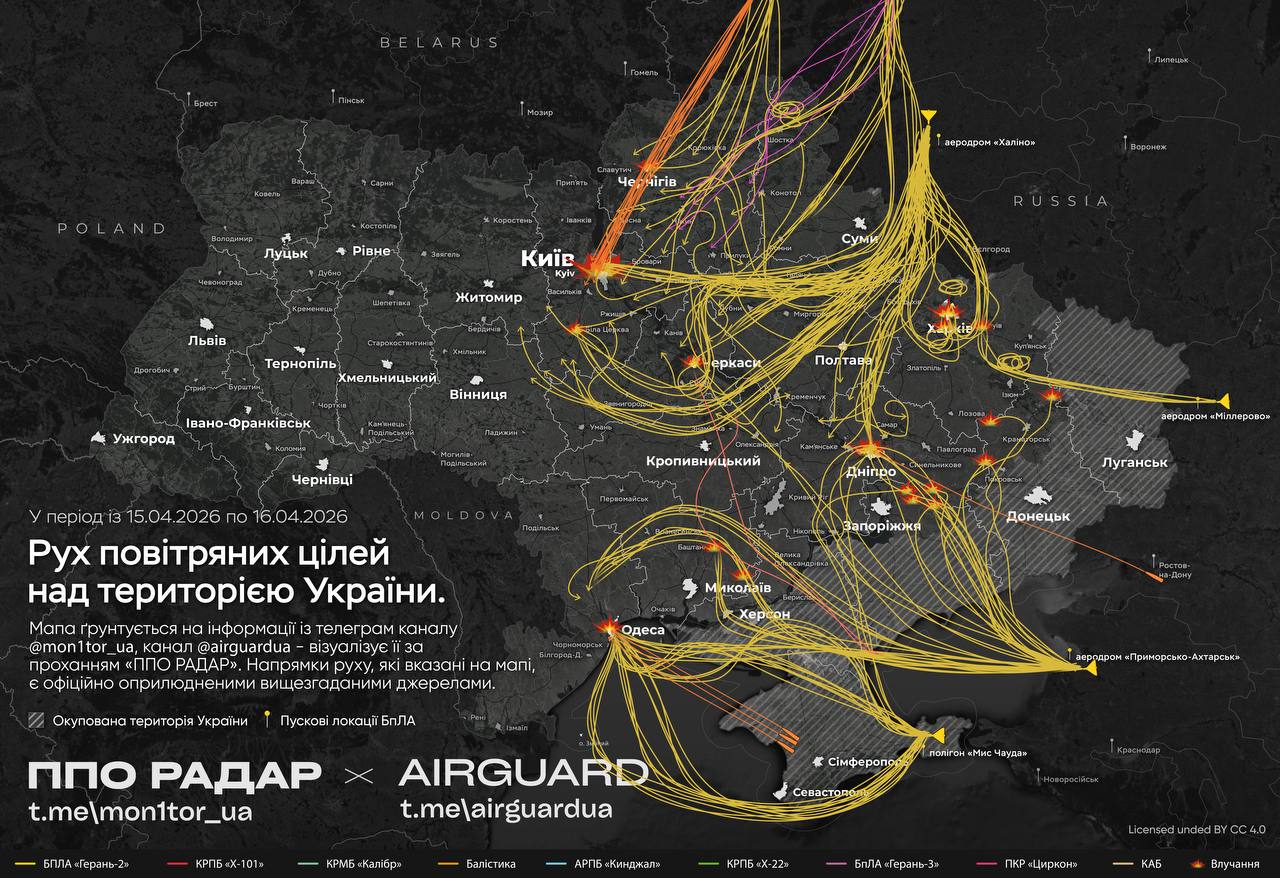
Kyiv took the heaviest damage — a large number of ballistic missiles targeted the capital. In Podilskyi district, not just individual buildings but an entire residential complex suffered damage. At least five high-rise buildings lost all their windows and balcony frames — the blast wave simply tore out windows, doors, furniture, and people. In Obolonskyi district, office spaces, a tire shop, a gas station, a car dealership, and vehicles in parking lots all sustained damage.
Second Wave
Overnight, the second wave hit. Here’s how the figures break down — missiles and drones launched versus intercepted by the Air Force (launched / intercepted):
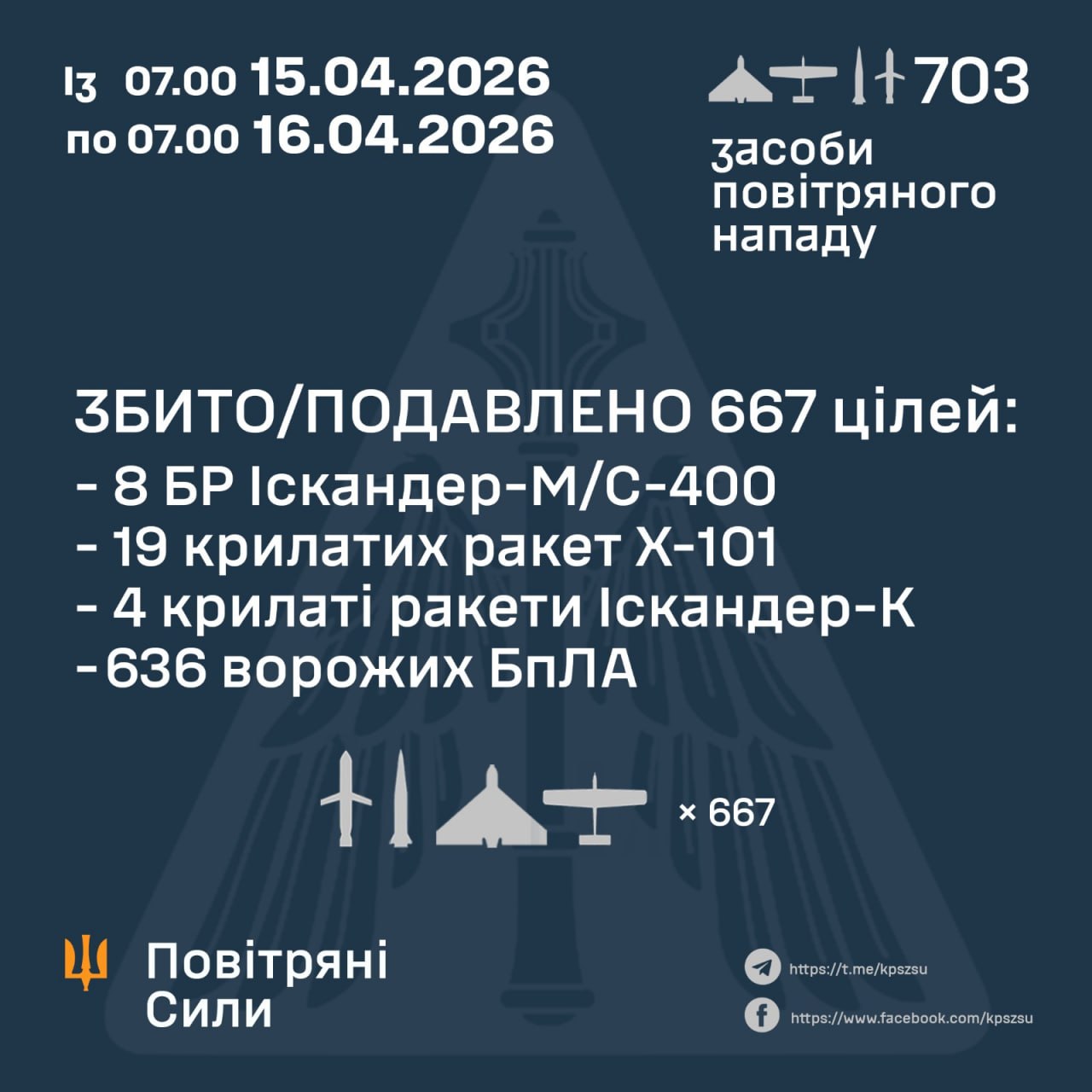
- Ballistic missiles Iskander-M/S-400 — 19 / 8
- Air-launched cruise missiles Kh-101 — 20 / 19
- Ground-launched cruise missiles Iskander-K — 5 / 4
- UAVs Shahed, Herber, Italmas — 659 / 636
Air defense neutralized 667 aerial targets in total. Confirmed hits: 12 missiles and 20 strike UAVs at 26 locations, plus debris from intercepted targets falling at 25 locations. Data on one cruise missile remains under clarification.
As of the morning of April 16: 15 confirmed dead — 4 in Kyiv, 2 in Dnipro, 9 in Odesa — and at least 102 wounded. Among the dead, a 12-year-old child. These figures are not final.
S-400 as a Ballistic Weapon — What It Means
As the infographic shows, Ukraine intercepts cruise missiles at roughly a 95% rate. Ballistic missiles are a much harder problem. Also worth noting: Air Force reports typically specify Iskander-M missiles or their North Korean equivalents, the KN-23. But this time, the report identifies modified surface-to-air missiles from S-400 air defense systems — repurposed as ballistics.
Enemy Telegram channels overflow with reports about air defense missile shortages. The more informed Orcs¹ write that long-range missiles for S-300/400 systems have become genuinely scarce. Their explanation is broadly logical: even before the war, Russian industry struggled to produce these munitions in required quantities. After Ukrainian strikes on supply chain facilities, production capacity shrank further.
GRAU arsenal stockpiles were supposed to serve as the reserve, holding enormous quantities of missiles. But after several of those arsenals went up in flames, the shortage began. The reason this matters: using long-range air defense missiles as ballistics only makes sense out of desperation — specifically, a severe shortage of Iskander-Ms. So if the enemy actually used repurposed S-400 missiles today, that’s evidence the strikes on the Bryansk Kremniy El plant and the Votkinsk missile factory are paying off.
The Preemptive SCALP Strike
Ukraine’s preemptive response to the April 16 massive strike began two days earlier. Ukraine’s General Staff reported that two days ago, a powerful SCALP cruise missile strike hit a Shahed drone staging area near the temporarily occupied Donetsk airport. Since that location has been struck before, the enemy likely keeps only a minimum number of drones on site to avoid losing them in another hit. That means large quantities — enough for a planned massive strike — only arrive when a launch is imminent, giving just enough time to send out several waves before a counter-strike arrives.
Ukrainian military intelligence read those maneuvers and struck preemptively. The choice of a French SCALP missile for this target suggests the drone count there was substantially higher than usual — those missiles don’t get used on minor targets.
The April 16 massive strike points to two things.
First — the Kremlin’s bloodsucker is in a bad way. His lackeys know he loves watching videos of things burning in Ukraine, so this strike almost certainly served as a gift for the bald grandfather. Keep him entertained.
Second — the Orcs can only hit “record mass” with Shaheds. Record numbers of all missile types combined is no longer achievable. Around two dozen air-launched missiles appears to be the limit they can push without risking their antique aircraft. Ballistics are also a problem — hence the repurposed S-400 missiles. And notably, no Kalibr missiles showed up at all. Which is interesting, given that we recently struck the Black Sea Fleet base at Novorossiysk and put a Kalibr-carrying frigate out of action.
Also worth a mention: this time the enemy tried using Herber drones to drop leaflets. Defense Ministry adviser Serhii “Flash” Beskrestnov commented:

These Herbers are dropping leaflets again. God, thank you that the enemy’s propagandists are this stupid and drop such nonsense.
We fully agree with Flash’s assessment of the enemy’s propagandists. And we’d add a rhetorical question of our own.
What exactly is the strategic goal of strikes like this? The Orcs can’t hit military targets — those were either struck back in 2022 or have become unreachable since 2025–2026. So they hit locations with zero military or political value, burning through enormous resources with every strike. The only purpose is to entertain the Kremlin’s wretch. In return, the enemy receives real, deeply felt strikes — against purely military targets, defense industry facilities, and oil infrastructure. That’s the exchange. And it’s not going well for them.
¹Orcs – a common term for Russians who support or participate in the armed aggression against Ukraine. Dehumanizing? Yes. Accurate? Also yes.
Related posts:

Another Russian Terror: Massive Attack on Kyiv on July 6
On the night of July 6, the enemy carried out another massive combined attack on Kyiv. Some of it landed elsewhere too, but the capital bore the main [...]
Lessons from the Massive Attack on Kyiv on July 2
The massive attack on Kyiv on July 2 was predictable even without any inside information. The enemy runs this format regularly — sooner or later it was going [...]