

Another Tuapse Strike: Refinery Burns, Orsk and Perm Join
The unfiltered truth from Ukrainian soldiers and volunteers. Just war as it is. Reader-supported.
Support →
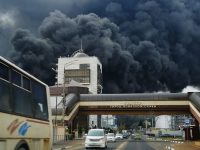
While our site was under a powerful DDoS attack, the Armed Forces delivered another strike on enemy refineries. Daily visits from Good Birds¹ to the enemy already became routine. Yet we believe it’s worth explaining the transition from the “thousand cuts” strategy to complete dismantling of enemy military-industrial facilities. Therefore, another Tuapse strike on April 29 is an excellent example.
Pretty clear fire photos from Tuapse appeared online. They give an idea about the periodicity of strikes on oil infrastructure that our Armed Forces deliver. Actually, two factors require a certain pause between strikes. They’re not connected to enemy air defense or any other countermeasures. It’s about economical spending of valuable ammunition. The same ammunition is needed to organize fire shows in other places. Here’s one of those photos revealing the meaning of this algorithm:
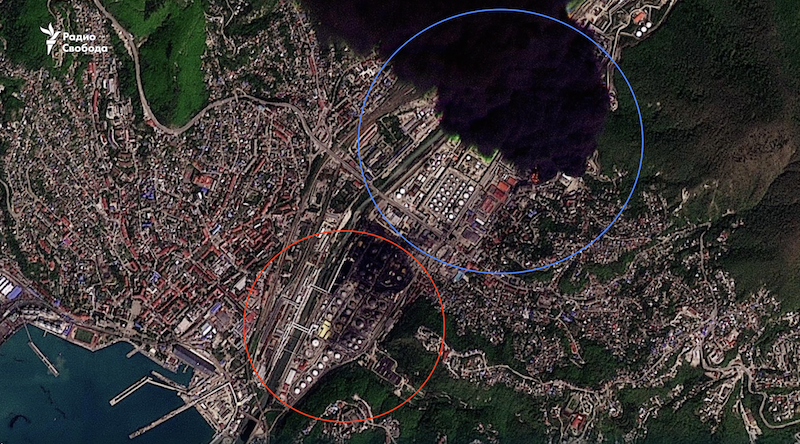
The blue circle marks the reservoir park of Tuapse seaport. Oil products were stored there. These products were no longer listed under the refinery that produced them, but under the port itself. From there they got loaded into tankers. As easy to notice, this location is clearly visible because nothing was burning there at the moment of the photo. You can see perfectly what already burned and what still remains undamaged. Just small additional efforts needed to make the entire reservoir park cease to exist.
The Port Park: Two-Thirds Gone
We all know how the first two strikes played out — they went straight for the port’s reservoir park, and now about two-thirds of it lies wrecked or damaged, effectively taken out of action. What’s left is just a third still untouched, but that will likely get fixed soon enough, because by now it’s pretty clear what exactly needs to be finished off in what used to be a massive tank farm. The refinery, though, is a different story altogether. The first two attacks didn’t touch the plant’s storage tanks at all, but this time they went straight for them.
The photo shows it’s burning pretty well there, but what exactly and how is unclear — the smoke plume covers the entire target location. Accordingly, while smoke still blankets the whole area, we can’t easily pin down targeting coordinates, because no one can tell what’s already gone. And most importantly — the Orcs² themselves have no clue how much is burning there or what exactly went up. At first, they claimed “no less than four tanks” were on fire, but as it kept burning, observers caught at least two explosions and massive bursts of flame, which likely means the neighboring reservoirs are now joining the ones the drones hit directly.
As a result, even on the ground it’s hard to determine how many barrels and which ones exactly are burning in this place. Moreover, while burning continues, it’s quite possible additional reservoirs will ignite, which means no need to waste drones on them. If everything burns so merrily there, additional efforts look excessive for now.
Wait for the Smoke to Clear, Then Strike Again
Local authorities report the only thing they’re trying to do is build earth embankments around the reservoir park so fuel during burning doesn’t pour directly into the city, and set up boom barriers on the river and sea so it doesn’t spread through the water.
All this means nobody can even imagine how many reservoirs will be destroyed after this attack. Only after the fire stops spreading to new tanks and what was burning burns out completely, the smoke will dissipate and it’ll be possible to understand what remained there. That’s exactly what Defense Forces did after attacking the port complex reservoir park. The fire died down, the smoke cleared, satellites captured the damage, and with an updated target map in hand, they set new flight tasks for a repeat strike. Then the same cycle played out again. Once the smoke cleared, they saw that the port complex had already taken most of the damage it could, so they moved on to carving up the refinery’s reservoir park.
So when burning finishes there, a satellite will paint the attack consequences, this data will form the basis for planning the next strike, and there will probably be another Tuapse strike. Paradoxically, while everything burns there and the wind, changing direction, covers the location, Orcs can be confident nothing will arrive during this time. Not because there’s no longer a task to finish everything completely, but simply because nobody wants to waste ammunition on targets that either got destroyed by direct hits or burned down for company.
Orsk and Perm
Meanwhile, Ukrainian Good Birds flew significantly longer distances. We already know the strike hit the refinery in Orsk, in Orenburg oblast. Orcs are already posting photos of smoke coming from the factory’s direction. Sure, it doesn’t look as cinematic as it did in Tuapse, but here’s the key point — sitting fifteen hundred kilometers from the nearest territory under Ukrainian control. The locals probably never expected anything to reach them, let alone just a day after Tuapse.
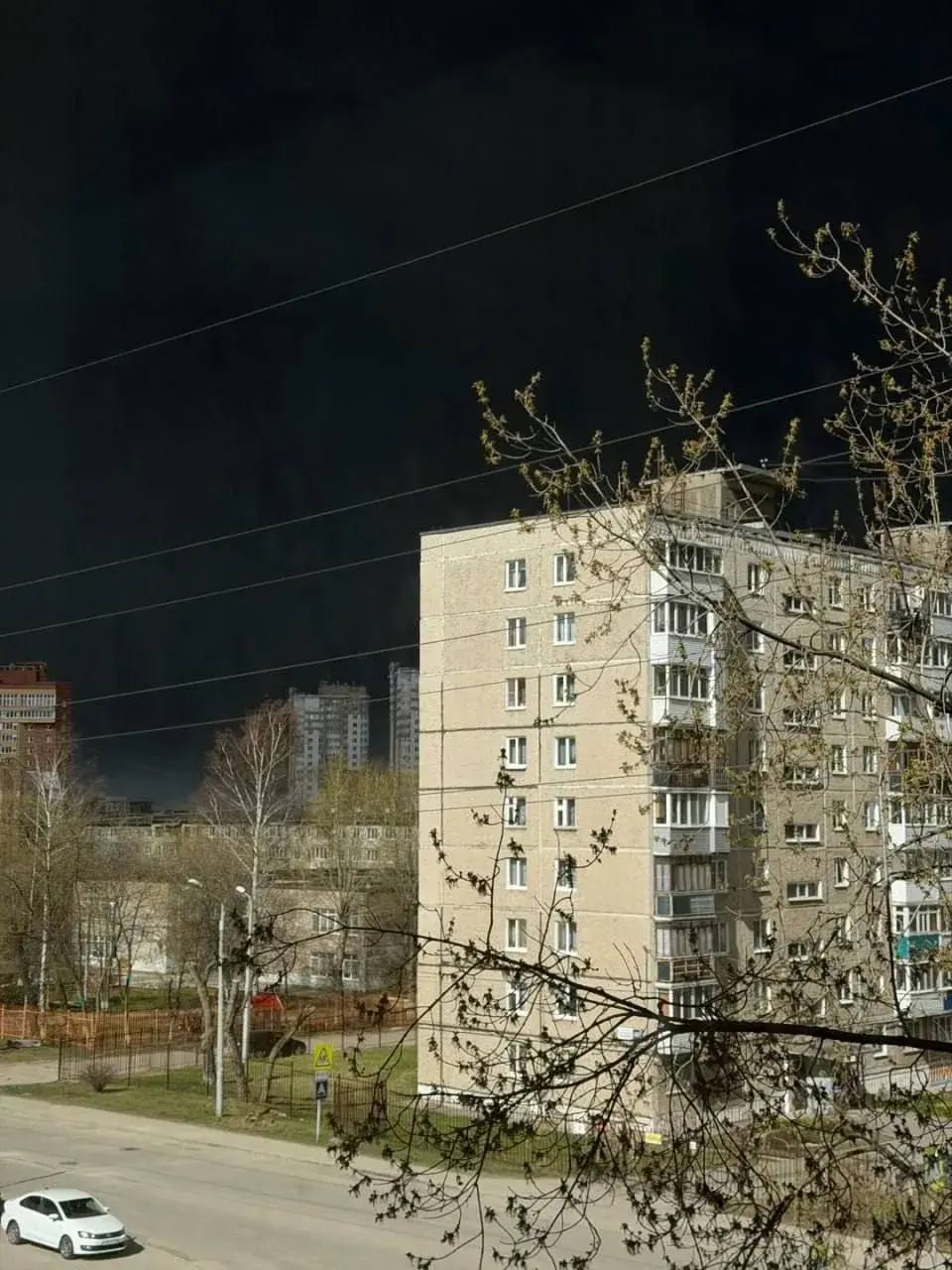
This photo shows another place where Good Birds arrived. This is Perm, located 1,800 kilometers away. The photo was taken during the day, and the sky has this color because of smoke coming from the local Lukoil refinery. As easy to understand, everything here happened much more convincingly than in Orsk, so today they have an idea there, albeit approximate, about how it is now in Tuapse.
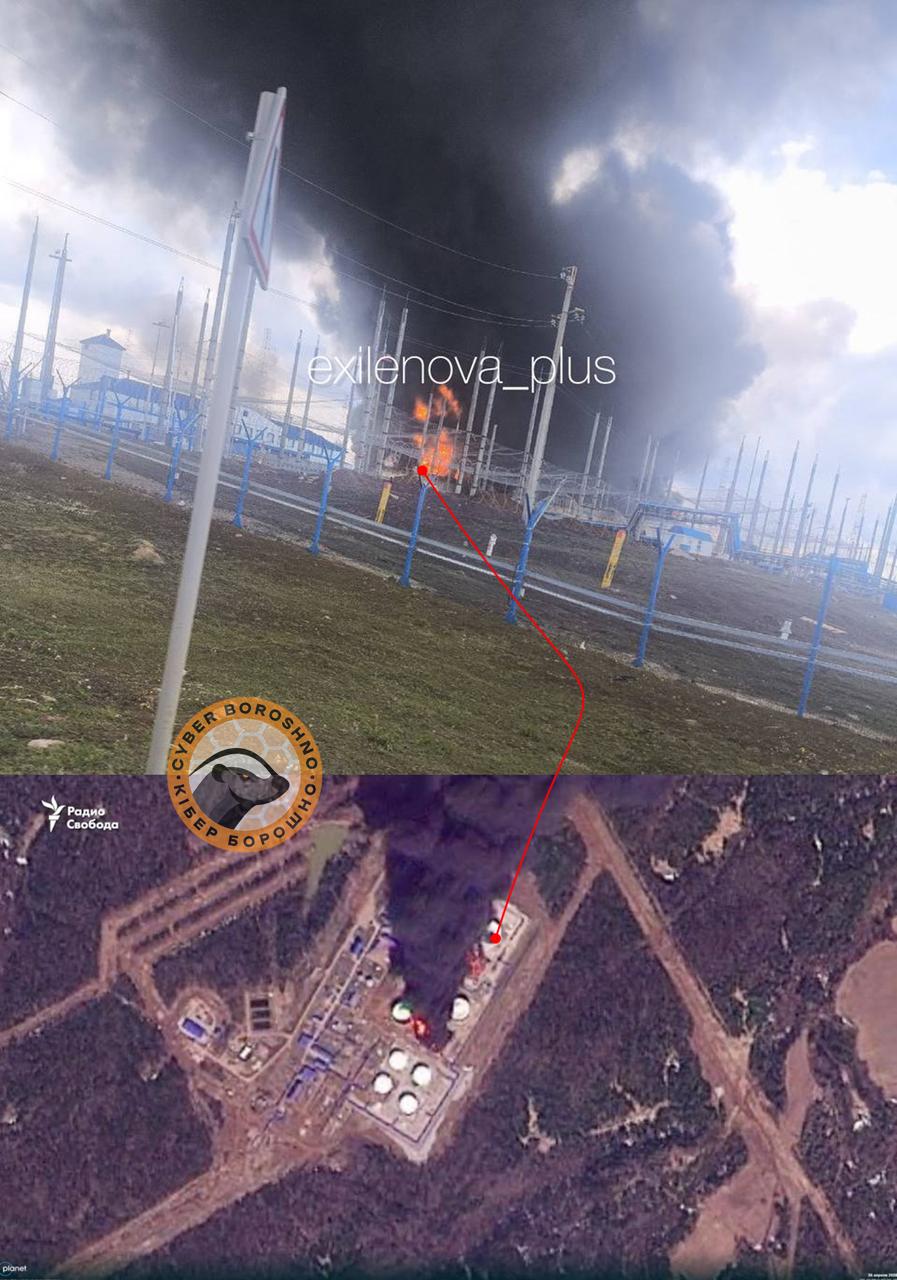
According to the OSINT community CyberBoroshno:
by April 30 a third tank in Perm had fully caught fire and burned out completely. There’s also a chance another tank ignited this morning, but so far no one has locked down 100% visual confirmation with clear geolocation.
Another Tuapse strike demonstrates the new reality for the Rabid Federation. The time when painful but isolated strikes hit oil infrastructure has passed. Now Defense Forces wiping out entire oil clusters so there’s nothing left even to repair. Locals may not like it, but every question about what’s happening should go straight to Pootin, who still wants this war. Because war is exactly like this — there’s no other kind. When you shoot at someone, at that moment someone shoots at you.
¹Good Birds – slang for strike drones. Why “good”? Because they bring “warmth and light” to enemy military factories, ammunition depots, and oil refineries. Sarcastic? Of course. Effective? Even more so.
²Orcs – a common term for Russians who support or participate in the armed aggression against Ukraine. Dehumanizing? Yes. Accurate? Also yes.
Related posts:

Strike on Ryazan Refinery: Ukraine’s Feedback for Yesterday
The Strike on Ryazan Refinery was not Pootin’s first surprise — before the so-called ceasefire, Ukraine’s Defense Forces had already sent him a private message. Not a subtle [...]
Russian Z-Channels on the Eve of the Victory Cult in Moscow 2026
As the May 9 “Victory Mania”¹ celebrations approach, signs of panic keep leaking out of the Kremlin. The closer the Victory Cult in Moscow 2026 gets, the more [...]