

Ukrainian Drones in Moscow Changed How Muscovites Think
The unfiltered truth from Ukrainian soldiers and volunteers. Just war as it is. Reader-supported.
Support →

Yesterday’s Good Birds¹ over Moscow caught the city’s finest completely off guard. And really, why would they worry? They never made a secret of the fact that the war on their TV screens suited them just fine — somewhere out there, Ukrainian cities burn, and you watch it with a beer. But Ukrainian drones in Moscow — drones you can see from your own window, not just flying past but actually striking targets — that is a completely different experience. Four years into the war, the people who considered themselves the center of the world finally got their first taste of war up close.
Outside observers might reach for the Kyiv February 2022 comparison here, but it does not quite hold. When the enemy first struck our cities, it was ballistic missiles, then cruise missiles — and from the very first strikes, they went after heating plants and energy infrastructure. The Shaheds only appeared in October 2022, more than half a year later. Moscow’s experience runs in the opposite direction. The first things to reach the city were drones — not even serial production models, but machines assembled specifically for one mission: get there, and make clear that Ukraine intends to send its own greetings. The warheads were so small that any meaningful damage was physically impossible. Now, however, serial drones are arriving — ones that can not only reach Moscow but actively maneuver through its skies and find the targets they are looking for.
What May 17 Looked Like
Footage from May 17 is already all over the internet. The drones are not flying in straight lines — they are pulling complex maneuvers and, in the end, hitting things. Actual impact moments are less common in the videos, but judging by how the Transneft facility is burning — throwing up an ever-widening column of black smoke — those strikes clearly landed well.
So Moscow’s experience runs backwards compared to ours — but even this much was enough to produce a level of howling that has not been heard in four years of a war they watched from their sofas. For years, the word “war” meant a beer and an evening news segment about Ukrainian cities being hit. Now the beer does not go down so easily, and they are writing things like this:
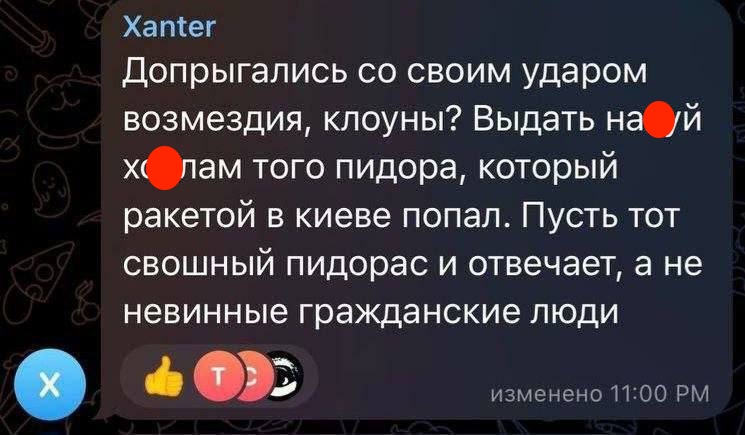
Translation from Russian: the Orc² suggests handing over to Ukrainians the Pidar³ who hit a residential building in Kyiv with a missile on May 14. Let’s call this what it really is. Moscow’s finest are getting their first mild impressions of what war looks like off the TV screen. Residents of Belgorod or Tuapse could explain much more about it. They already know what larger-scale attacks look like and how life changes under such conditions. Moscow still has all of that ahead — and its residents should probably start thinking about how those scenarios tend to unfold.
What the Drones Were Actually Doing
Ukrainian drones in Moscow were not only hitting specific targets. Strikes like these also serve to map the behavior and algorithms of local air defense — and that mapping was happening. The active maneuvering of the Good Birds suggests the drones were deliberately provoking air defense systems into action. Not just to identify individual firing positions, but to observe how those positions interact with each other. They were also collecting exactly the kind of data needed before sending in heavier and far more expensive weapons.
The videos circulating online support this reading. In them, drones fly low and confidently over dense urban development, changing course without any hurry, clearly working toward specific targets — and throughout all of it, there is no visible or audible air defense response at all. Either they punched through the enemy’s defensive perimeter, or that perimeter turned out to be so thin it could not stop a significant portion of the drones.
As a result, Moscow residents got to compare television propaganda with reality firsthand. TV talking heads kept assuring them the city’s sky was heavily protected, but then they watched events unfold from their own windows. The opinion of ordinary orcs is not what matters most here, even when they post drone footage online. What matters is that the same reality check is starting to seriously irritate the wealthier part of the population. Many of them probably told themselves that at least Moscow was safe — a place to hide from whatever was hitting the factories. As it turns out, there is no hiding in Moscow either.
The Mayor Is Not Happy Either
This mood is not limited to the business community. Moscow’s mayor, in his inner circle, exploded over the drone raids on Moscow and Sevastopol — where, according to him, 18 Russian officers were killed. A source in his entourage says the conflict between the mayor and the Russian military has escalated into a sharp confrontation. His words, directly:
Sergei Semyonovich is shocked that Moscow and the Moscow region’s air defense let the strikes through — it was breached. Clearly the air defense systems are insufficient, and the mayor has demanded that the capital’s protection be urgently strengthened. If drones are getting through now, what happens when missile strikes come? The enemy is preparing them — we have that information. All of Moscow is at risk. The military responded inadequately and aggressively. They said that protecting the capital is supposedly hurting other regions. And that overnight, due to a lack of air defense in Sevastopol, our servicemen were killed. Sergei Semyonovich is upset with that response and will be addressing Vladimir Vladimirovich with a request to do something.
Say what you want about Sobyanin, but he is raising logical points here. Drones are the easiest possible target for air defense systems. Stopping a mass cruise missile strike is incomparably harder, and we know this from our own experience with strikes on Kyiv. As for ballistic missiles, the orcs’ air defense has never had the chance to demonstrate its real capabilities against ballistic missiles. But judging by the track record of other Russian weapons systems, reality and propaganda are usually two very different things.
The Propaganda Is Struggling
Meanwhile, orc propaganda is working overtime to prevent the Moscow attack from becoming the top story. By midday, however, some enemy media reported that close to a thousand Ukrainian drones in Moscow and the surrounding region had been launched overnight. Their own press also noticed something worth quoting directly:
The largest Ukrainian drone strike on the Moscow region since the start of the war, which took place on the night of May 17, received minimal coverage on federal television channels… On Channel One, Rossiya-1, and NTV, anchors spent about a minute on the topic, presenting it as something that had just happened — despite having had plenty of time to prepare full-length segments. Instead of a detailed account of the strike’s consequences, the broadcast shifted focus to Russia’s “retaliatory actions”. The Channel One noon bulletin reported that Russia was “pounding military targets in Ukraine’s rear areas”. “AFU infrastructure in flames”, read the opening chyron against the caption “Response to the attacks”.
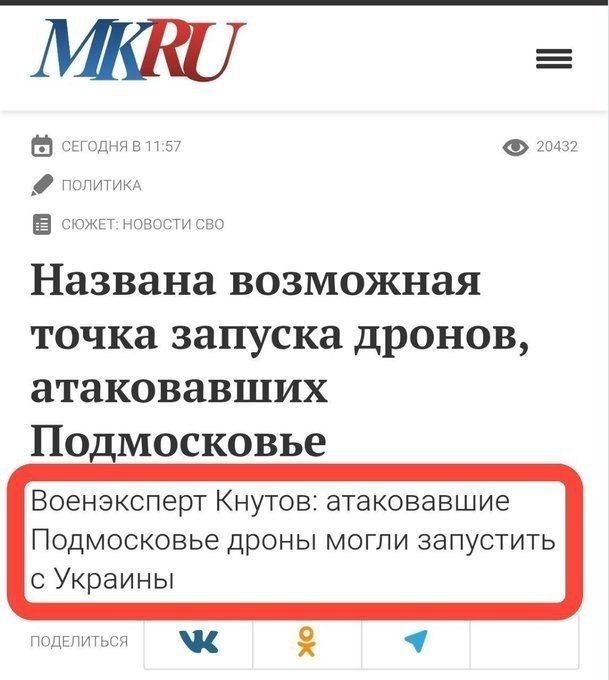
There is also an interesting shift in rhetoric around the drones’ route. Not long ago, leading enemy media were claiming Ukrainian drones were entering Russia from the Baltic states. Now Moskovsky Komsomolets — in the top ten of enemy news sites — is writing about launches from Ukraine:
The Fairy Tale Is Over
So now it is clear to everyone: the night before last, the legend of the impenetrable Moscow air defense district came to an end. Moscow residents watched the destruction of something they had believed in wholeheartedly. And unlike previous incidents, this time they watched it happen right outside their windows.. They saw not only Ukrainian drones in Moscow itself, but also their own air defense in action. And that upset them far more than watching the Good Birds fly past. In some areas, the air defense did not respond at all. In others, residents clearly saw missiles being launched that either hit nothing — or hit their own buildings.
¹Good Birds – slang for strike drones. Why “good”? Because they bring “warmth and light” to enemy military factories, ammunition depots, and oil refineries. Sarcastic? Of course. Effective? Even more so.
²Orcs – a common term for Russians who support or participate in the armed aggression against Ukraine. Dehumanizing? Yes. Accurate? Also yes.
³Pidar (pronounced [ˈpʲidɐr] or “PEE-dar”, stress on the first syllable) – Ukrainian military slang for a Russian service member. In radio communications, the word “Pidar” sounds shorter and clearer than “Enemy” especially under EW.
Related posts:

Attack on the Tyumen Refinery: Distance Matters More Than the Hit
On the morning of June 20, Ukraine drones pulled off an attack on the Tyumen refinery — right in the oil and gas capital of the Rabid Federation, [...]
To Light a Fire in Moscow: The Song Came True
Even before today’s fire in Moscow, Orc¹ moods had been getting noticeably worse, especially after the strike on the Moscow refinery. The strike on the Kapotnya plant hit [...]