

May 14 Massive Combined Strike — It Never Really Stopped
The unfiltered truth from Ukrainian soldiers and volunteers. Just war as it is. Reader-supported.
Support →

Exactly one hour passed since the air raid alert ended. That alert marked the end of the longest combined attack the enemy has wanted to pull off for a long time but kept failing to execute for very specific reasons. The May 14 massive combined strike lasted more than 24 hours, so it makes sense to sit down and examine what just happened. The numbers matter, but their meaning matters too. And those meanings go in several directions at once. Still, let’s start with the numbers.
The Air Force reported on the main phase of the attack, which ran from 6:00 p.m. Wednesday through 8:43 a.m. Thursday. It looked like this:
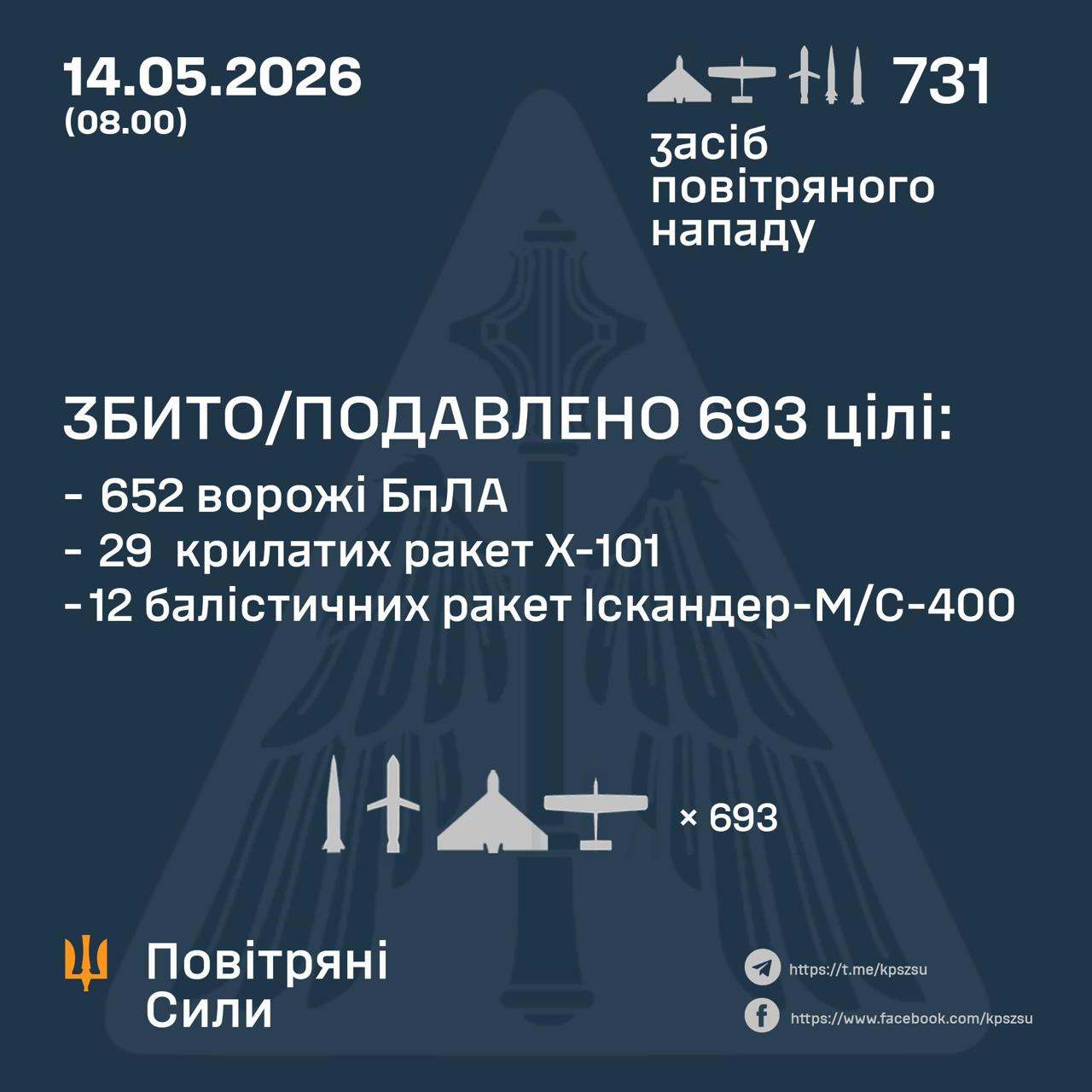
The weapons the enemy used in this phase were combined, and according to Defense Forces data published hot off the press (launched / intercepted):
- Aeroballistic missile Kh-47 “Kinzhal” — 3 / 0;
- Ballistic missile Iskander-M class — 18 / 12;
- Air-launched cruise missile Kh-101 — 35 / 29;
- Strike UAVs of various types — 675 / 652;
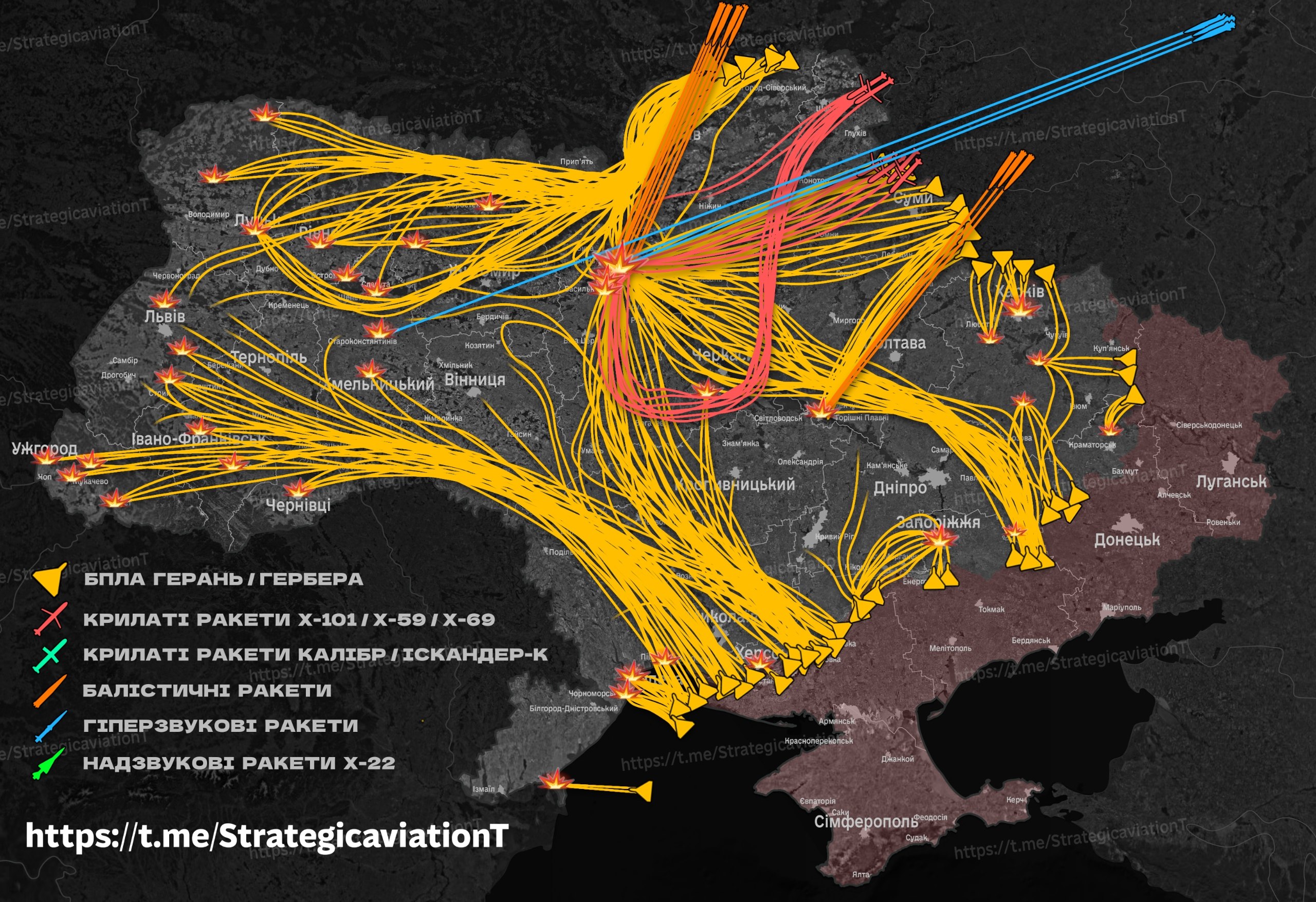
15 missiles and 23 drones got through. In 18 cases, debris from intercepted weapons was recorded. The Kinzhal result needs no explanation — they flew toward Starokostiantyniv, and there is simply nothing there to take them down. That outcome was predictable. Also worth noting: in this phase, the enemy used aeroballistic, ballistic, and cruise missiles exclusively. And if you look at the cruise missile list — it is air-launched only, no sea-based component. Because the Black Sea Fleet is gone, and by various accounts, there are simply no serviceable sea-based cruise missile carriers left.
The Full Count
Now for the overall math. Because the attack ran well over 24 hours and its first phase was drones only, you have to add the 892 drones from that earlier period — 821 of which were shot down — to the numbers above. That brings the drone total to 1,566 launched and 1,473 destroyed. Add the missiles from the main phase and the final tally for the entire operation comes out to 1,619 weapons launched and 1,504 intercepted. That is the math of this attack.
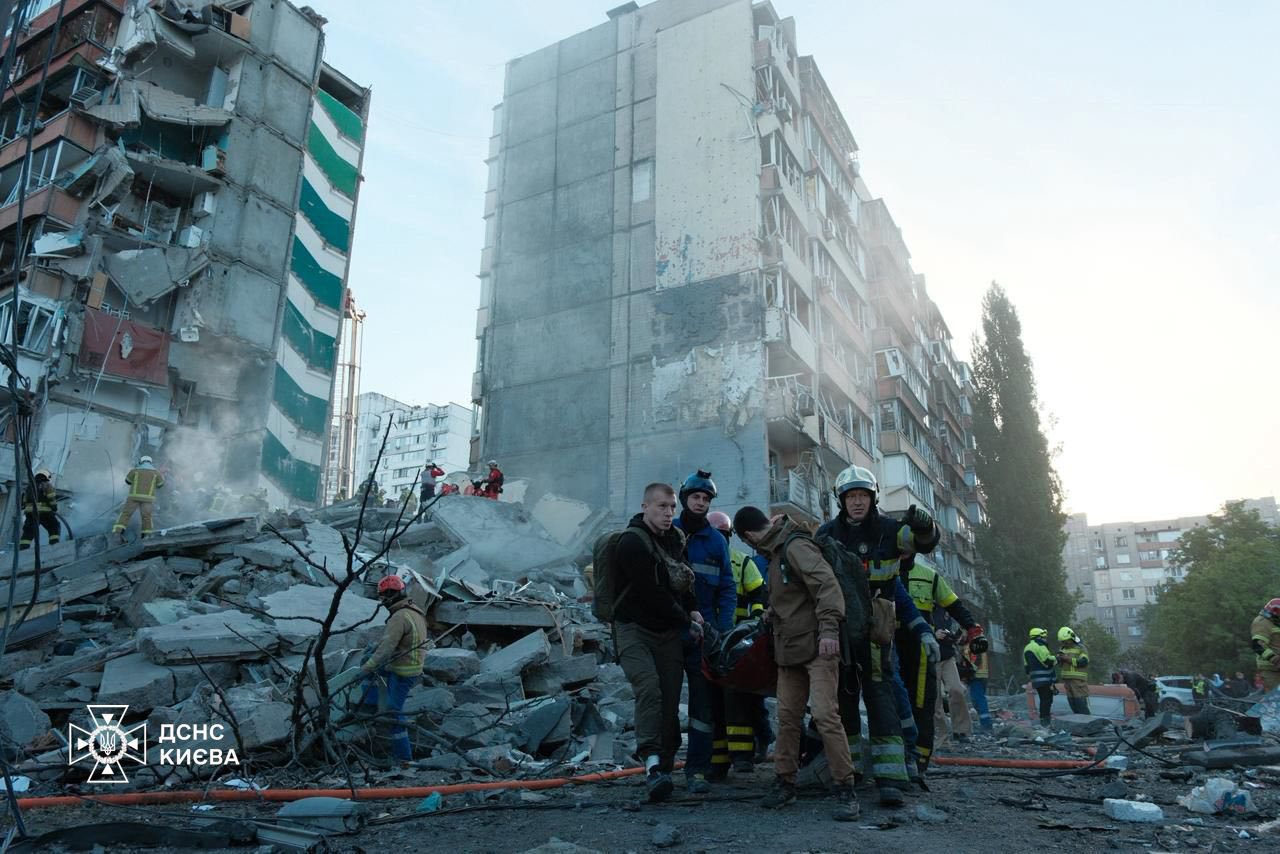
115 weapons were not intercepted, and some of those simply could not be — ballistic and aeroballistic strikes hit locations where interception is physically impossible with what we currently have there. These are still preliminary figures and something may shift, but not significantly. Either way, this attack was beyond any doubt the largest of the war, and the first of this duration.
That is an important detail with its own meaningful implications, which we will get to. But first — having a reasonably clear picture of the scale — let’s talk about how, when, and why. If you break this operation into separate days or phases it almost looks like business as usual, but if you look at it soberly — as a single planned operation from the very beginning — the May 14 massive combined strike falls into place.
Why Now — And Why This Way
The enemy had been planning something like this for a long time. The first credible reports about preparations for something of this scope started surfacing in the second half of December last year. When they did attempt combined mass strikes, none of them went beyond what had already happened before — neither in the sheer number of weapons used nor in the density of heavy items like ballistic missiles.
During that same period, Ukraine’s Defense Forces began actively hitting the assets the enemy relies on to build an operation of this scale. Just recall how regularly the enemy was losing drones and personnel at the launch sites used for Shahed operations. And if you read today’s Air Force report carefully, you will notice that several components the enemy always uses in strikes like this are simply absent.
Take the Kalibr carriers, for instance. They do not appear in the report at all — not because the enemy chose to leave them out, but because Ukraine’s forces have been steadily and methodically cutting down those carriers to the point where there are none left to list. The same goes for a number of locations that always used to appear in reports as Iskander-M launch points. Today the report names Bryansk and Kursk — but Crimea is gone, the Donetsk region is gone, the entire southern sector of their rear zone is gone. Not because the Orcs¹ had a change of heart. Because Ukraine’s Defense Forces removed those assets from the equation.
Old Bombers
We also have no idea what the real technical condition of their strategic aviation fleet looks like right now. We do not know how many aircraft they can realistically send into the air for a strike. The Tu-95s are so old that not every aircraft can simply complete the full route. They have to fly from Ukrainka air base in the Amur region to Engels-2 for missile loading, then relocate to Olenya on the Kola Peninsula, fly to launch positions, fire the missiles, and return all the way back to the Far East. We do not have that data. We can only speculate why the enemy used four of their rare and extremely valuable Tu-160s in this attack. It is entirely possible that the Tu-95 fleet continues to deteriorate, forcing them to burn through the flight hours of aircraft originally meant to threaten the United States strategically.
It is also worth remembering that a previous Good Bird² strike seriously damaged the Votkinsk plant — the facility that produces finished missiles and critical components for missiles other factories assemble later. We do not know the full scale of the production losses, but nobody doubts they happened. Since production can no longer fully replace what the enemy uses or loses in preemptive strikes, the calculation behind a massive operation has to change — they need to spend less to achieve the same result. And if they cannot overwhelm air defense with additional means, interception rates remain roughly where they have always been.
The Ceasefire Did the Enemy a Favor
Here is where the questions become important. And these questions matter not only for this attack, but for the whole situation overall. Even without a military planning background, you can understand that something like this cannot come together in a day or two. Someone has to develop, coordinate, and synchronize every detail across all involved units. Then commanders still need to push the mission down to individual crews. They also need to load the correct targeting data into the weapons. Could they really start planning on May 11 and launch the attack by the evening of May 12? The answer is obvious. They did not plan this on the final day of the “three-day ceasefire for May 9th”.
Which means the missiles, drones, and everything else needed to reach their launch positions quickly and safely — moved by air either directly to the site or to the nearest airfield and then by road to the final location. From the moment that cargo is unloaded from an aircraft, it becomes extremely vulnerable. And stockpiling an unusual volume of munitions at a single location is a problem of its own — you cannot hold that kind of accumulation for long before it becomes a target. Everything has to happen very fast.
The conclusion that follows is straightforward: the enemy had a plan for a mass strike before any talk of a “ceasefire” began. The “ceasefire” itself simply gave the enemy a window to concentrate that volume of munitions without much risk of losing them first.
How Air Defense Performed
There were gaps — that cannot be glossed over. But in the final accounting, Ukraine’s Defense Forces neutralized more than 90% of everything launched during the May 14 massive combined strike. Based on what I personally observed and heard, I would give our air defense the highest possible grade under these circumstances. Put simply: the enemy went all in and used literally everything it had. But even then, it failed to achieve the results an operation of this scale was supposed to deliver.
¹Orcs – a common term for Russians who support or participate in the armed aggression against Ukraine. Dehumanizing? Yes. Accurate? Also yes.
²Good Birds – slang for strike drones. Why “good”? Because they bring “warmth and light” to enemy military factories, ammunition depots, and oil refineries. Sarcastic? Of course. Effective? Even more so.
Related posts:

Another Russian Terror: Massive Attack on Kyiv on July 6
On the night of July 6, the enemy carried out another massive combined attack on Kyiv. Some of it landed elsewhere too, but the capital bore the main [...]
Lessons from the Massive Attack on Kyiv on July 2
The massive attack on Kyiv on July 2 was predictable even without any inside information. The enemy runs this format regularly — sooner or later it was going [...]