

Strikes on Russian Corvettes: Fewer Kalibrs Over Ukraine
The unfiltered truth from Ukrainian soldiers and volunteers. Just war as it is. Reader-supported.
Support →
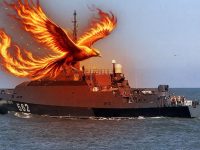
Strikes on Russian military targets continue at their usual pace. But before getting to strikes on Russian corvettes and yesterday’s General Staff reports, one technical detail needs clarification — because machine translation often mangles it. Ukrainian military reports use the word “уражено”, which means “hit” or “damaged”, but not “destroyed”. A target as large as an oil refinery needs several strikes before it is fully gone — something like what has been happening to Tuapse over and over.
Now, buried in that same General Staff report is a detail that sheds real light on how the 24-hour mass attack actually unfolded. Among the listed targets: a corvette and a minesweeper, hit in the area of the Kaspiisk naval base in the northern Caspian Sea. That data only appeared in yesterday’s report, but there is good reason to believe it happened a day earlier — on the night from Wednesday to Thursday. Right when the final missile phase of the aerial attack was beginning.
The Kalibrs That Never Flew
Here is what most likely happened. The enemy tried to move its corvettes out of port to add a sea-launched salvo to the general strike. Between the Caspian Flotilla and what remained of the Black Sea Fleet, the enemy had seven such ships total: Grad Sviyazhsk, Uglich, Veliky Ustyug, Vyshniy Volochek, Grayvoron, Orekhovo-Zuevo, and Ingushetia. One was damaged in summer 2022, another in August 2025.
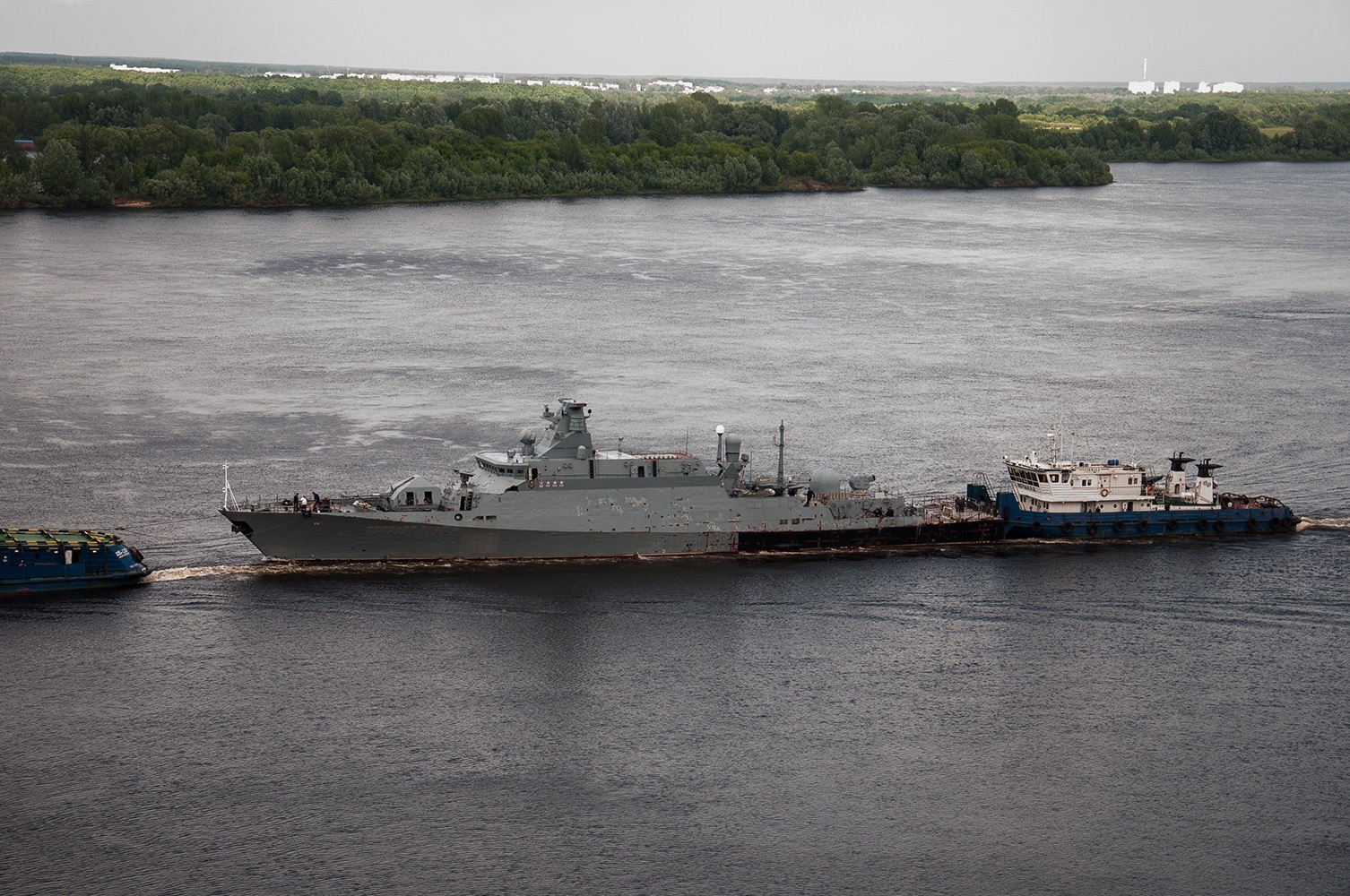
And now this week, another one joins that list. For a mass strike of this scale, the enemy almost certainly planned to use its to add firepower. Each corvette carrying eight Kalibr launch tubes. That would have added 32 to 40 Kalibrs on top of the 56 missiles of various types already fired at Ukraine that night. Something went wrong, however, even with a minesweeper added as escort.
The ships were probably moving out from under the shore-based air defense coverage that protects the base — and walked right into a surprise. The result of that surprise ended up in the General Staff report.
A Ship Is Not a Refinery
There is one detail here worth paying attention to. A ship is not a refinery. An oil storage tank or a military plant sits in one place — you know exactly where it will be when the strike arrives. A warship is different. If you launch drones at ships, there is no guarantee those ships will be in the same position eight hours later.
So the drones likely launched early and loitered in a waiting area. The moment the enemy ships moved beyond the base perimeter, the attack began. For the enemy, that was a clear and brutal signal: Ukraine’s Defense Forces can now lock down not just the remnants of the Black Sea Fleet in Novorossiysk, but the Caspian Flotilla in Kaspiisk as well. The strikes on Russian corvettes, it turns out, reach further than enemy might have expected.
A Rare Aircraft Gone
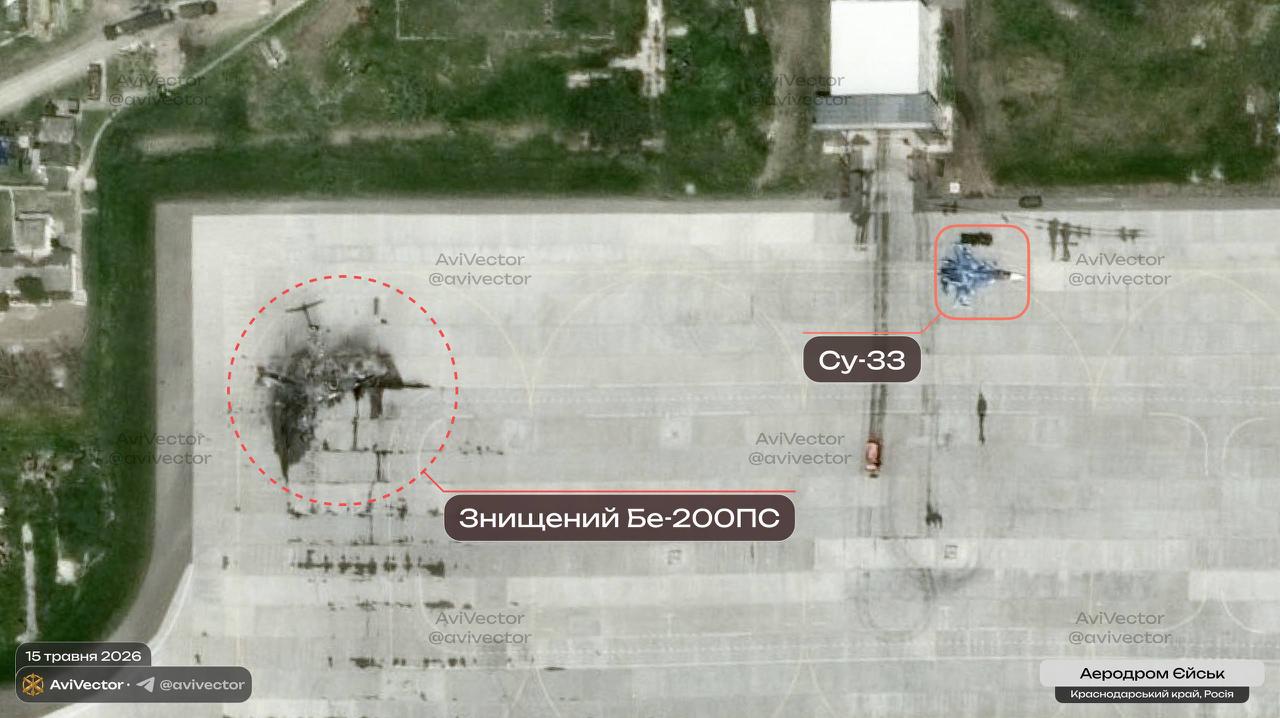
Overnight, the Good Birds¹ visited the military airfield in Yeysk, Krasnodar region of the Rabid Federation. The strikes destroyed a unique Be-200PS jet amphibious aircraft and a Ka-27 naval helicopter. Be-200PS is destroyed — not “damaged”. Satellite imagery confirms it:
And one more piece of good news to close out with. The enemy handed over 200 Ukrainian prisoners of war instead of the promised thousand. Media are framing it as “the first stage” of the thousand Pootin pledged in exchange for no strikes on Red Square during the parade.
¹Good Birds – slang for strike drones. Why “good”? Because they bring “warmth and light” to enemy military factories, ammunition depots, and oil refineries. Sarcastic? Of course. Effective? Even more so.
Related posts:

To Light a Fire in Moscow: The Song Came True
Even before today’s fire in Moscow, Orc¹ moods had been getting noticeably worse, especially after the strike on the Moscow refinery. The strike on the Kapotnya plant hit [...]
Ukraine Strikes Moscow Refinery With Drones
Today’s Ukraine Strikes Moscow Refinery hit the primary distillation unit in Kapotnya. As anyone following these strikes already knows, knocking out primary distillation shuts down everything downstream. If [...]