

Ukrainian Military in Mali: Could These Rumors Actually Be True?
The unfiltered truth from Ukrainian soldiers and volunteers. Just war as it is. Reader-supported.
Support →
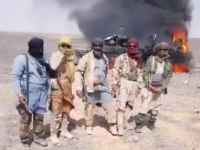
Rumors are flying around the internet about Ukrainian military in Mali, but to figure out how much truth there might be to this, we need to look at this version from different angles. Late last week, information leaked to the press that the French government supposedly secured agreement from Greece to transfer part or all of their multi-role Mirage-2000 aircraft to Ukraine. In return, France would supposedly supply the same number of new Rafales with a massive discount. Unofficially, word is spreading that a general agreement is already in place, but right now they’re hammering out the final technical details of this operation.
Worth noting — in Indian competitions, Rafales showed results very close to American fifth-generation F-35s. In some aspects they fell slightly behind the Americans, but in others they definitely outperformed them. So French machines are worth going for this kind of multi-level deal to get them. Today the French are actively participating in our aviation modernization program using SCALP cruise missiles, and in other areas strengthening our strike capability. And here’s what matters — there’s zero pompous speechmaking from their side about it. If the US were providing military aid to Ukraine right now, you can bet your ass old Donnie would stage such a circus that actual circus horses would be jealous. With Paris, it’s simple — no showboating whatsoever, but everything works beautifully.
France’s African Problem
France is working very actively for Ukraine’s benefit, and there are probably specific reasons beyond the general ones already discussed extensively by President Macron himself and EU leadership. But before we examine those reasons in detail, it’s worth turning to history. When the Orcs¹ fought alongside Ukraine against a common enemy, they had a chance at victory. For example, in World War II. When they fought without Ukraine — those were mostly defeats. For example, the Russo-Japanese War of 1904-1905. But when they fought against Ukraine…
History answers this question directly and unambiguously. The whole world knows Napoleon captured Moscow, but if you ask these history buffs who else captured and burned it, you’ll probably get silence in response. But almost 200 years before Napoleon, in 1618, Moscow got torched by Cossack Hetman Petro Sahaidachny. And even earlier — in 1571 — Moscow got burned by Crimean Khan Giray, whose army included Zaporizhian Cossacks under Mykhailo Vyshnevetsky’s command. Seems our ancestors already understood hundreds of years ago how to conduct “negotiations” with the Muscovite kingdom.
Let’s continue the historical excursion, but now in the 20th century. Before World War II started, France held large colonies in North and Central Africa. World War II and France’s capitulation left its colonial status hanging in the air. What followed was a chain of questionable decisions that seriously damaged its reputation in Africa. Most of the army and navy allowed themselves to be disarmed, so French weapons, ammunition, and equipment ended up in the Reich’s trophy pile. Meanwhile, French industry began working for Germany.
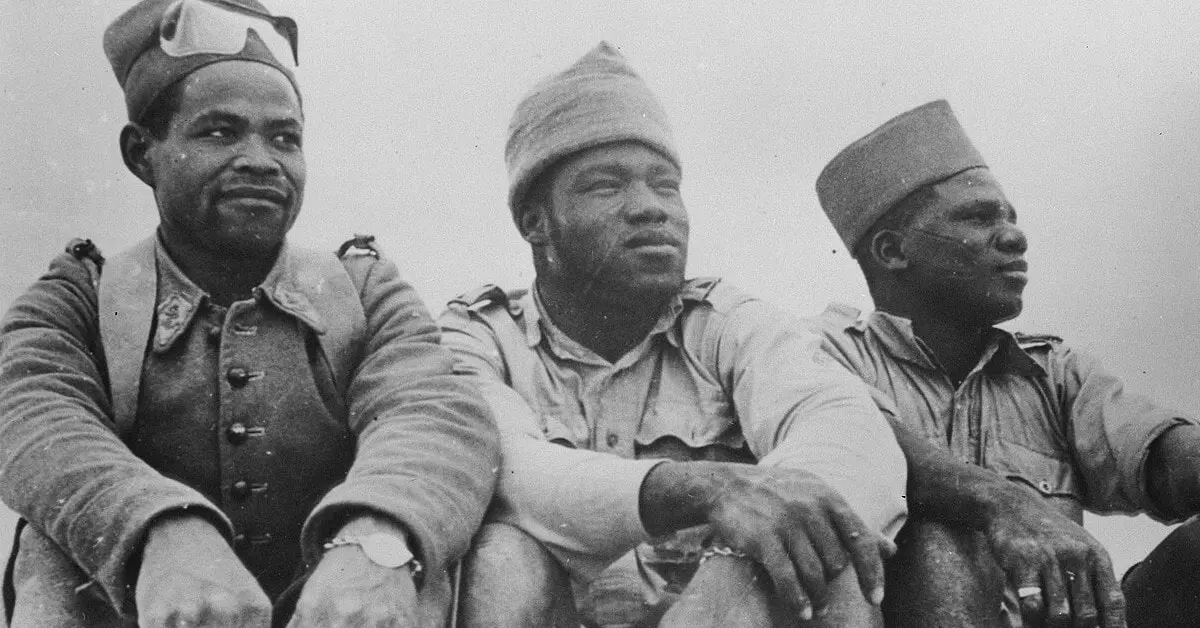
However, Charles de Gaulle didn’t accept defeat. He fled to London and led the “Free France” movement, continuing the fight against Hitler and the Vichy collaborators, whom he considered illegitimate. Most of French Equatorial Africa — Chad, Congo, and Gabon — sided with him. As a result, his forces relied heavily on colonial units and local servicemen.
The Colonial Betrayal
Everyone who fought expected decolonization in return. After all, in the hardest moment, local populations carried the main burden of open resistance against the occupier. Especially since right after the war, Great Britain launched a massive dismantling of its empire, leaving former colonies freedom to choose their future fate. France, however, moved in the opposite direction. It not only tried to restore its colonial rule, but also attempted to reinforce it by force.
Local residents’ attitude toward France kept getting worse, trust was lost, and France eventually resigned itself to the failure of its neo-colonial policy. And when it had to shift relations into a pragmatic channel, new players appeared in Africa. China and the Rotten Federation. The problem ran deeper. For key resources, including uranium, France became tightly dependent on supplies from its former colonies. With more than 80% of its energy tied to nuclear generation, that dependence created serious risks for Paris in these regions. Old grievances never really disappeared — they just kept smoldering. And once someone fanned them, earlier mistakes quickly turned into very real, very negative consequences.
Soft Power and Hybrid War
The Orcs played sharply against France on this. If Beijing brought part of Africa under its thumb through “soft power” — credits and corrupt infusions for local elites — then Moscow deployed well-practiced hybrid war tactics. They send their people into some country, who find those willing to play the role of “rebels.” Then they pump them full of weapons and money, and at the right moment Moscow sends its own military to carry out a coup.
The French have their bases in Africa and generally could increase troop numbers to counter the Orcs in Africa, but… A problem arises in the form of old grievances — any military action by France would be perceived as another wave of neo-colonialism, and therefore wouldn’t be supported by locals. So the French categorically cannot enter into military confrontation on African territory, and the best solution would be a third party that local populations wouldn’t associate with colonialism at all.
Enter the Third Party
Such a party not only needs to know how to conduct modern combat operations. It must be ready for confrontation against Rabid Federation military units. Agree that’s a very important condition, since few would agree to open military confrontation with Moscow.
And there’s a force that fits this role perfectly. Ukrainians, with their professionalism and a natural lack of racism, can pull together groups that barely trust each other. Local residents understand the motivation of our troops, who came to destroy an enemy that attacked their homeland from thousands of kilometers away. That kind of drive earns respect anywhere, regardless of religion, skin color, or language.
The so-called Russian “African Corps”, based on the notorious Wagner PMC, has taken losses from Tuareg actions more than once. But if earlier this happened in ambush mode, when Tuaregs would wait for an enemy column and methodically destroy it from ambush, this time the rebels managed to liberate the city of Kidal. In the process, they destroyed an Mi-35 helicopter and captured another helicopter — an Mi-24 — as a trophy.
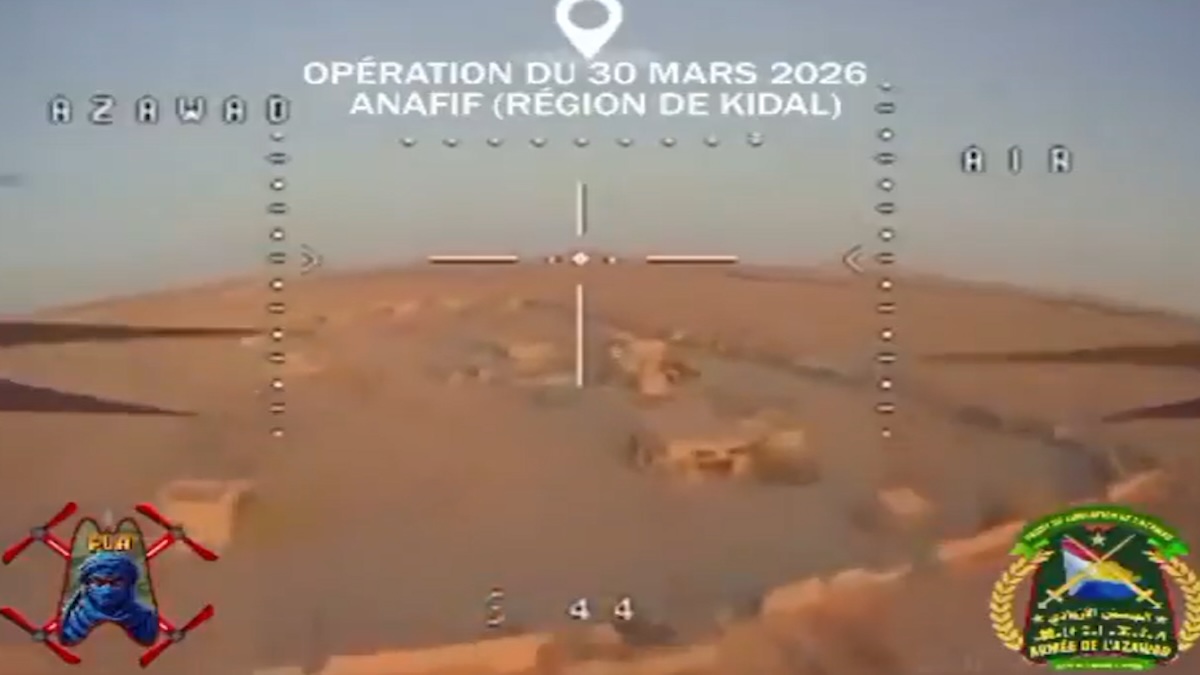
Officially, Ukraine doesn’t confirm the presence of Ukrainian military in Mali. GUR spokesman Andrii Yusov told The Guardian only that:
the rebels received necessary information, and not just information, which enabled a successful military operation against Russian war criminals
So, information — yes, soldiers — no. But rumors are actively spreading online that the most effective Tuaregs were exchanging commands in a language unknown to local residents and had unusually light skin for Africa. There’s also the undeniable fact that Mali’s junta officially severed diplomatic relations with Ukraine, and drones were widely used during Kidal’s liberation.
Why This Makes Perfect Sense
And let’s be honest — Ukraine today is the only country in the world that doesn’t fear military confrontation with russia. Moreover, Ukraine is interested in eliminating Russian war criminals in any corner of the planet, and we have a personal score to settle with Wagner.
So it’s entirely possible that we’re getting French missiles and aircraft not just because. Ukrainian military in Mali, whom we group under the name “Ukrainian Tuaregs”, are hitting several targets at once. They eliminate Russian war criminals on the ground, and at the same time provide France with delicate services that no one else can deliver.
The beauty of this arrangement is simple — France gets plausible deniability while the Orcs get exactly what they deserve. Ukrainian military doing what they do best: hunting down the same bastards who’ve been killing our civilians in Ukraine. Whether that’s in Bakhmut or the Sahara doesn’t really matter — a dead Wagner mercenary is a dead Wagner mercenary, and the world’s a better place for it.
¹Orcs – a common term for Russians who support or participate in the armed aggression against Ukraine. Dehumanizing? Yes. Accurate? Also yes.
Related posts:

Iran War Consequences: West Unprepared to Beat Dictatorships
A month of war with Iran clearly showed leading democratic countries of the world never thought to study Ukraine’s 4-year war and draw useful conclusions from it. This [...]
Ukrainian Kitchen Drones — Innovation, Revolution, or Evolution?
A few days ago, The Atlantic published an interview with the CEO of Rheinmetall, who weighed in on Ukraine’s so-called “kitchen drones” and claimed that its defense industry [...]