

Naval Cleanup in the Sea of Azov and Black Sea
The unfiltered truth from Ukrainian soldiers and volunteers. Just war as it is. Reader-supported.
Support →
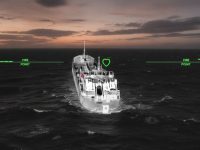
USF¹ Commander Robert “Magyar” Brovdi, in his characteristic style, announced that the general cleanup of the Azov Sea — while not yet 100% complete — has reached the stage where all that remains is maintaining order so enemy scrap metal does not wander around unsupervised. In nine days of this naval cleanup, 116 enemy vessels connected to fuel logistics were disabled or destroyed outright. Simultaneously, the enemy’s coastal loading infrastructure along the Azov shore — the facilities used to pump petroleum products into tankers before those tankers got caught and eliminated at sea — was also hit.
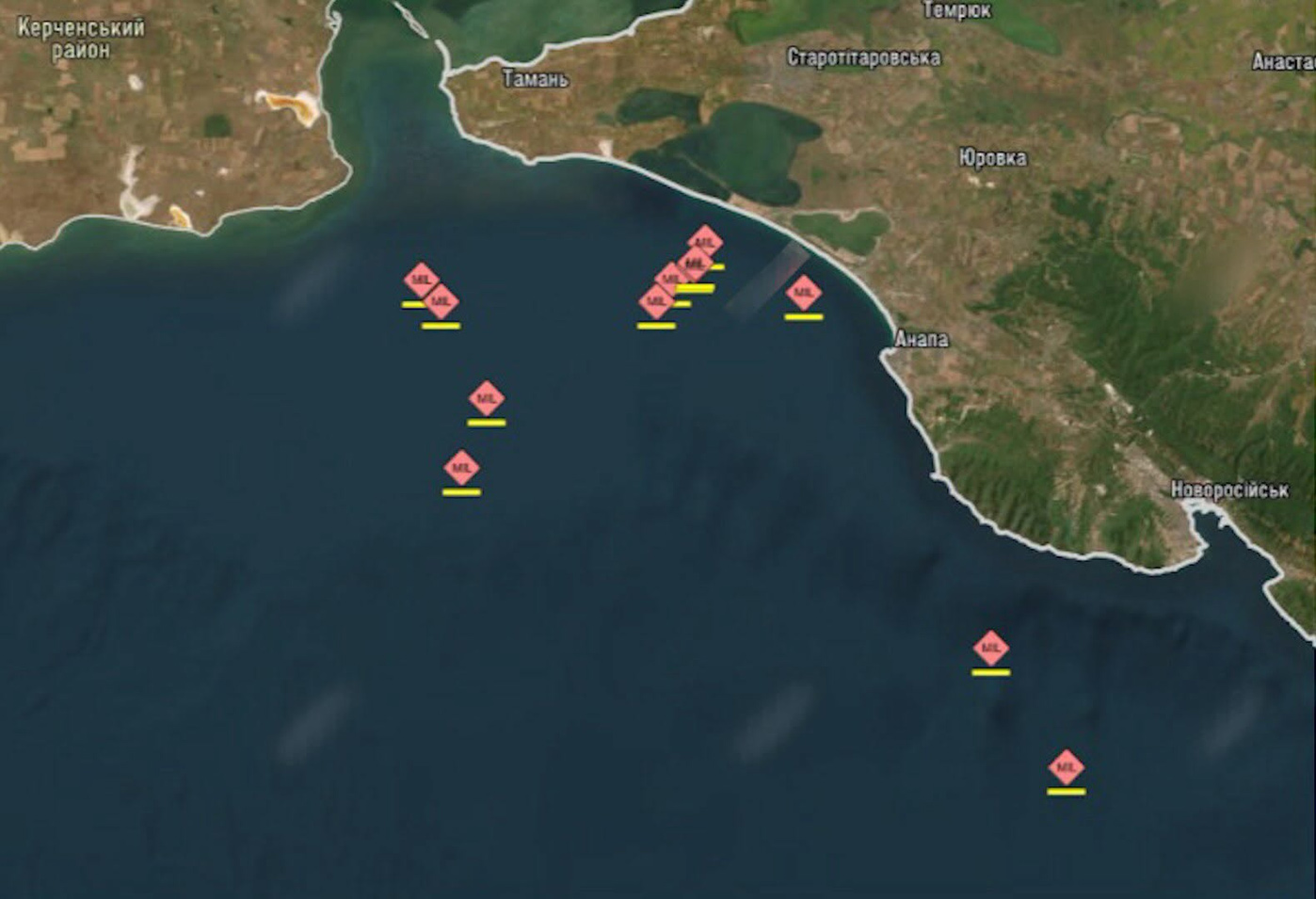
But the Azov naval cleanup results weren’t presented on their own. They came alongside the announcement of a general cleanup — this time in the Black Sea. As we know, the patrol vessel Izumrud was effectively destroyed on Tuesday. And by Wednesday morning — the first night of the new cleanup — the USF reported 20 targets struck: 17 tankers, two gas carriers, and one tugboat. That last one was presumably there to tow something already disabled. As it turned out, it wasn’t a lucky night for the tugboat either.
The Black Sea Cleanup Has Opened
And this is only the beginning. Everyone has seen what the Azov operation produced — and now the same is starting in the Black Sea. Some Z-bloggers are darkly speculating that once Ukraine finishes in the Black Sea, the Baltic is next. While NATO countries sit on their hands, Ukraine’s Good Birds² will clean that up too. Meanwhile, one analyst, less prophet than fact-reporter, simply noted that nearly all long-range air defense systems — including S-300 and S-400 complexes — have been moved out of Severomorsk, the Northern Fleet’s home base.
The first night of the Black Sea naval cleanup brought a decent catch. We hope that in the same nine days it took to complete the Azov operations, there will be plenty to look at here as well. And not only the Orcs³ are watching — our partners and those who consider themselves neutral observers are watching too. Partners are drawing conclusions and deepening cooperation with Ukraine in this direction. Results aren’t publicized right away. But the world has already witnessed the first naval drone strike by the US Navy against targets in Iran, using a craft that is essentially a copy of the Ukrainian design.
What the Maritime Security Analysts Are Saying
Financial Times columnist Thomas Alexa, senior analyst at maritime security agency Ambrey, has been watching what Ukraine is doing at sea and writes roughly the following:
The attacks on Russian vessels in the Azov (and now Black) Sea are reminiscent in scale of the ‘Tanker War’ between Iran and Iraq in the 1980s, when two oil-producing countries tried to deprive each other of the means to survive. In the nine days through Tuesday, Ukrainian drones attacked 116 Russian vessels. The pace of attacks exceeded that of the Iran-Iraq war, which saw over 450 incidents across seven years.
Ukrainian drones primarily target steering compartments or the pipelines used to pump liquid cargo into side tanks. The ships do not sink as a result — tankers are specifically designed to remain afloat even under significant damage — but they lose the ability to move. Restoring steering systems can take a very long time. On top of that, damaged vessels need to be towed to drydocks for repair — and probably not in the Azov Sea, given that it has effectively fallen under the control of Ukraine’s Unmanned Systems Forces.
The analyst notes that these are potentially lethal strikes. Ukraine is simply not aiming to sink the vessels outright — even though both the technical and tactical capability to do so already exists. Scaling up the severity of strikes could be done without particular difficulty and, crucially, very quickly. Looking at the results and the execution, he says he cannot find words adequate to describe what he is seeing. Any superlative, he notes, would simply come out pale.
Why Disable Rather Than Sink
Two factors drive this approach. The first is ecological — sinking empty vessels is one thing, but fully loaded fuel tankers are a different matter. The environmental cost would be too significant. So the goal is to disable them, not send them to the bottom. Let the burned-out hulk drift, completely unable to move under its own power. The second factor is strategic — disabling rather than sinking creates a bottleneck in the enemy’s regional repair capacity.
As a bonus, damaged vessels must be towed — and tugboats and auxiliary ships come under attack almost every night, as the Drone Forces’ own statistics confirm. Which means the enemy’s ability to even assist its stricken vessels keeps shrinking. At some point, the only option left will be to pull the crew and leave the ship at sea — a fitting end for a naval cleanup operation of this kind.
¹USF – Unmanned Systems Forces, Ukraine’s newly established branch of the Armed Forces. No, not the U.S. Navy — in Ukraine USF means those who destroy Russian bombers, not those who park aircraft carriers.
²Good Birds – slang for strike drones. Why “good”? Because they bring “warmth and light” to enemy military factories, ammunition depots, and oil refineries. Sarcastic? Of course. Effective? Even more so.
³Orcs – a common term for Russians who support or participate in the armed aggression against Ukraine. Dehumanizing? Yes. Accurate? Also yes.
Related posts:

First in History: Underwater Drone Hits Submarine
Today the SBU made an official announcement that right at the basing site of Black Sea Fleet remnants in Novorossiysk port, an underwater drone hits submarine 636.3 Varshavyanka. [...]
Novocherkassk Landing Ship Destroyed by Own Ammo
The video of the explosion went viral worldwide, and Novocherkassk landing ship destroyed gave people a surge of raw, positive emotions. The most experienced among them, understanding that [...]