

Flamingo Missiles Strike a Military Factory in Volgograd
The unfiltered truth from Ukrainian soldiers and volunteers. Just war as it is. Reader-supported.
Support →

On the night of June 27, Good Birds¹ with the well-known name “Flamingo” delivered a strike on a military factory in Volgograd. Their target was not the city at large — just one specific enterprise, “Titan-Barrikady”. The name may not ring many bells internationally, but in Ukraine, the products of this research-and-production center are very familiar indeed.
The Titan-Barrikady plant produces a broad range of military products, from artillery systems to launch vehicles for the Topol-M, Yars, and Iskander-M missile complexes. It holds an absolute monopoly on ground equipment for Russia’s operational-tactical and strategic missile systems. The plant runs as a full-cycle enterprise — from design to final assembly of heavy hardware. Its core specializations:
- For the Iskander-M OTRK: the sole manufacturer of self-propelled launch vehicles (SPU 9P78-1) on the MZKT-7930 wheeled chassis, and transport-loading vehicles (TZM 9T250).
- For strategic nuclear forces: design and production of mobile launchers and launch complexes for ICBMs — Topol-M, Yars, and the infamous Sarmat.
- Heavy artillery: artillery assemblies and large-caliber gun barrels, including for the 152mm Msta-S howitzer, the new Koalitsiya-SV, Malka, and naval guns.
- Additionally: development and production of the Oreshnik ballistic missile, new artillery and missile systems, testing, and certification.
Sounds familiar, doesn’t it?
In other words, this is not just another factory. It is one of the key bottlenecks in Russia’s missile and artillery production chain.
According to early reports, the pink-feathered birds scored at least two direct hits — confirmed through videos sent in by local correspondents. As we know, the Flamingo is a serious bird. It dwarfs not only Storm Shadow and SCALP but even the Russian Kh-101 missiles the enemy fires at us. In plain numbers, Ukraine’s Armed Forces exported no less than 2,300 kg of explosives — with, notably, direct delivery to the consumer.
That makes Flamingo a very large platform. Its size alone should make it an easy target for air defense systems, even ones as backward as russia’s. Yet its successful flight to Volgograd, roughly 600 kilometers away, points to one of two explanations. Either the air defense along that route was completely absent — entirely plausible, given that Ukraine’s forces have already destroyed part of it, and the rest was redeployed to cover moscow and the Kerch Bridge. Or the Flamingos received something that makes even a large missile difficult to detect on enemy radar. The Orcs² themselves seem to understand this, judging by what they’ve been writing:

The Bottleneck Russia Cannot Get Around
To understand the mathematics of war, one must remember a simple fact. A missile is a consumable that burns up in a single launch. A launch vehicle, by contrast, is a reusable engineering platform — and producing them is russia’s main bottleneck. According to public procurement data from the RF and rail shipment monitoring, Titan-Barrikady had moved to three shifts. They were pushing hard for four to six launch vehicles per month.
The unique precision equipment required here is the other crucial factor. Building an Iskander launch vehicle isn’t simply welding a metal box together — a four-ton rocket launch generates colossal mechanical loads, demanding specific metallurgy and hydraulics. This equipment cannot be import-substituted via China — Chinese alternatives simply don’t deliver the precision class needed for components at this scale. That’s the core vulnerability, and why the Volgograd military factory strike delivers lasting damage, not just immediate destruction.
The plant’s forging operations relied on giant GFM complexes — Austrian-made forging machines acquired before sanctions tightened. High-precision machining of bore surfaces in gun barrels and hydraulic cylinders requires premium European or Japanese equipment. Assembly of missile hardware demands unique jigs and robotic production lines.
If the Strike Hit the Right Shops
If the overnight strikes landed on the assembly shops or machining workshops where this irreplaceable equipment stood, russia has no path to replacement in the coming months. This means the Flamingos hit the real jackpot — destroying irreplaceable high-value equipment together with the skilled specialists who operated it. As for the Russians still working at military plants, we can only recommend reading Article 52 of Protocol I to the Geneva Conventions. While working at such facilities, they become lawful military targets. The smartest career move may be to find a different job.
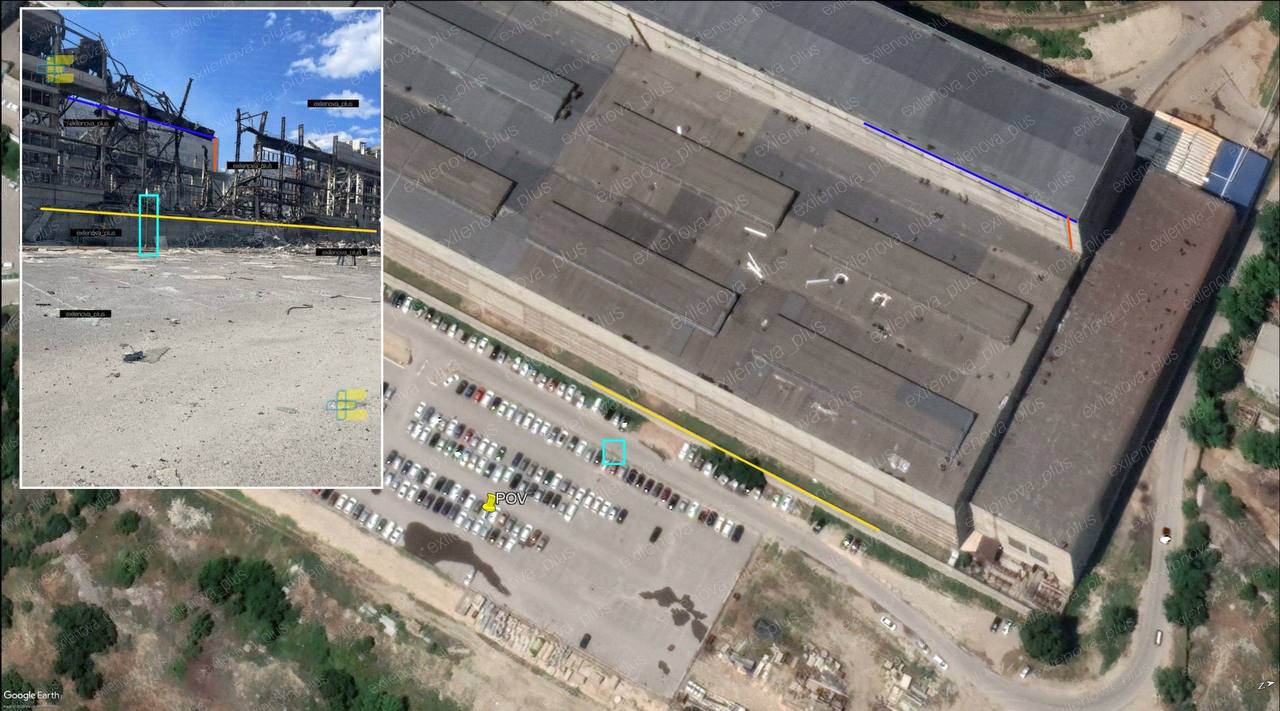
Also worth noting — enemy media are treating this story as if it simply does not exist. There are no official statements, nothing like the announcements that followed the Voronezh factory strike. Perhaps details will surface by end of day, but for now — silence.
Either way, we cannot help but be glad — the strike on the Volgograd military factory proves that Ukraine’s Defense Forces now have assets that deliver good things to the enemy in very substantial volumes.
¹Good Birds – slang for Ukrainian missiles and drones. Why “good”? Because they bring “warmth and light” to enemy military factories, ammunition depots, and oil refineries. Sarcastic? Of course. Effective? Even more so.
²Orcs – a common term for Russians who support or participate in the armed aggression against Ukraine. Dehumanizing? Yes. Accurate? Also yes.
Related posts:

Russian Ground Robots: Origins, Failures, and a Growing Threat
Ukraine’s Ministry of Defense plans to shift 100% of frontline logistics to NRKs¹. But where does the enemy stand on this technology? How are Russian ground robots developing [...]
Missile Strike on Progres Plant Making Russian Weapon Parts
It may sound strange, but pootin himself helped Ukraine pull off the missile strike on Progres plant. Enemy social media spent the night posting footage of air defense [...]