

Lessons from the Massive Attack on Kyiv on July 2
The unfiltered truth from Ukrainian soldiers and volunteers. Just war as it is. Reader-supported.
Support →
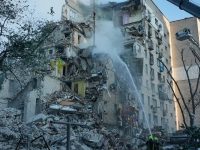
The massive attack on Kyiv on July 2 was predictable even without any inside information. The enemy runs this format regularly — sooner or later it was going to happen, and the longer the gap between strikes, the higher the probability it was coming within days. Several preparation signals appeared and circulated in open sources beforehand, which made the timing less of a surprise and more of a countdown.
Ukraine tracked and logged the sequence of enemy military transport flights delivering batches of missiles and drones to launch sites. But the most revealing indicator is always the strategic aviation movement pattern — it follows the same choreography every time a strike is being prepared. Russia keeps these aircraft at distant air bases in Siberia and the Far East, then the cycle begins. Two or three Il-76 transports land at Engels-2 airbase carrying cruise missiles. Since the Good Birds¹ already paid Engels a visit — and more importantly, its missile arsenal — the enemy now tries to minimize how long those Kh-101 missiles sit exposed. Each one runs upward of ten million dollars. Also worth noting: Russia burned through its stockpiles long ago and markings on components our specialists pull from wreckage confirm the missiles hitting us today left the factory two or three months before launch at most.
How a Mass Strike Cycle Actually Works
Once the cruise missile loading wraps up, the aircraft head to Olenya airbase and wait for the strike order. That move means an attack within a day or two. After the order comes through, the planes fly to their launch corridors, release the missiles, and continue to Ukrainka airbase in the Far East — closing the loop on a mass strike cycle.
This cycle also tells us something important. Russia would prefer to run far heavier attacks, but the bottleneck holds it back — both the number and condition of the strategic bombers, and the rate at which new missiles come off the production line.
Russia appears to have accumulated a reasonable stockpile of Tsirkon anti-ship missiles, held in reserve for their intended naval role. But with the Black Sea Fleet in ruins and the Baltic Fleet damaged, russia is no longer a naval power in any meaningful sense. Naval battles won’t feature on russia’s agenda for decades, so pointing the Tsirkons at Ukrainian apartment blocks was, from their perspective, entirely logical.
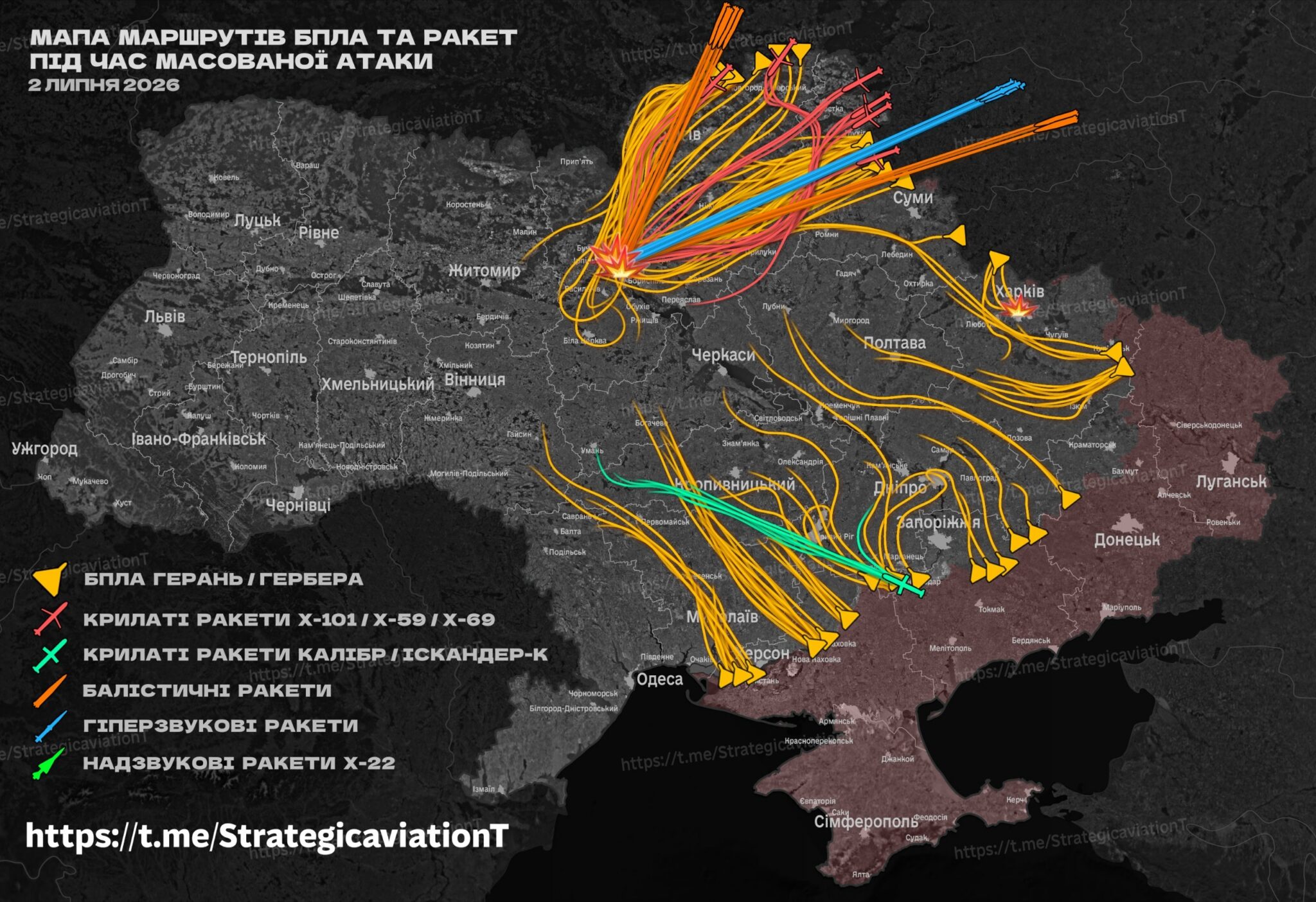
The Numbers Behind the July 2 Attack
On the ballistics — the same missile brigade worked the launch. Twenty-four missiles means twelve launchers. Six sat in Kursk Oblast, six more in Bryansk. The first Kursk wave of ballistics went up simultaneously with the Tsirkons. By the time the second wave came from Bryansk, the Tsirkons were gone. The launchers fired standard load and stopped there — no reloading. Everything points to a shortage, because if they had more, they would have used them.
Ukraine’s defenses downed every Kalibr cruise missile and Kh-59/69, almost all Kh-101 and 476 of 496 drones. The breakdown by type and interception results (launched / intercepted) was as follows:
- 3M22 Zircon anti-ship missiles — 4 / 0;
- Iskander-M / S-400 ballistic missiles — 24 / 4;
- Kalibr cruise missiles — 8 / 8;
- Kh-101 cruise missiles — 34 / 32;
- Kh-59/69 guided air-launched missiles — 4 / 4;
- Enemy UAVs of various types — 496 / 476;
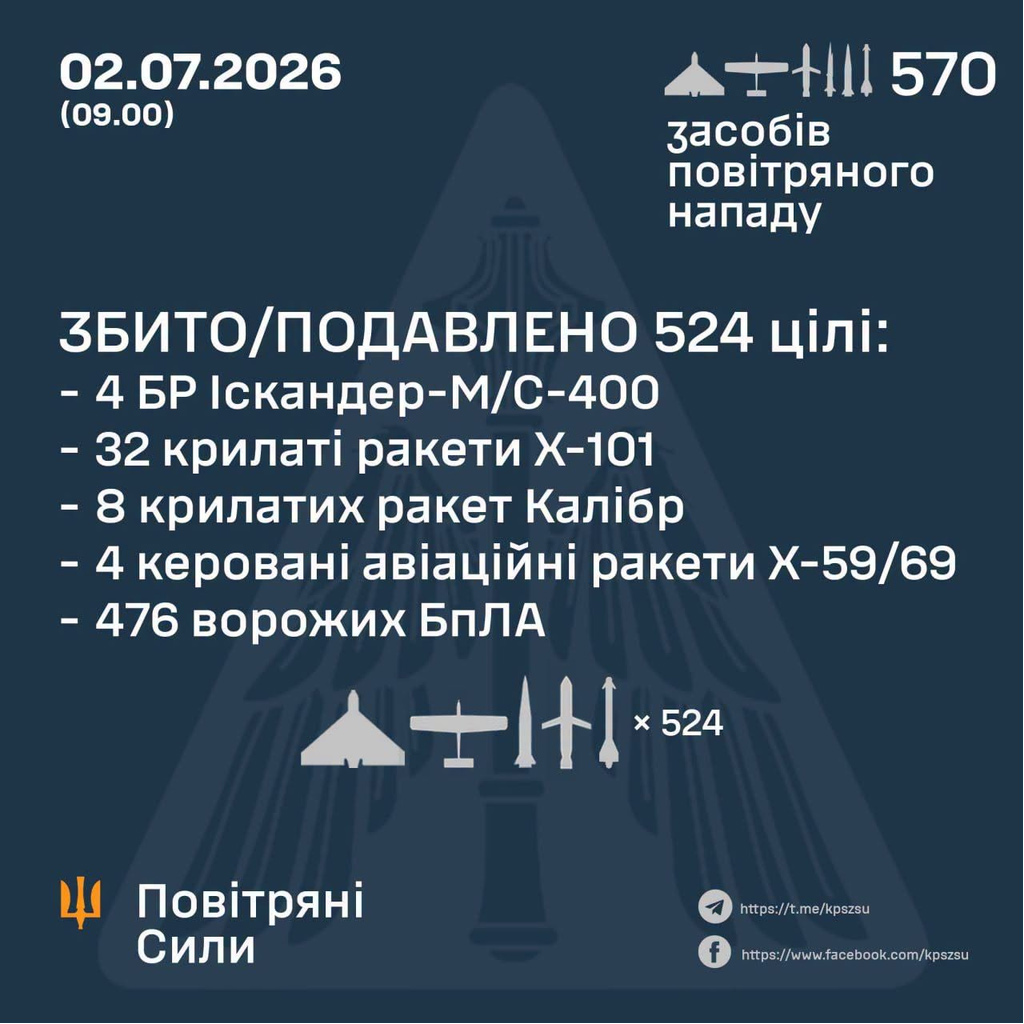
Meanwhile, Kyiv residents saw the aftermath this morning, and the vast majority of strikes hit residential areas. Ukrainian intelligence reportedly received advance information on the intended targets and took appropriate measures where possible. However, a significant portion of the strikes were effectively random — and that is textbook terror.
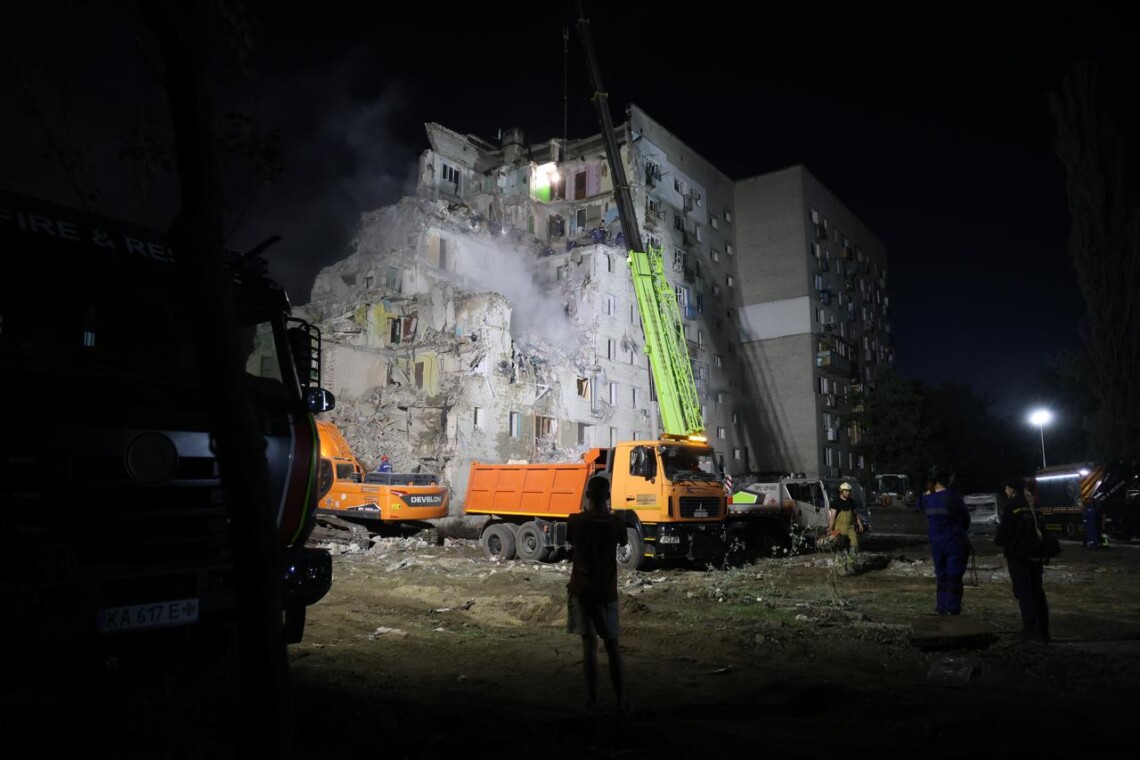
The goal is panic and chaos among civilians, but it produced the opposite effect. More Ukrainians than ever are now calling for mass strikes on moscow, and they reach for a historical parallel from World War II.
Berlin, 1945 — The Parallel Nobody Should Miss
The bombing of London eased significantly after Allied forces destroyed the Nazi fuel plants at Leuna and Pölitz, struck the V-weapon launch complexes at Watten and Wizernes, and began hammering Berlin’s rail yards and stations.
So the massive attack on Kyiv on July 2 — specifically its terror component — achieved the exact opposite of its intended result. Russian refineries are the direct analogue of Leuna and Pölitz. Destroying missile launchers in Crimea and Kursk Oblast mirrors Watten and Wizernes. The historical logic points in one direction — it is time to find the analogue of Berlin, 1945.
¹Good Birds – slang for strike drones. Why “good”? Because they bring “warmth and light” to enemy military factories, ammunition depots, and oil refineries. Sarcastic? Of course. Effective? Even more so.
Related posts:

Another Russian Terror: Massive Attack on Kyiv on July 6
On the night of July 6, the enemy carried out another massive combined attack on Kyiv. Some of it landed elsewhere too, but the capital bore the main [...]
June 15 Massive Strike: Record Ballistics, Cultural Sites Hit
On the night of June 15, the enemy launched a massive combined strike on Ukraine using attack drones along with air-launched and ground-launched missiles of various types. The [...]