

What the Intelligent Enemy Says About the Russia-Ukraine War
The unfiltered truth from Ukrainian soldiers and volunteers. Just war as it is. Reader-supported.
Support →

Sometimes it is worth reading and listening to what the intelligent enemy says about our war. Not the cheap propagandists who “captured” Kyiv in three days back in 2022 and have “captured” Kupyansk twenty-eight times since 2025 — but the professional, intelligent, cunning, and genuinely dangerous enemy.
In early February 2022, most Russian politicians, propagandists, and a significant portion of military analysts were assuring the public of easy victory over Ukraine. The entire Western world, meanwhile, was quietly preparing to bury Ukraine. Into that chorus, Mikhail Khodarenok’s voice sounded like near-dissonance. He was a former Russian General Staff officer, military analyst, and publicist. He did not deny Russia’s military advantages in certain areas, but he cautioned firmly against dangerous illusions.
His article “Predictions of the Bloodthirsty Political Scientists. On the Enthusiastic Hawks and the Impatient Cuckoos” (Прогнозы кровожадных политологов. О восторженных ястребах и торопливых кукушках), published on February 3, 2022, was a warning against the euphoria sweeping Russia’s information space at the time. Television analysts were promising to take Kyiv in three days and predicting the collapse of Ukrainian statehood. Khodarenok proposed a different frame — evaluate the situation through military logic, not political slogans.
What Khodarenok Predicted Before the Invasion
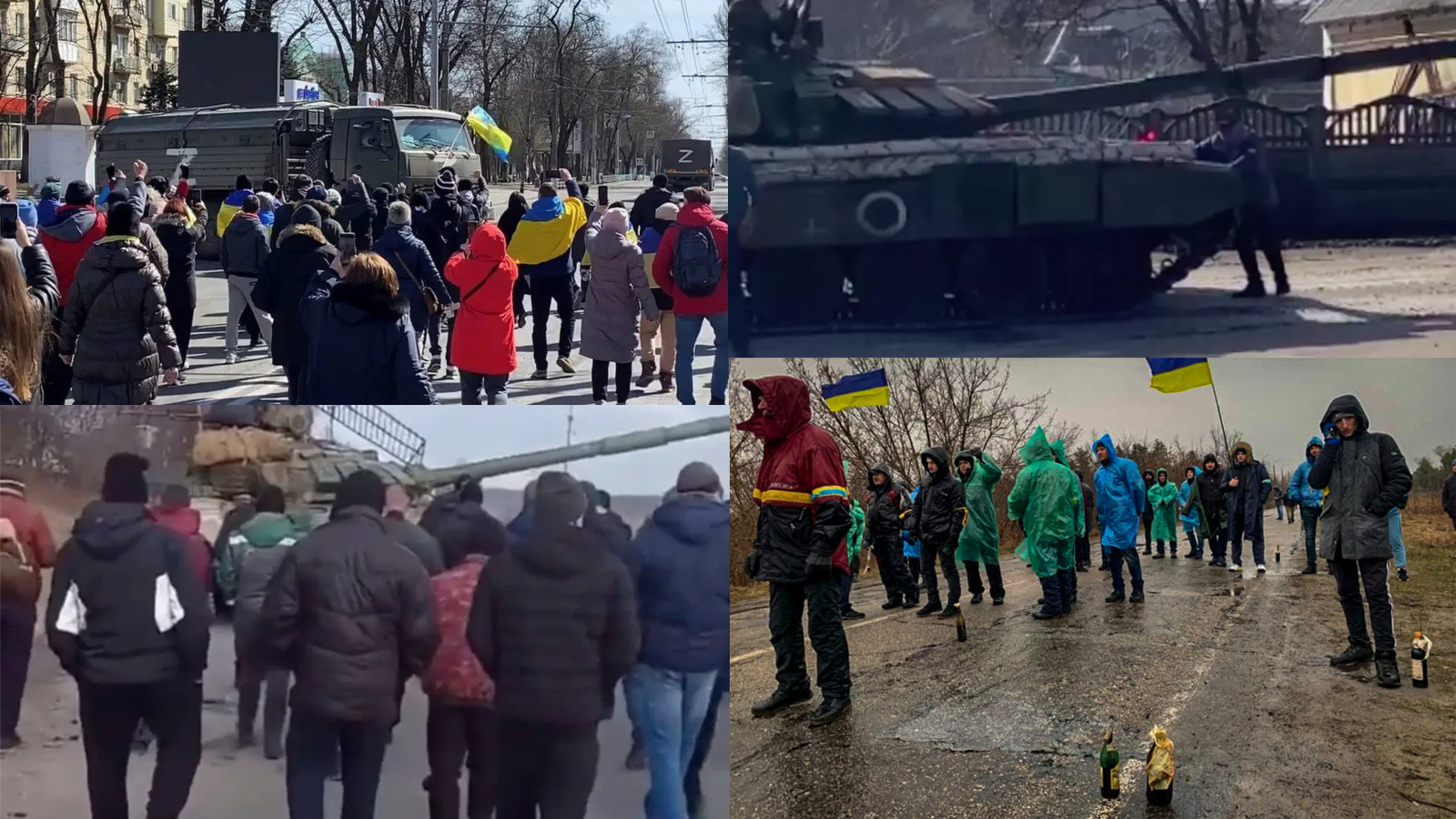
One of his central conclusions was that the greatest mistake Russia’s leadership would make was underestimating Ukrainian society. He wrote directly that counting on mass support — or even neutrality — from Ukrainians was a dangerous illusion. Russia’s political circles were effectively ignoring Ukrainian public sentiment. Khodarenok emphasized that anti-Russian feeling had grown significantly after 2014, and that hatred of the Kremlin had become a powerful driver of Ukrainian resistance.
This moral factor, he argued, could prove more decisive than any comparison of tank or aircraft numbers. The first weeks of the war confirmed his assessment. The Orcs¹ did not encounter the mass support they expected — they ran straight into organized resistance from the army, territorial defense, and civilian population.
His second key argument was a direct critique of the concept of a quick war. No single powerful precision strike could crush Ukraine, he warned. Successful missile attacks could not automatically break the system of state governance, and Ukraine’s Armed Forces would continue organized resistance. He was, in effect, questioning the Russian blitzkrieg concept before the full-scale invasion had even begun. Within weeks, that forecast proved far closer to reality than the optimistic assessments of most Russian commentators.
Another Prediction He Got Right
A third thread in his analysis was an evaluation of the likely international response. Khodarenok believed the Kremlin was underestimating the West’s readiness to back Ukraine. He predicted that once large-scale war began, Western arms deliveries would take on a systematic character. That shift, in his view, could radically alter the balance of forces over the long term. In the years that followed, that forecast also proved largely accurate. Ukraine received massive military, financial, and technological support from the West.
In early February 2022, a publication like this looked almost oppositional — even though its author is part of the Russian horde. We return to Khodarenok’s article not because it offered precise prophecies, but because it showed professional thinking. The entire Orc information space at that moment was flooded with military optimism. He did not predict every turn of the war. But before the invasion, he identified several factors that genuinely shaped its course — Ukrainian willingness to resist, the impossibility of a blitzkrieg, Western support, and the risk of a prolonged conflict.
53 Months Later
After 53 months of war, the central question is how and when this ends. So what is the intelligent enemy saying today? Khodarenok proceeds from the assumption that the war has approached a decisive phase, but he does not expect a quick conclusion. The 2026 campaign, in his view, could prove defining for both sides.
Russian propaganda has long promised complete military victory. Khodarenok himself speaks with growing frequency about something different — the need to end the active phase of hostilities. He does not describe a specific peace agreement or predict its terms. But what follows from his statements is clear. The war’s final settlement will come not from the complete military defeat of one side, but from mutual exhaustion.
Khodarenok does not forecast the rapid collapse of Ukraine or a quick peace. His core conclusion points somewhere else: the war has reached its decisive stage. But its outcome will not hinge on loud political declarations or dramatic gestures. It comes down to the balance of resources, each side’s capacity to keep fighting, and the readiness to move from military confrontation to political resolution.
This is precisely what the intelligent enemy is saying today, and the point is plain — the end of this war will look nothing like a swift and unambiguous victory for either side. One successful offensive will not determine the outcome. What will shape it is the gradual exhaustion of both sides and the emergence of conditions for a political settlement.
¹Orcs – a common term for Russians who support or participate in the armed aggression against Ukraine. Dehumanizing? Yes. Accurate? Also yes.
Related posts:

Ukrainian Drones in Moscow Changed How Muscovites Think
Yesterday’s Good Birds¹ over Moscow caught the city’s finest completely off guard. And really, why would they worry? They never made a secret of the fact that the [...]
Refinery Attacks Intensify, Russian Rhetoric Changes Drastically
Over the past two weeks, refinery attacks intensify — and the enemy media can no longer pretend otherwise. Gone are the poetic references to “precision debris”. Instead, there’s [...]