

Probability of a strike on Red Square: The Rocket Math Behind It
The unfiltered truth from Ukrainian soldiers and volunteers. Just war as it is. Reader-supported.
Support →

No one seriously expected the ceasefire talks to lead anywhere. Pootin’s proposal was transparent to the point of being embarrassing — the whole thing boiled down to: “Don’t shoot at me while I stands on Red Square squinting nervously at the sky”. The only reason he needed that deal was his own body being in a clearly announced location at a clearly announced time — which, by the way, violates every security protocol in existence. A strike somewhere else in Moscow wouldn’t ruin his day at all, not while he’s buried in one of his deep bunkers. Ukraine can’t reach a bald grandfather that far underground. Not yet. So let’s look at this soberly. The probability of a strike on Red Square only made sense if expensive hardware was rolling across it. And here’s where the math gets interesting.
One Out of Six Is Not a Good Ratio
Out of five or six cruise missiles launched at the Progres plant in Cheboksary, only one hit the target. Some were likely lost for technical reasons — the weapon is still rough around the edges. Others were probably shot down, because the missile has a large frame and a significant heat signature. That tells you something important: to reliably take out any specific target, you need to launch far more missiles than the minimum required to destroy it.
How many more depends on air defense density along the route and around the target itself. To guarantee even a single hit on Red Square, you’d need to launch proportionally more than what went to Cheboksary. But we clearly saw that enemy air defense didn’t even respond during the terminal phase of that flight. Would that happen over Red Square in Moscow? Extremely unlikely. Which means guaranteeing at least one hit there requires two, three, maybe four times more missiles than the Progres strike. We’re talking 15 to 20 missiles for a single hit.
Is the Grandfather Worth That Many Missiles?
At that scale, the target has to justify the entire salvo. So — is Khuilo’s¹ body actually worth that? Is it worth burning that many scarce munitions to eliminate one decrepit war criminal?
That calculus changes completely if expensive hardware had been rolling across the square. Think about how much effort Ukrainian intelligence spends just to locate an Iskander OTRK to strike it. Here it would’ve driven itself across the square in broad daylight — you’d just pick the fattest target. If the tsar happened to catch some collateral damage, fine, pleasant bonus. But not the point.
As it turns out, there’s no hardware — just a modest infantry column marching across the square, and that’s it. Sure, turning a few battalions into “two-hundredths”² is useful work — but is it really worth that many scarce munitions? Hardly. The Rabid Federation loses several battalions every day anyway. Expensive missiles deserve more appropriate targets.
What About Drones?
Drones are a different story — they’re already rolling off assembly lines, and the cost of one isn’t remotely comparable to any cruise or ballistic missile. But a drone strike on Red Square is almost certainly a fantasy. Imagine launching a large flock of Good Birds³ plus decoys to blind enemy air defense over the target zone. Say it works perfectly — a few dozen drones break through to the mausoleum area.
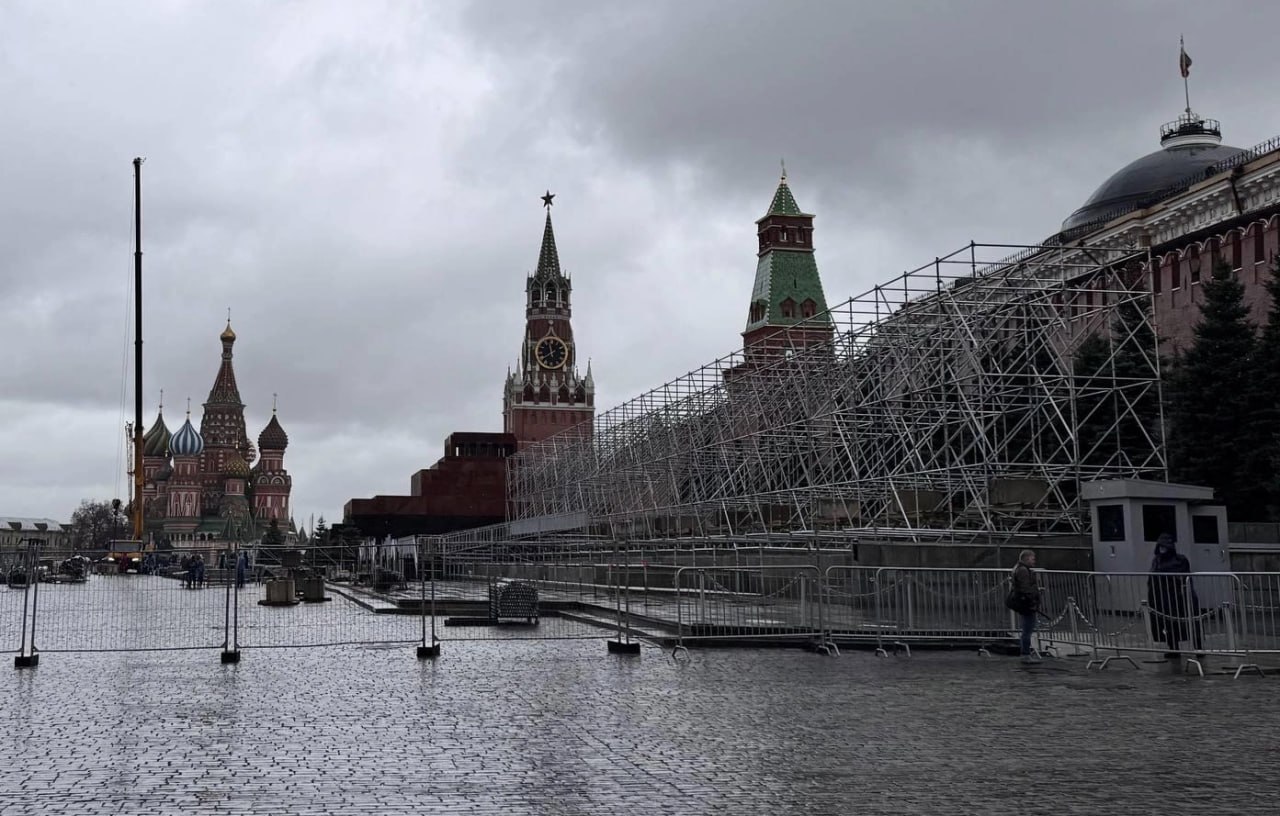
Here’s the problem: a drone flies at 120 to 200 km/h. The target is a small but surprisingly nimble goblin. He’d disappear underground through one of the many entrances to the tunnel network under the Kremlin and Red Square before any drone could reach him. He’d have plenty of time — not just to hide, but to board his armored train and leave Moscow entirely. Hitting someone like Khuilo with a long-range drone is simply impossible in principle. Even a successful cruise missile strike wouldn’t technically guarantee catching the old bastard in time.
The Signal Factor
There’s one more critical factor. Every Ukrainian drone and missile strike beyond 300 kilometers follows the same operational signature. Before hitting the main target — a port, a refinery, a military plant — Ukraine’s Defense Forces clear the route. Air defense and EW systems along the path and around the target get taken out first. Only then comes the main strike. That’s exactly why we hear daily about radar stations and SAM systems being destroyed in Crimea or Novorossiysk.
If Ukraine starts cutting through air defense in a corridor toward Red Square, it sends the enemy a clear signal about intentions. Pootin’s security detail would figure it out immediately. They simply wouldn’t let him appear on the square — they’d roll out a stand-in or a disposable double instead. In that case, the effort would be pointless, and the whole operation would lose its meaning.
The more realistic option for eliminating the planet’s most wanted war criminal is ballistic missiles. Ukraine doesn’t have those yet — and beyond having them, you’d need operational experience to understand how they perform in real conditions, how well enemy air defense and EW can counter them. You need to know exactly what the weapon can do and where its limits are.
What the Threat Actually Achieved
The enemy took preventive steps to minimize any probability of a strike on Red Square. That means not just pulling every remaining air defense system into Moscow. It also means the “Victory Mania”⁴ parade this year has no hardware at all — deliberately, so Ukraine’s Defense Forces have no target worth hitting during the parade itself.
Given everything above, the most likely outcome is that the planet’s chief terrorist will, unfortunately, survive May 9th this year. But since the Orcs showed zero interest in the proposed halt on long-range strikes, Ukraine’s Defense Forces kept making things beautiful on enemy territory. One of the targets hit by our Good Birds is worth far more than a battalion of Orcs on Red Square.
The strike was confirmed at Military Town No. 3 in Naro-Fominsk, near Moscow — 40 km from the city’s outskirts, about 69 km from the Kremlin. That location sits inside Moscow region’s air defense coverage and should have had dense local air defense of its own. Because what’s located there is “Nara” — the central logistics hub of the Orc Ministry of Defense. What’s inside is classified, but open sources describe the facility — 180 to 200 hectares — as follows:
- Storage and distribution of military cargo and equipment;
- Automated logistics for the Russian Armed Forces;
- Storage of weapons, vehicles, fuel, ammunition, and other supplies;
Not “Nara” only
“Nara” was supposed to replace dozens of outdated depots, cut costs, and become the central hub for the entire Central Region, including the Western Military District. There probably aren’t many munitions stored there directly — the Orcs built separate GRAU arsenals for that. But “Nara” handles the transit of weapons, vehicles, and equipment. And we’re fairly confident Ukraine’s Defense Forces aimed for the most valuable sections of the complex.
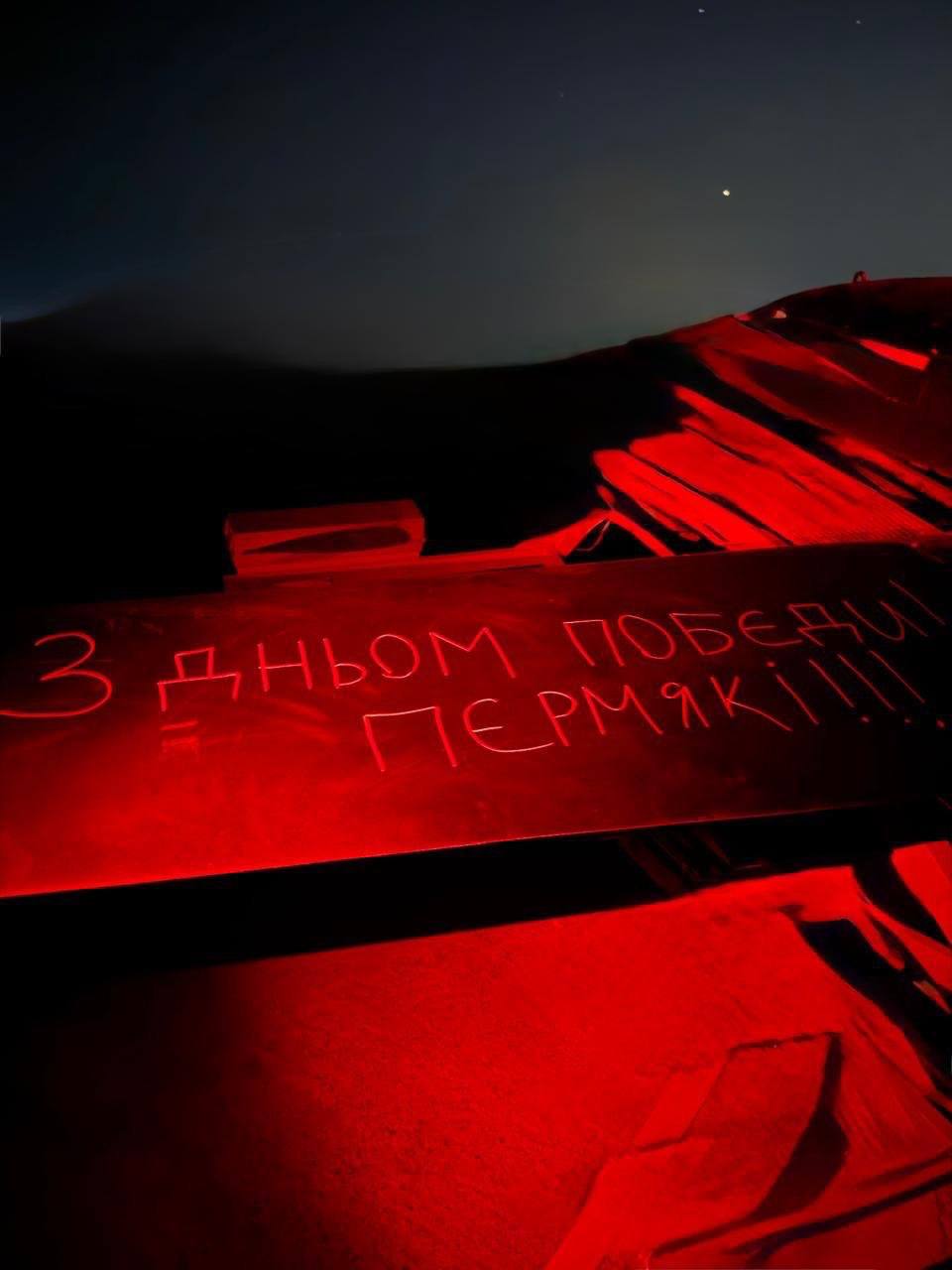
Despite the low probability of a strike on Red Square, Ukrainian military and Western analysts agree: the threat alone did serious work for Ukraine. Stripping air defense from other Russian sites opened the door for successful strikes elsewhere — including damage to the Lukoil-Permnefteorgsintez refinery, the Radar research center in Rostov-on-Don, and a Russian military base in Khankala.
¹ Khuilo – the most popular nickname for Russian dictator V. Putin. First used during the 2014 invasion, and since 2022 most Ukrainians call him only that. See more on Wikipedia.
² 200th (two-hundredth) – Ukrainian Army slang for KIA (Killed in Action). From the military code “Cargo 200” for transporting dead bodies.
³ Good Birds – slang for strike drones. Why “good”? Because they bring “warmth and light” to enemy military factories, ammunition depots, and oil refineries. Sarcastic? Of course. Effective? Even more so.
⁴ Victory Mania – (Russian: Победобесие / Pobedobesiye) – Ukrainian and Russian opposition term for the increasingly hysterical cult around Russia’s WWII victory, used as a tool of state propaganda and political mobilization.
Related posts:

April 25 Massive Strike: Putin’s Failed Revenge for Burning Oil
April 25 massive strike on Ukraine occurred as often happens, Friday night into Saturday. Psychiatrists could probably issue some theory about why psychopath Pootin has such weird cycles, [...]
April 16 Massive Strike: Russia Used S-400 Missiles as Ballistics
The April 16 massive strike came in two waves — a combined attack on Ukraine using multiple missile types and strike drones. Kyiv, Dnipro, Kharkiv, and Odesa all [...]