

Ukrainian FPV Drone Downs Mi-28 Helicopter in Kursk Oblast
The unfiltered truth from Ukrainian soldiers and volunteers. Just war as it is. Reader-supported.
Support →
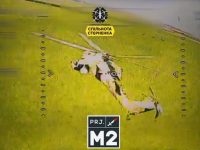
Yesterday in Kursk Oblast, an Ukrainian FPV drone downs Mi-28 attack helicopter. A helicopter’s speed is actually comparable to certain drone types, which already makes an intercept feasible. During takeoff or landing — when the helicopter is slow and committed — the drone gains a clear maneuverability edge on top of that. And unlike a tank or an IFV, a helicopter doesn’t take much of a warhead to disable. Which means most of the drone’s weight can go toward batteries instead of explosives, extending range.
This opens up an interesting tactical concept — something like aerial mining using loitering drones. Send a drone hundred kilometers forward to a waiting zone, and it just holds there until a helicopter comes in for landing. The Mi-28 was specifically used by the enemy as a night drone hunter. Now the roles are reversed and it’s the one getting hunted.
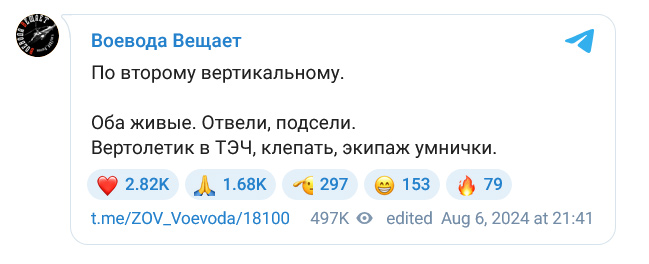
Russian milblogger Alexey Zemtsov of the “Voevoda Broadcasts” Telegram channel confirmed the strike. According to him, the crew survived and the helicopter was sent for repairs:
Remember Last Summer
Just recall what these helicopters did to Ukrainian armor last summer. They worked anti-tank strikes from distances two or three times beyond the reach of man-portable SAMs. A Stinger can’t touch a helicopter at that range and the helicopter operated in a zone where ground-based air defense simply couldn’t follow. Until now.
Ukrainian volunteer and blogger Serhiy Sternenko published the video: FPV drone downs Mi-28 in broad daylight:
Every Tactical Advantage Flips
Let’s look at what made attack helicopters so effective. Ultra-low altitude keeps them below the radar horizon of longer-range air defense. At the same time, the distance puts them out of reach of portable SAMs. They can hover in place, waiting in ambush. Against conventional threats, that combination was close to untouchable.
But against drones, every one of those advantages reverses. Low altitude and low speed make a helicopter a perfect FPV target. Add machine-vision self-guided drones into the equation, and the hover that made the Mi-28 lethal becomes a stationary bullseye. The low altitude that hid it from radar puts it right in the drone’s kill zone.
Ten kilometers turns out to be the optimal engagement range for modern drones against aerial targets. Operators need skills that go well beyond standard FPV work — tracking and intercepting a moving airborne target requires something different. However, Ukrainian forces have clearly been developing exactly those skills for a while, because the results against various aerial targets have been consistently strong. The enemy now faces a new reality: there’s almost no safe operating space left for attack helicopters on the front line.
Attack helicopters are becoming too vulnerable to weapons that cost a fraction of what they do. What was a clear battlefield asset is turning into a liability — and that shift may be happening faster than anyone expected.
Related posts:

Why Russia Uses Small Group Tactics and How to Counter
It looks like Russia’s top military command has concluded that the tactics its occupation army used before no longer deliver the results Pootin keeps demanding. So they changed [...]
Operation Snow of Akhmat: 65 Kadyrov Fighters Eliminated
Operators of the 1st Separate Center of the Unmanned Systems Forces, together with the Security Service of Ukraine, carried out Operation Snow of Akhmat on the night of [...]