

Missile Strike on the Fleet HQ: Destroyed for the Second Time
The unfiltered truth from Ukrainian soldiers and volunteers. Just war as it is. Reader-supported.
Support →
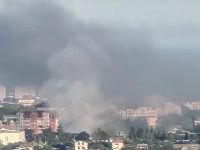
By midday, more details emerged about the missile strike on the fleet HQ building on Gogol Street in temporarily occupied Sevastopol.
For those who have already forgotten the backstory, here is a quick recap of previous episodes.
Storm Shadow Round One: A Warm-Up Act
Three years ago, a pair of Storm Shadow missiles destroyed the Black Sea Fleet headquarters building, which had served as the fleet’s headquarters since Soviet times. The missiles arrived at a particularly unfortunate moment. The fleet commander had gathered senior officers for a meeting, but the discussion ended ahead of schedule. According to eyewitness accounts, one missile struck the exact section of the building that housed the commander’s enormous office. Coincidentally, that was also where the meeting was taking place. As a result, the agenda ended rather abruptly.
Then things got a little mystical. Russian propagandists insisted the building was completely fine and the commander walked away without a scratch. They even aired footage of Admiral Viktor Sokolov participating in some kind of video conference. The problem is that nobody has actually seen Sokolov in person since then, and he himself has never bothered to explain his miraculous “survival”.
Worth remembering: the same pattern played out with the cruiser Moskva. After Ukraine’s first reports of hitting the ship, the enemy called it fake news and announced the cruiser was doing just fine — cheerfully spinning its propellers and terrorizing seagulls as usual. Only later, when photos of the burning and sinking vessel surfaced, did Russia acknowledge that something had gone slightly wrong and the ship had been “temporarily relocated to the bottom of the Black Sea”.
Back to the September 2023 Strike
The damage to the headquarters was so severe that, in all likelihood, nothing remained of the commander or anyone present at that meeting — except DNA fragments collectible from the rubble. Unsurprisingly, bulldozers arrived shortly after, and the Black Sea Fleet headquarters exists now only as a memory. However, someone still needs to command whatever boats are left, and that requires a suitable venue. For exactly such situations, the Soviets had the foresight to build backup command posts. Fully equipped with communications, a canteen, and all the comforts.
The only problem: all of that infrastructure sits on occupied Ukrainian territory, which means it held no particular secrets for us. After losing the main headquarters the fleet had to move somewhere less convenient. By all indications, that somewhere turned out to be the Black Sea Fleet’s aviation headquarters on the very same Gogol Street. That is exactly where the missile strike landed at 05:50 on 27 May.
Two for the Price of One
It is difficult to say who attended the missile strike on the Fleet HQ or how many servicemen were inside at the time. However, judging by photographs published by the Crimean Wind Telegram channel, the entire building ended up in what Ukrainians would call a “grill” condition. Local residents reported a steady stream of ambulances. Later, a Ural military truck was spotted in the courtyard of the destroyed building, with Russian servicemen loading large black bags into it.
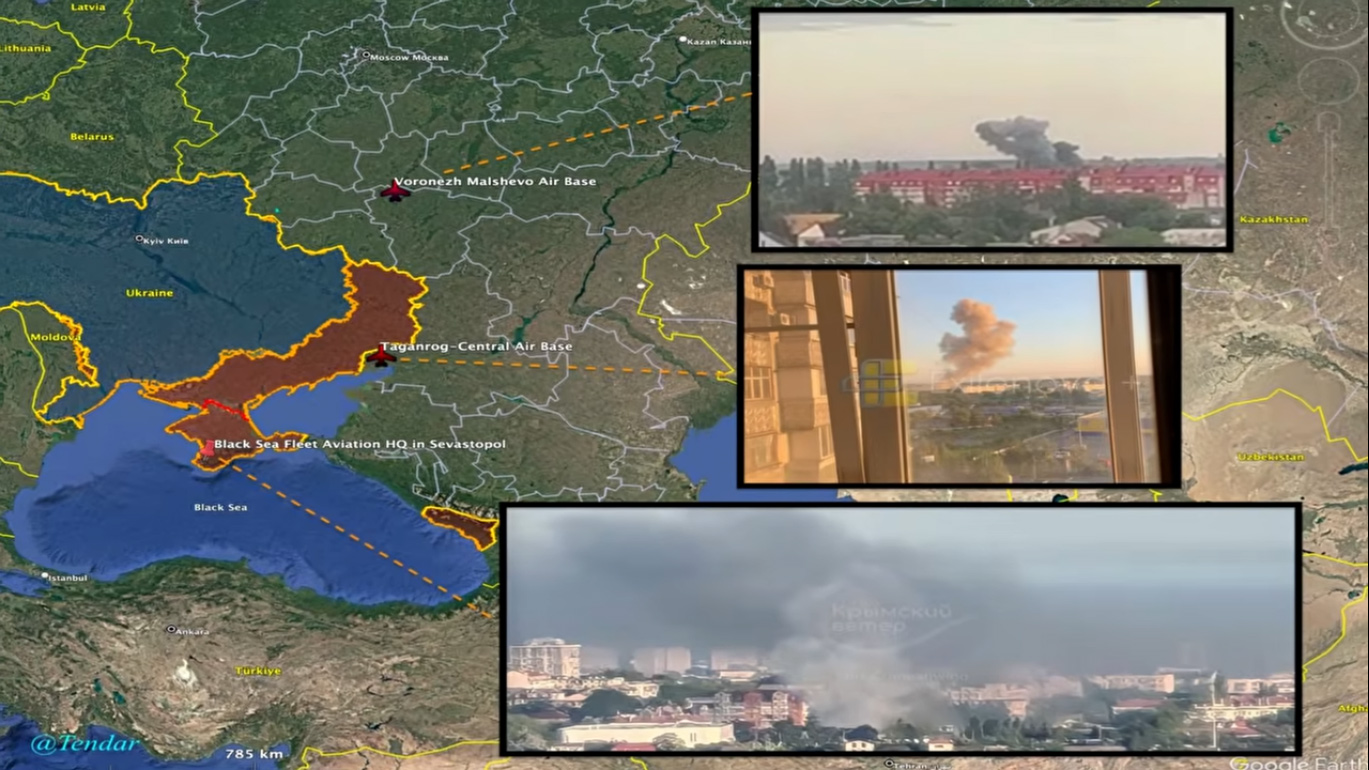
There is one more angle worth considering here. Over the course of the full-scale invasion, the Russian fleet has suffered such catastrophic losses that it now resembles a trimmed-down flotilla rather than a serious naval force. As a result, it requires far fewer command staff than before. Aviation losses, meanwhile, have not yet reached the same level of disaster, and replacing aircraft is at least somewhat easier than replacing warships. Logic suggests that both the naval and air force commands may have been sharing the destroyed building. If that is the case, this was genuinely a two-for-one deal. Nobody will confirm it officially, of course — the enemy has its own security protocols. But obituaries, financial disclosures, and other indirect evidence tend to surface eventually.
Here is what the Kremlin’s hand-picked puppet in Sevastopol, Mikhail Razvozhayev, had to say:
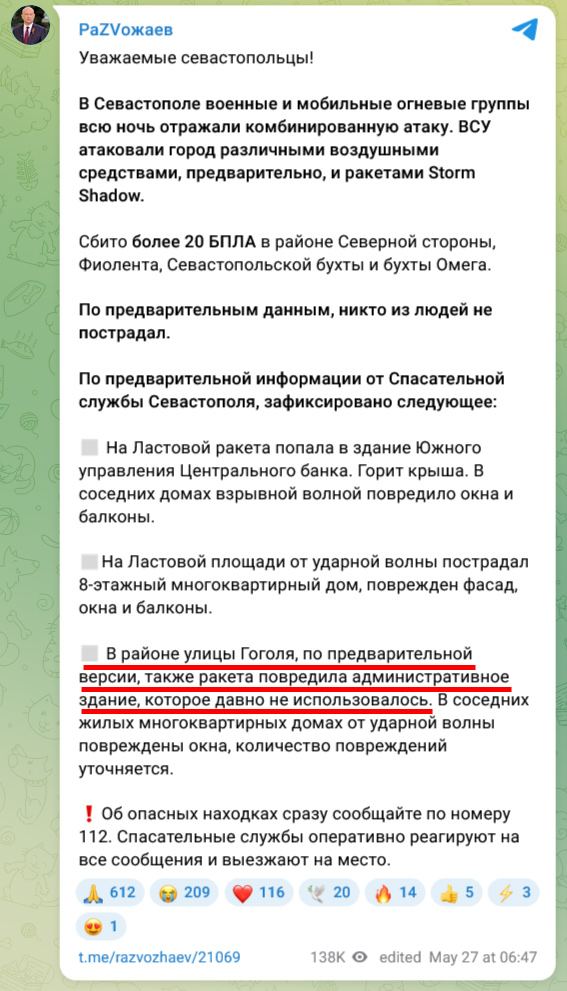
According to him, the strike damaged an administrative building on Gogol Street. Allegedly, the building had not been used for a long time.
Third Time’s the Charm
The real question now is: where does the enemy set up its next headquarters? Strangely, they have not yet tried a school or a college. As everyone knows, these things come in threes — so the Black Sea flotilla is waiting. We have absolutely no doubt that the third headquarters will end its operational life exactly the same way: under the roar of bulldozers scraping away what is left of its walls.
Related posts:

Chonhar Bridge Strike: Ukraine Expands the Crimea Blockade
On the night of June 9, Ukraine’s armed forces delivered the second consecutive devastating strike on the Chonhar Bridge, bringing all traffic across this critical crossing to a [...]
Why Russia Uses Small Group Tactics and How to Counter
It looks like Russia’s top military command has concluded that the tactics its occupation army used before no longer deliver the results Pootin keeps demanding. So they changed [...]