

June 2 Massive Strike: The Enemy Is Going All-In on Ballistics
The unfiltered truth from Ukrainian soldiers and volunteers. Just war as it is. Reader-supported.
Support →

June 2 massive strike was one of the heaviest combined strikes since the full-scale invasion began. This time, the real concern wasn’t the drones — it was the number of ballistic and hypersonic missiles.
Last night the enemy launched a large-scale combined attack on Ukraine — roughly the one that was supposed to happen on Friday night. As we noted earlier, a preemptive strike on one of the Iskander launch positions disrupted that attack. And the point was not just losing a launcher — the enemy realized that we had uncovered its plan and that other UAVs might already be loitering over the sites it had chosen for the next salvo. So last night it fired everything it currently had.
What Was in the Air
According to General Staff, the picture looked like this:
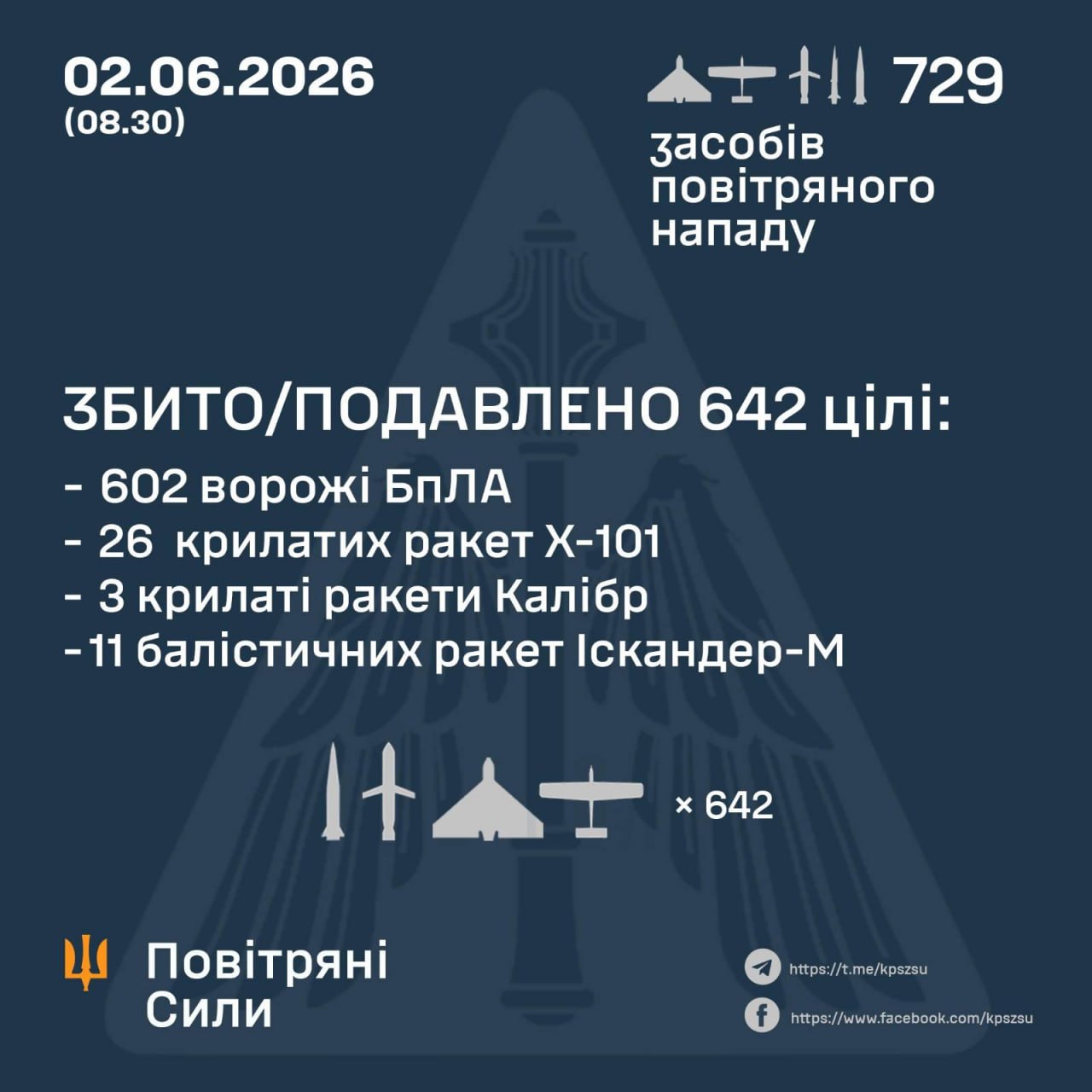
The breakdown by weapon type and interception results (launched / intercepted):
- Hypersonic anti-ship missiles 3M22 Zircon — 8 / 0;
- Ballistic missiles Iskander-M — 33 / 11;
- Air-launched cruise missiles X-101 — 27 / 26;
- Sea-launched cruise missiles Kalibr — 5 / 3;
- Strike drones of various types — 656 / 602;
The primary target was Kyiv, but Dnipro, Zaporizhzhia, and Kharkiv were also hit. The geographic distribution looked like this:
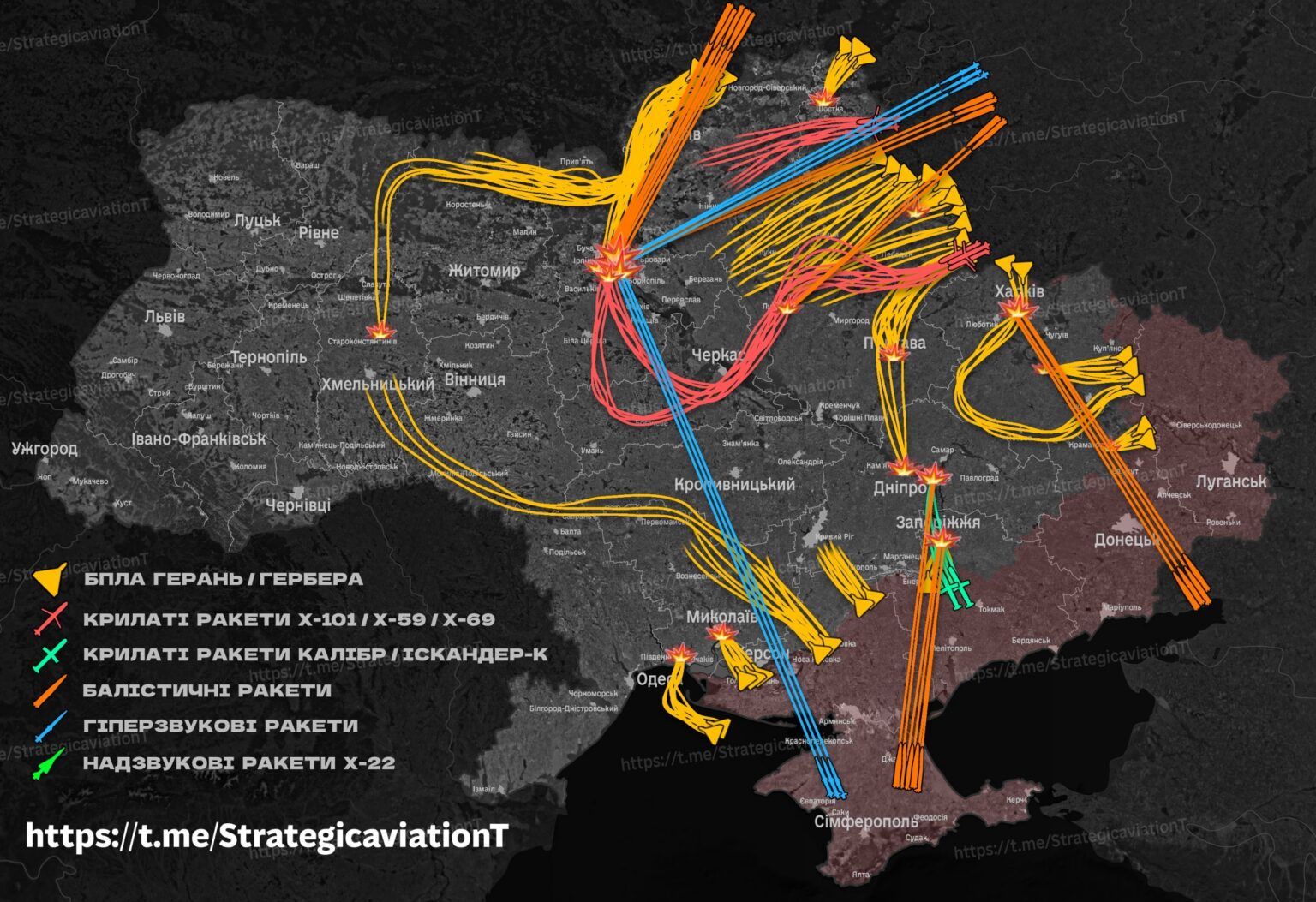
Unfortunately, many missiles got through. Some Iskanders flew toward targets outside Kyiv, making it impossible to determine how many actually targeted the capital. My guess is that our air defense shot down all 11 intercepted Iskanders around Kyiv. The Zircons are another story. This time, our air defense failed to intercept any of them, despite successful interceptions during previous attacks. Then again, the enemy has never used this many Zircons in a single strike before.
A Word on the Zircons
One thing worth noting — the enemy fired Zircons exclusively from temporarily occupied Crimea. That makes sense — this is technically an anti-ship missile, designed to operate near coastlines. But apparently the occupation command has reached the correct conclusion that large naval engagements where these missiles might actually be used are no longer in the cards. Sitting on stockpiles of expensive anti-ship missiles with nothing to shoot at is wasteful, so they found another use for them.
As for the ballistics that flew toward targets outside Kyiv — those almost certainly reached their targets, or at least the target areas. Over Kyiv, however, our air defense intercepted at least part of the ballistic salvo, and as the infographic above shows, combat aviation took down a significant portion of the cruise missiles well outside the city.
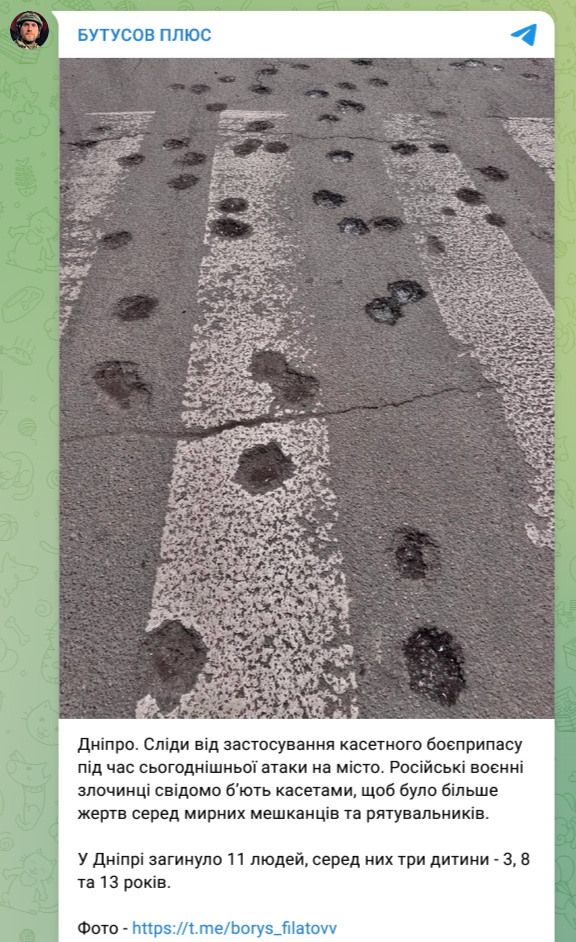
The June 2 massive strike left dead and wounded in Kyiv and other cities. At the time of publishing, Kyiv counted five dead and dozens wounded. Dnipro suffered the highest death toll — 11 people, including 3 children. Overall figures for Ukraine will likely follow later. The Air Force reported confirmed hits from 30 ballistic missiles, three cruise missiles, and 33 strike drones across 38 locations, with additional strikes on 15 more locations.
Three Conclusions
First — this was one of the largest attacks since the start of the full-scale invasion. Previous attacks that exceeded last night’s in total munitions used usually had a massive drone component and far fewer missiles. Moreover, in those attacks the missile portion was typically dominated by cruise missiles of various types. Last night, ballistics were the main event.
Second — Ukraine’s forces have become very effective at neutralizing cruise missiles. And since the air force will soon receive aircraft from France and Sweden, the cruise missile problem looks increasingly manageable.
Third — the June 2 massive strike confirmed a trend we have been watching for weeks: a clear shift in the enemy’s missile composition. The enemy will increasingly bet on ballistics, and ballistics can only be countered by modern air defense systems like Patriots.
The Preemptive Hunt Option
That said, countering the enemy’s ballistic missiles does not have to mean air defense systems alone — where we face a permanent shortage. The alternative is preemptive strikes, as demonstrated recently against the Iskanders and earlier against the Zircons. Both used drones.
This means a drone has to fly for at least several hours to reach the area where the enemy plans to deploy a launcher. It then loiters over the location, waits for the launcher to show up, acquires the target, locks on, and destroys it. That option was not available in time on the night in question — but the approach has already proven it works.
Related posts:

Another Russian Terror: Massive Attack on Kyiv on July 6
On the night of July 6, the enemy carried out another massive combined attack on Kyiv. Some of it landed elsewhere too, but the capital bore the main [...]
Lessons from the Massive Attack on Kyiv on July 2
The massive attack on Kyiv on July 2 was predictable even without any inside information. The enemy runs this format regularly — sooner or later it was going [...]