

June 15 Massive Strike: Record Ballistics, Cultural Sites Hit
The unfiltered truth from Ukrainian soldiers and volunteers. Just war as it is. Reader-supported.
Support →
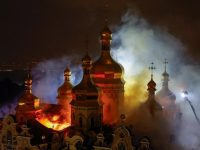
On the night of June 15, the enemy launched a massive combined strike on Ukraine using attack drones along with air-launched and ground-launched missiles of various types. The main direction was Kyiv, though Dnipro and Kharkiv were also hit by missiles. The June 15 massive strike was not the largest in terms of total munitions launched, but it set a new record for the number of ballistic missiles fired since the start of the full-scale invasion.
According to the General Staff, the Russian attack looked like this:
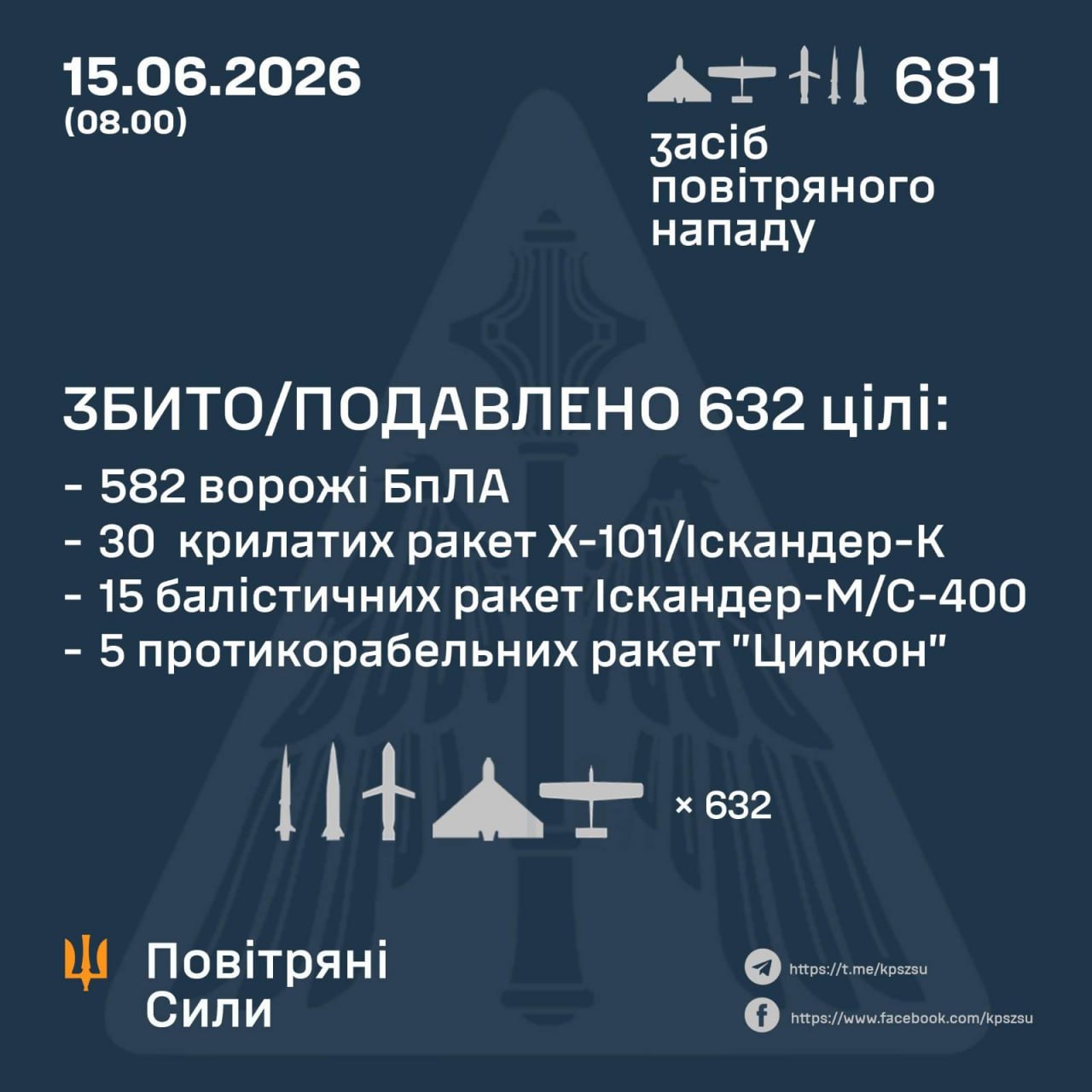
Ukraine’s air defense forces tracked 681 aerial attack assets in total — 70 missiles and 611 UAVs of various types. As of 8:10 AM, the breakdown by type and interception results (launched / intercepted) was as follows:
- Hypersonic anti-ship missiles 3M22 Zircon — 6 / 5;
- Ballistic missiles Iskander-M / S-400 — 34 / 15;
- Air-launched cruise missiles X-101 — 30 / 30;
- Strike UAVs of various types — 611 / 582;
By morning, the State Emergency Service reported four dead and 25 wounded in Kyiv, with damage across nearly every district of the capital. In Kharkiv, the enemy used a deliberate double-strike tactic. They launched four ballistic missiles into the same location specifically when rescue workers were already on site, killing five first responders. Later, Kyiv Mayor Vitali Klitschko reported that one of the critically wounded women had died in hospital. The death toll rose to ten. Doctors are still fighting for the lives of other patients, and given the number of people in critical condition, the final casualty count from this terrorist attack may still rise.
Record Ballistics — and a Pattern
The enemy clearly understands how difficult ballistic missiles are to intercept, and has been leaning heavily on them. On February 3, Russia launched 32 Iskander-M missiles. On June 2 it was 33, and tonight that number reached 34. Worth noting separately are the Zircons, which are technically cruise missiles but, due to their speed and approach trajectory, are closer to ballistics in terms of interception difficulty.
That said, the interception rate on the hardest targets was better than last time. Out of 40 ballistic missiles and Zircons launched, 20 were intercepted — 50%. All 30 cruise missiles were intercepted — 100%.
Watching the timings through the night, the most likely conclusion is that there were no Iskander launcher reloads during this attack — multiple batteries were working simultaneously. Previously there were gaps of roughly 35 to 40 minutes between ballistic waves — exactly the time needed to reload. One Iskander launcher fires two missiles about a minute apart. Tonight the pattern was standard except for the absence of that half-hour reload pause. The ballistic waves formed as fast as possible, which means more than ten launchers were active — essentially a full enemy rocket brigade at work. And that tells you something: they were not afraid of our drones taking out their launchers the way it happened before the last strike. The enemy feeling safe is actually good news for us.
A Deliberate Attack on Ukraine’s Culture
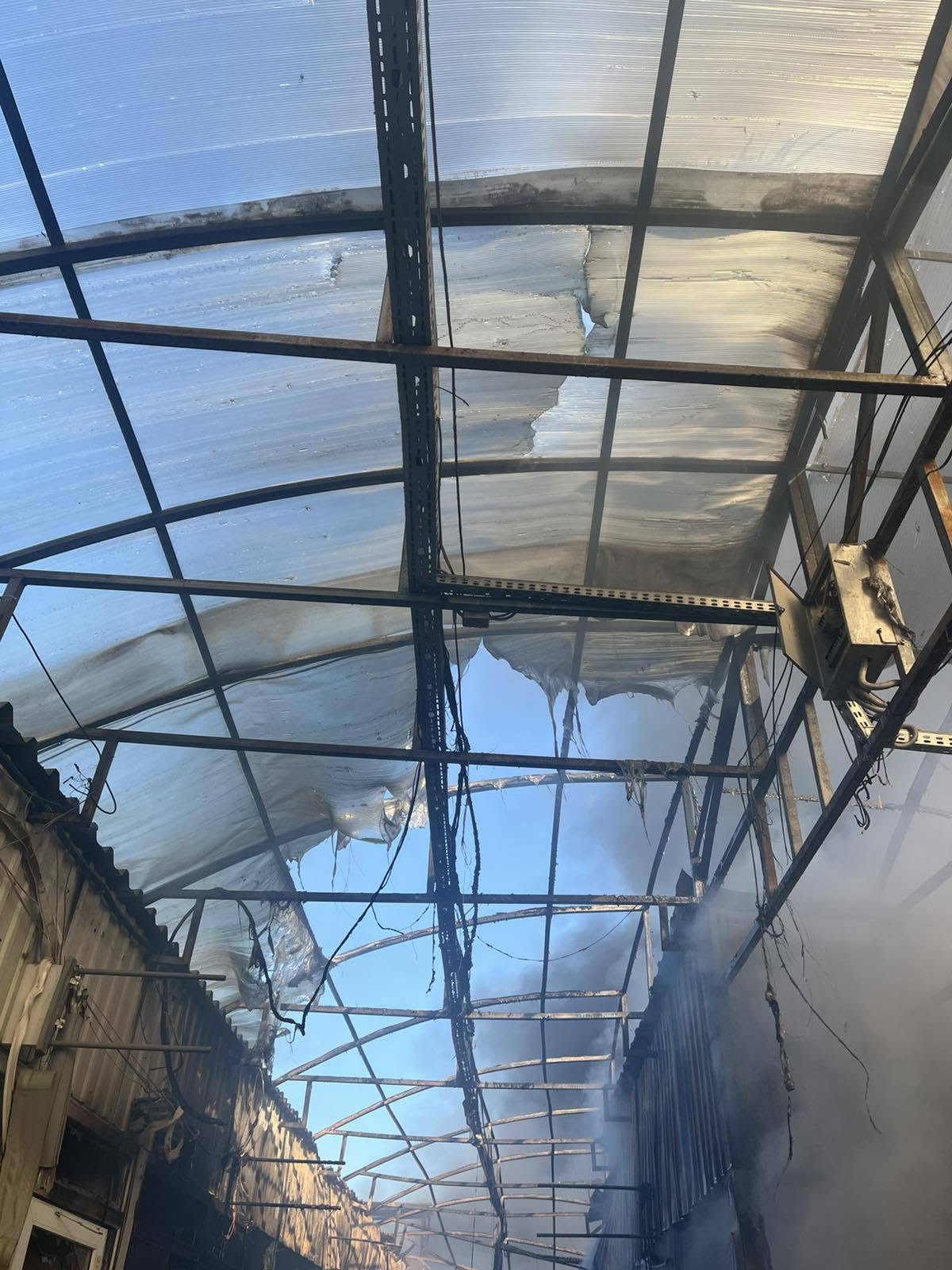
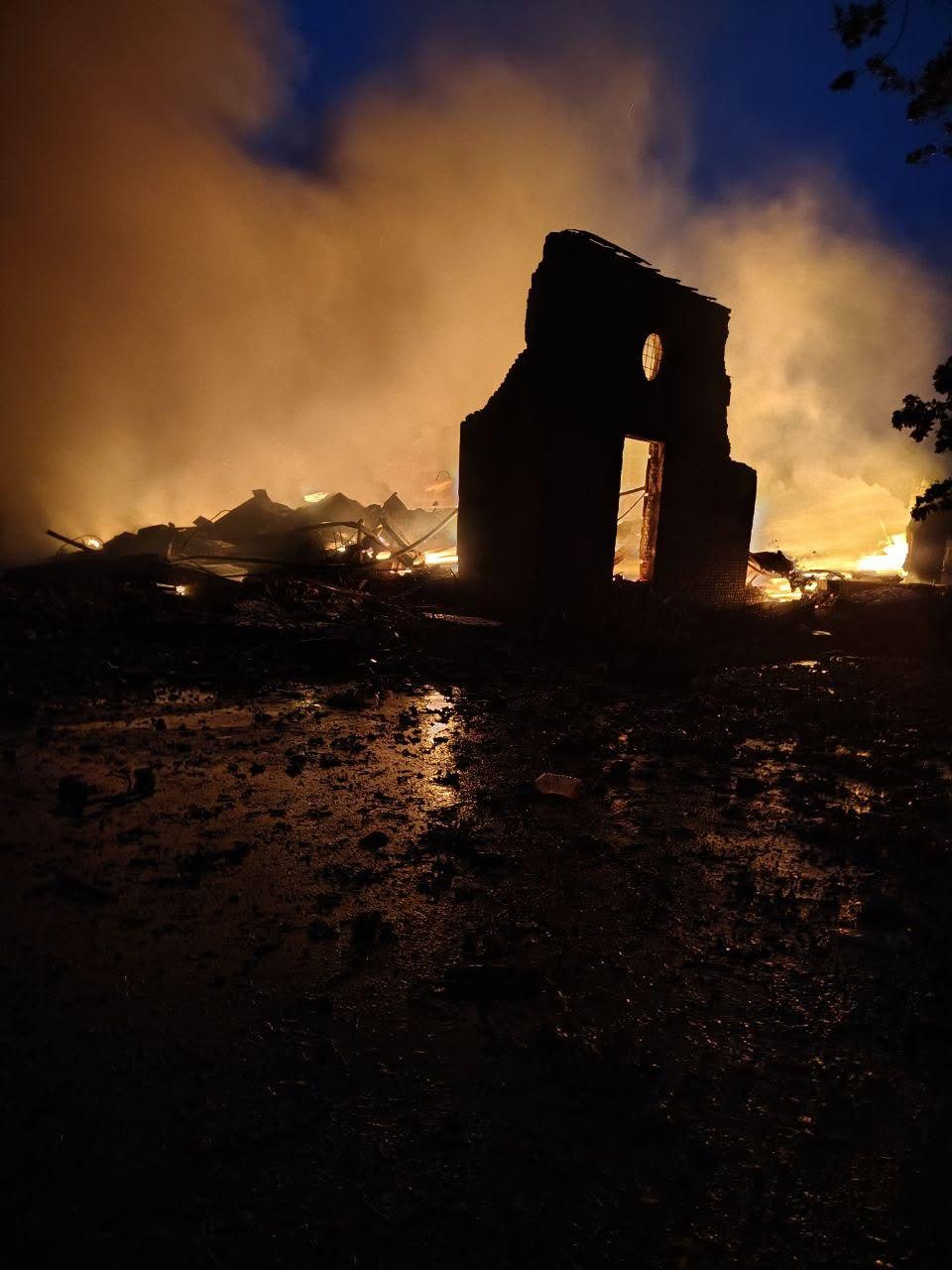
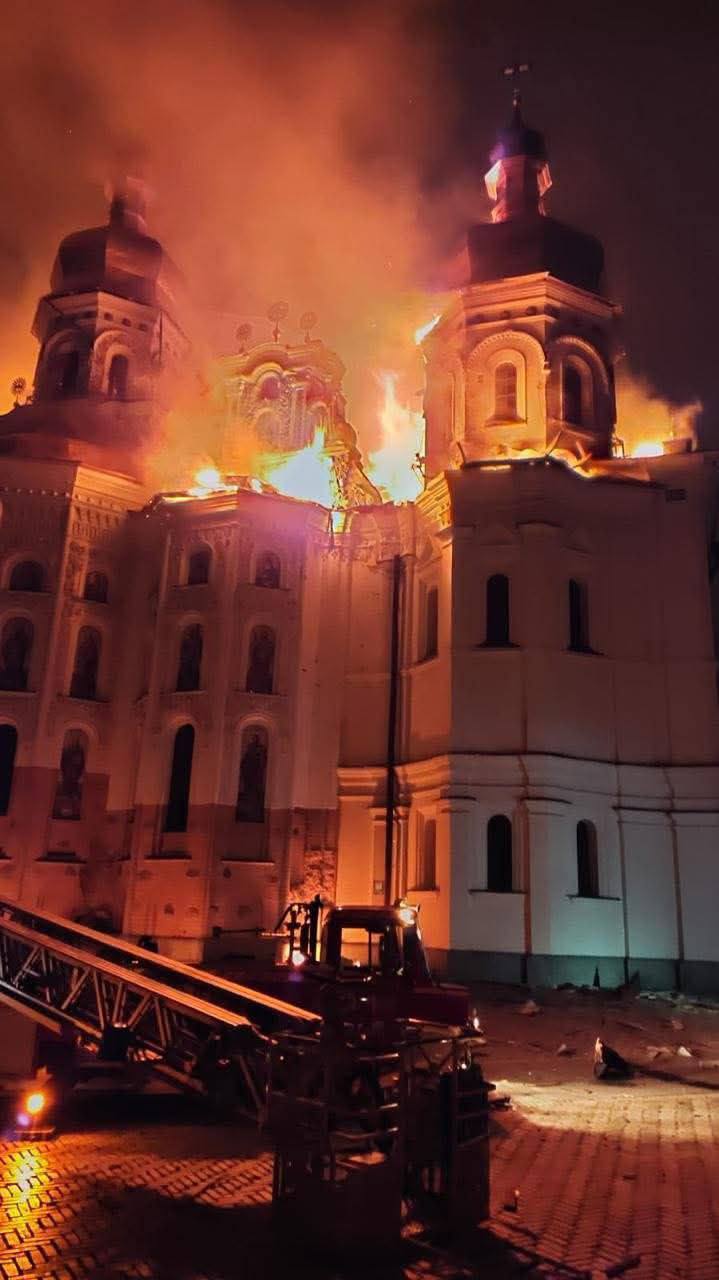
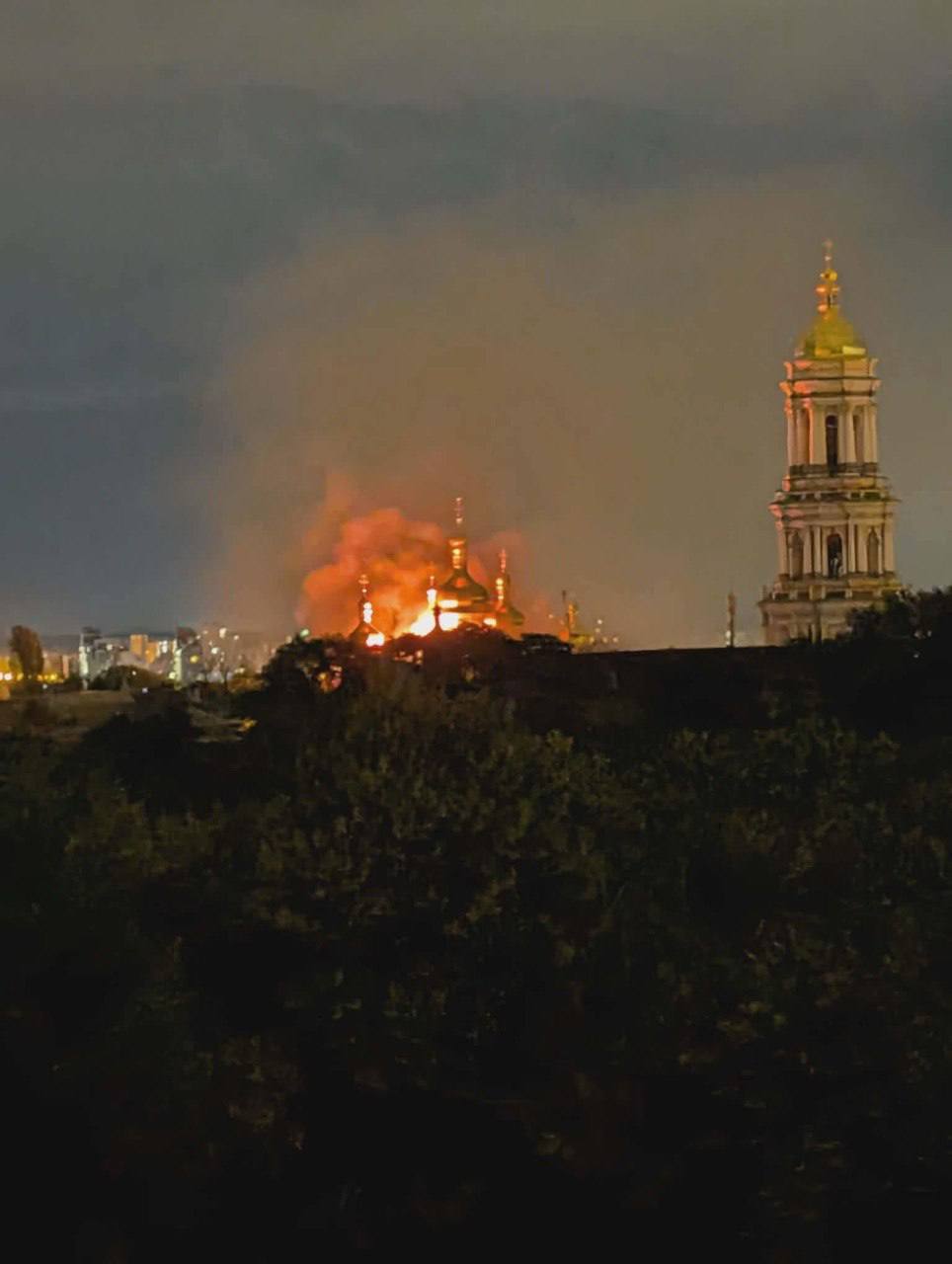
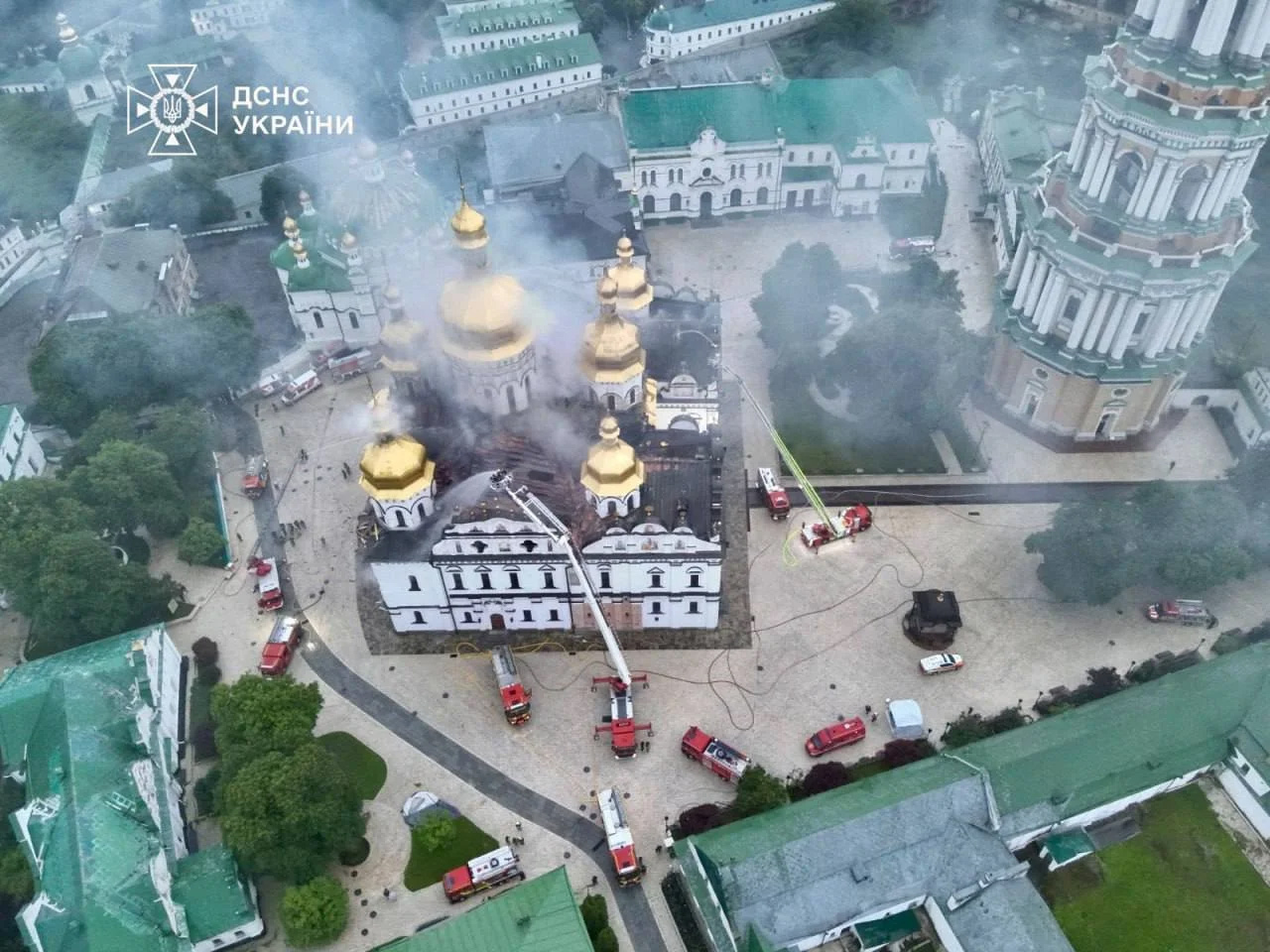
One thing that stands out sharply in tonight’s June 15 massive strike — a large number of hits landed on historical and cultural sites. The Kyiv-Pechersk Lavra, the Dovzhenko Film Studio, the Ukrkinokhronika documentary film studio, the National Palace of Arts “Ukraine”, the National University of Theatre, Film and Television named after Ivan Karpenko-Karyi, the National Cultural and Museum Complex “Mystetskyi Arsenal”, the book market on Pochayna Street — and this is not even a complete list. Compare that to the military factories and oil refineries that Ukrainian drones are hitting on Russian territory.
Why Sunday Night?
The timing is also worth noting. The enemy usually launches these massive strikes on Friday-to-Saturday or Saturday-to-Sunday nights. This time it came Sunday to Monday — and so far the only theory that fits is that it is old Donnie’s birthday. In all likelihood, the Kremlin dictator did not want to launch a terrorist attack on the same day as congratulations to the most magnificent hair in the world.
Meanwhile, just as this article was being finished, the OSINT group CyberBoroshno geolocated the crash site of an enemy Tu-22M3 bomber.
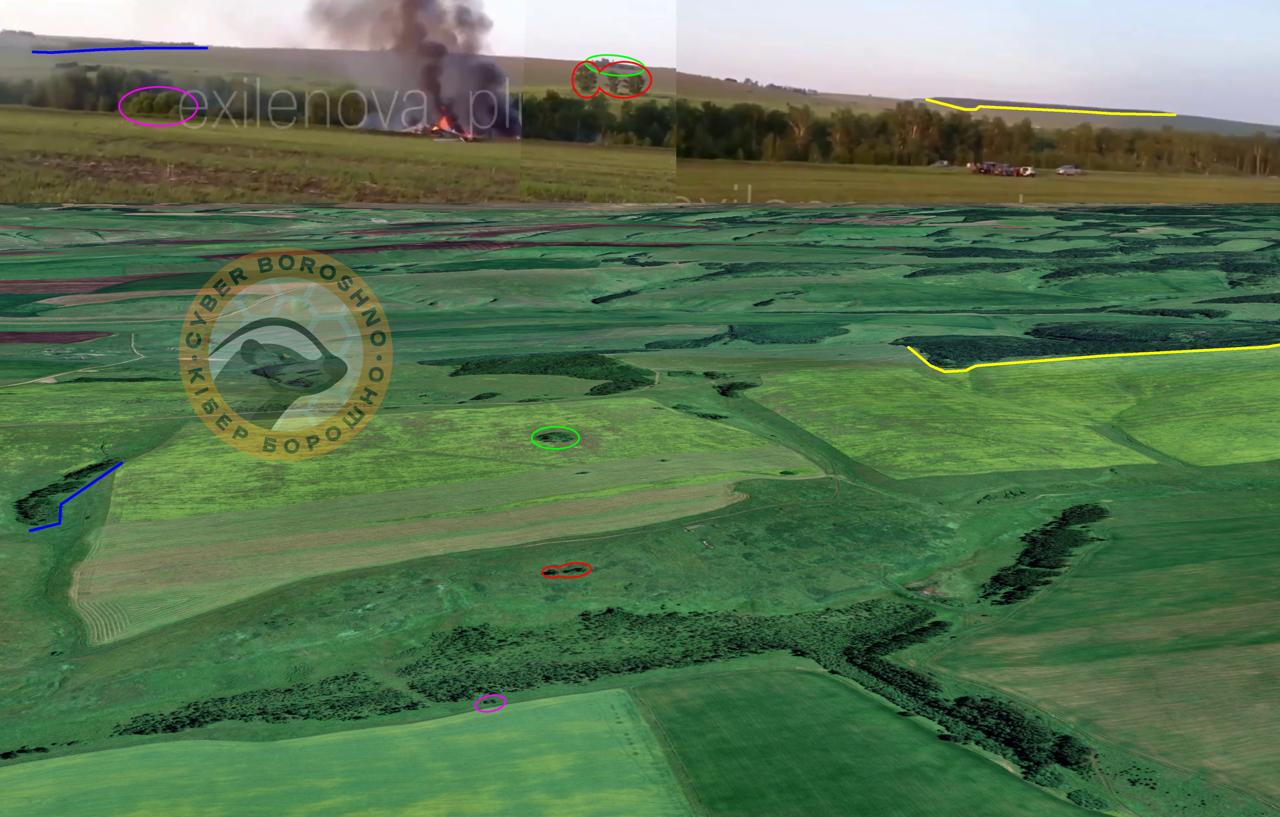
However, the location is in the Irkutsk region — over 4,500 kilometers from the Ukrainian border. We have no capability to destroy bombers at that distance.
Related posts:

Another Russian Terror: Massive Attack on Kyiv on July 6
On the night of July 6, the enemy carried out another massive combined attack on Kyiv. Some of it landed elsewhere too, but the capital bore the main [...]
Lessons from the Massive Attack on Kyiv on July 2
The massive attack on Kyiv on July 2 was predictable even without any inside information. The enemy runs this format regularly — sooner or later it was going [...]