

May 29 combined strike: Kyiv Under Attack Again
The unfiltered truth from Ukrainian soldiers and volunteers. Just war as it is. Reader-supported.
Support →

The enemy repeats the sequence of its actions. If the previous night was devoted to an air strike with Shaheds, we expected the next night would be devoted to a missile strike. But the past night showed us a combined strike — Shaheds and 40 cruise missiles together. Russia launched the May 29 combined strike with one clear message. The enemy have many Shaheds and don’t mind spending them.
If any limit existed on these means of destruction, we would most likely have seen a purely missile strike. This once again says it’s desirable to destroy this trash wholesale at the moment when they haven’t yet launched it.
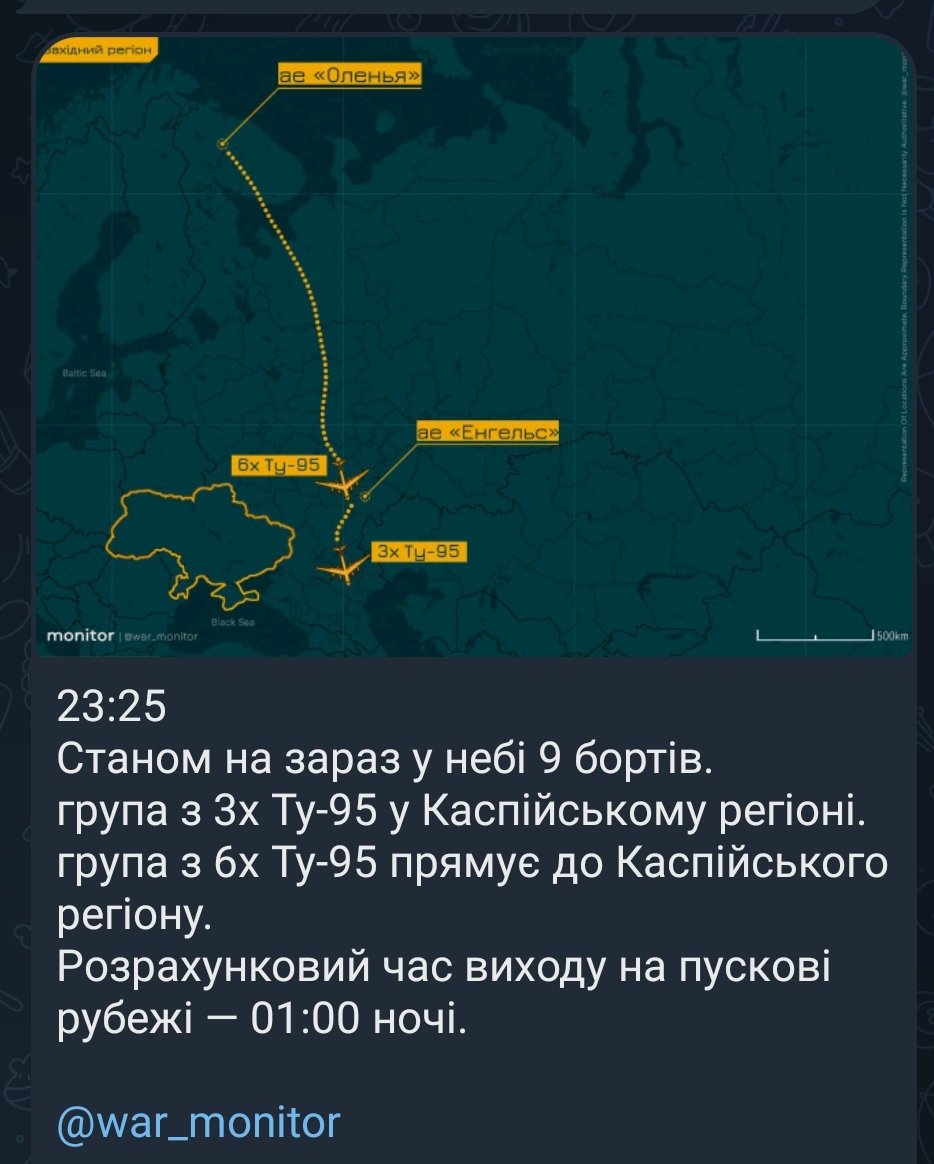
We’ll note separately that Tu-95 bombers, from which the maximum number of cruise missile launches occurs, are a “sweet” target for surface-to-air or air-to-air missiles. Their dimensions, thermal signature, weak maneuverability, and flight altitude are simply ideal. You could even say it’s impossible to invent a better target. The only thing that can protect these aircraft from defeat is a flight route that avoids enemy air defense zones or fighter aviation. That’s why they launch missiles from such great distance.
Five Hours to Prepare the Shot
Being relatively slow, such aircraft “light up” all five hours of flight from their airbase to launch areas. If we had the necessary means of destruction, in five hours we could prepare and work on these scrap metal in the most exquisite way. Most likely, the enemy is very worried about F-16 aircraft deliveries to us. Because in a certain configuration, with some type of ammunition, they can reach some point on the bomber flight route and land them directly in the Caspian.
In such a case, the enemy will have to either move all commercial traffic farther East to push back the missile launch zone, or abandon this completely. Apparently, with an eye to such possibility, they’re now expending cruise missiles at maximum pace. At least, in one sortie they fire approximately a monthly norm of their production. Considering that 90+ percent simply gets shot down, this undertaking, from a military point of view, has very dubious character.
In this case, we won’t reason about where and what struck there, and what the ammunition that broke through destroyed, since this is our military’s business. Instead, we’ll note another feature that’s been observed for some time but remains outside the field of view. We’ve surely seen, heard, or ourselves said that after another raid with missiles or drones, we need to roll back a worthy “return” to the enemy. Since only this way will the full price of their actions add up for them. It will include not only the cost of spent ammunition — in this case exceeding 50 million dollars — but also what they received in response.
Strike Back While Missiles Still Fly
Now we observe that the Armed Forces of Ukraine don’t delay with response. As soon as reports go out about missile or drone launches, intensive missile-drone shelling of the enemy immediately begins — both on occupied Ukrainian territory and on their internationally recognized territory. Reports are just now coming in about where the Armed Forces of Ukraine directed strikes. But it’s already known that harsh strikes hit enemy troop positions in the Mariupol area.
According to other reports, after a strike on one of the military objects in the Moscow region, the public noted long, repeated detonation. What exactly detonated there remains unknown, but the fact remains. While we observe the course of the enemy’s raid on our cities, appropriate tools already flew to them. Well, as always, such response actions almost never happen without something flying to Shebekino. Meanwhile, as of 11:09 AM, sirens are wailing again in the capital.
The math doesn’t work in Russia’s favor. They expend a month’s missile production in one night. Ukraine shoots down 90+ percent. What gets through causes damage, but Ukraine responds immediately with strikes that hit troop concentrations and ammunition depots. The May 29 combined strike cost Russia over $50 million and achieved little except triggering Ukrainian retaliation.
Related posts:

Another Russian Terror: Massive Attack on Kyiv on July 6
On the night of July 6, the enemy carried out another massive combined attack on Kyiv. Some of it landed elsewhere too, but the capital bore the main [...]
Lessons from the Massive Attack on Kyiv on July 2
The massive attack on Kyiv on July 2 was predictable even without any inside information. The enemy runs this format regularly — sooner or later it was going [...]