

Ukraine Strikes Moscow Refinery With Drones
The unfiltered truth from Ukrainian soldiers and volunteers. Just war as it is. Reader-supported.
Support →
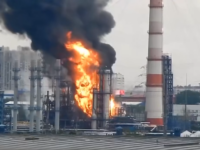
Today’s Ukraine Strikes Moscow Refinery hit the primary distillation unit in Kapotnya. As anyone following these strikes already knows, knocking out primary distillation shuts down everything downstream. If a plant runs on a single unit like this, processing stops completely. If there are several, output drops by whatever share that unit was handling. One more thing. A strike on primary distillation usually does not produce the kind of spectacular fire people expect. Automatic safety systems cut the oil supply to the unit, so only what was inside at the moment of impact actually burns.
The General Staff reported the strike in its usual dry manner, so we decided to take a closer look at what it actually achieved. It is no secret that our specialists have been shifting their focus toward secondary refining units when planning attacks like these. These are the facilities that turn crude already processed by the primary distillation unit into gasoline, diesel fuel, or kerosene. In other words, knocking out a specific secondary unit reduces the output of a specific product, while production of other products can continue. The overall refining volume falls by a smaller amount, but secondary units are more expensive, more complex, and take much longer to repair. At Kapotnya, however, the hit landed on primary distillation — and in the bigger picture, that’s still a good sign.
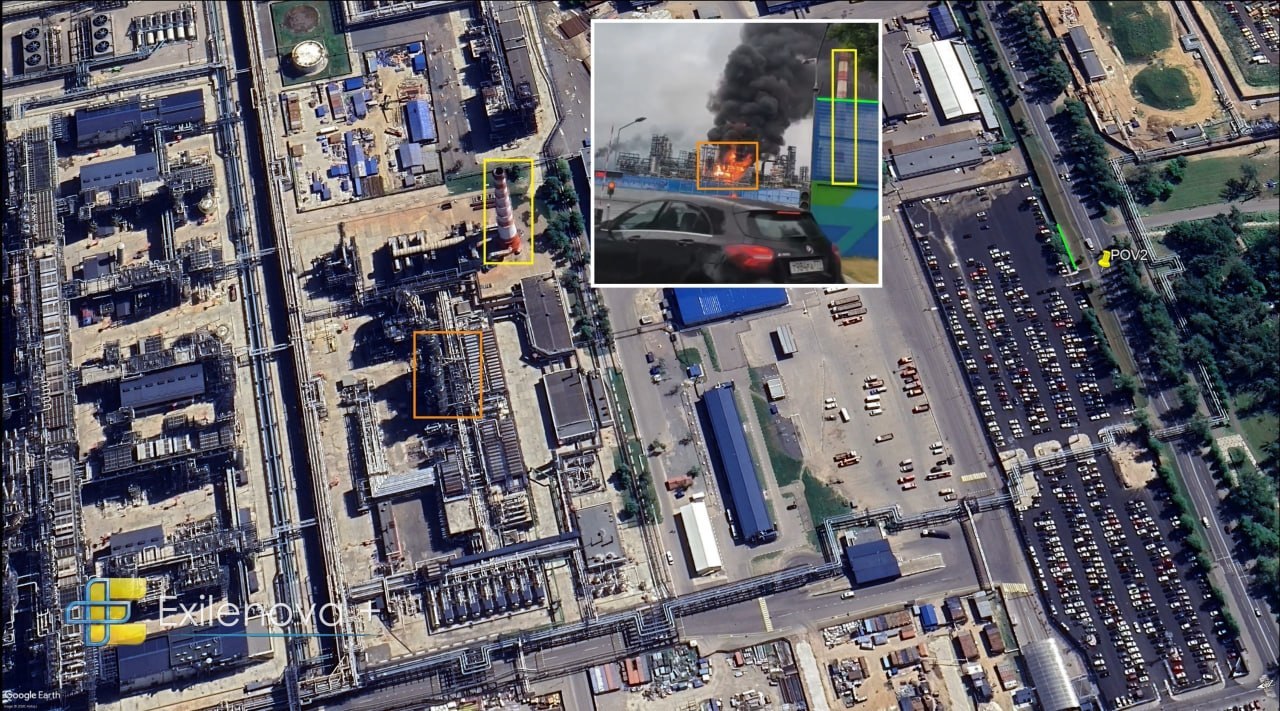
It’s reasonable to read this as a test strike — not primarily about destroying this particular target, but about probing what’s possible at this particular location. And when assessing what happened, the key word here isn’t “refinery.” It’s “Moscow”.
Why Kapotnya — and Not Something Bigger
The Gazprom-owned plant at Kapotnya is not the largest refinery in Russia. In pure damage terms, there were more important targets available. But this strike hit a strategic facility inside the capital’s own agglomeration — and that changes the calculus entirely. The Kremlin and the mausoleum have no strategic value. Neither does the Russian Defense Ministry building or the central apparatus of Putin’s power — anything that matters there runs through vast underground complexes connected by a dedicated metro line.
A refinery is different. Unlike those “decision-making centers”, it has real industrial value. And when you hit it, the result is visible immediately — a fire, smoke, confirmation. If Ukraine’s Defense Forces were testing Moscow’s reinforced air defenses, the Kapotnya plant was the ideal target: practical, confirmable, and impossible to spin away.
The Moscow agglomeration holds dozens of facilities that have been on the target list for a long time — factories producing key components for cruise and ballistic missiles, without which final assembly becomes impossible. These targets are exceptionally important, and their locations are exceptional too, which means they’re protected by every available air defense asset the enemy can throw at them.
Testing the Lock Before Picking It
Reaching those targets will require large numbers of strike assets, with the assumption that a significant portion will be intercepted. Before planning strikes of that scale, you need to test the relevant technologies and establish the actual ratios — how many get through, under what conditions, against what defenses. There’s no way to know this except by doing it. So you pick a convenient target in the target location, one where success or failure is immediately obvious. Ukraine strikes Moscow refinery infrastructure and watches what happens. The Kapotnya plant was a perfect indicator.
Hitting a machine-building plant with no fuel or explosives on site produces almost nothing visible. No fire, no secondary detonation, and no clear answer as to whether the Good Birds* did their job. The footage from Kapotnya tells a different story. At least one drone — visible on video — was already inside the air defense blind spot and flying calmly toward the target.

Ukrainian Forces Found a Way Through
That means Ukrainian forces found the key to this particular lock. Everyone saw it, including the enemy. Ukraine’s Defense Forces penetrated Moscow’s dense layered air defense zone and placed a drone precisely on its target. Frankly, it was not even that large.
The same footage clearly shows several enormous storage tanks standing right next to the impact site. We all know what happens when a strike lands on one of those tanks. When several of them sit packed tightly together, as they do in the Kapotnya footage, the result becomes even more spectacular. The enemy knows that too. They understand perfectly well that if the target had been one of those tanks rather than the ATB-6 distillation unit, dear Muscovites would have spent the evening watching half the sky turn black.
There is no doubt that Ukraine’s military has dozens — more likely hundreds — of plans sitting in a drawer, waiting for the moment when the math works out: enough assets, the right technology, the right ratio of effort to result. The results from Kapotnya prove that when Ukraine strikes Moscow refinery infrastructure, it’s no longer just a test — it’s a warning that those drawers are about to be opened.
*Good Birds – slang for strike drones. Why “good”? Because they bring “warmth and light” to enemy military factories, ammunition depots, and oil refineries. Sarcastic? Of course. Effective? Even more so.
Related posts:

To Light a Fire in Moscow: The Song Came True
Even before today’s fire in Moscow, Orc¹ moods had been getting noticeably worse, especially after the strike on the Moscow refinery. The strike on the Kapotnya plant hit [...]
St. Petersburg Oil Terminal Attack: Pootin Gets a Slap on SPIEF
On June 3, 2026, Ukraine’s General Staff confirmed the St. Petersburg oil terminal attack by Ukrainian drones — along with a string of other high-value targets. The list [...]