

Chonhar Bridge Strike: Ukraine Expands the Crimea Blockade
The unfiltered truth from Ukrainian soldiers and volunteers. Just war as it is. Reader-supported.
Support →
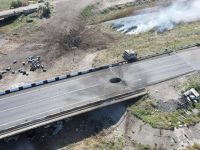
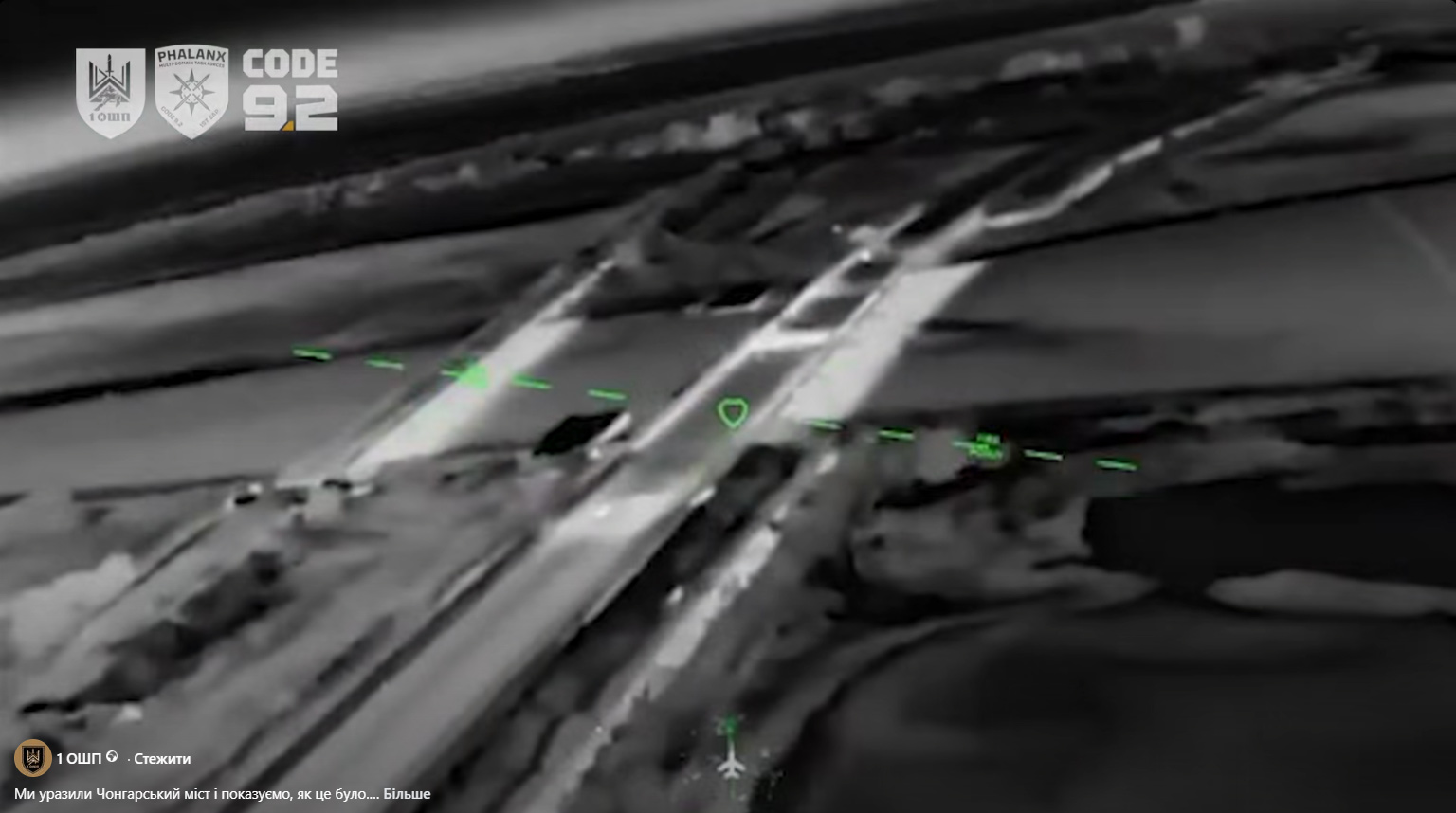
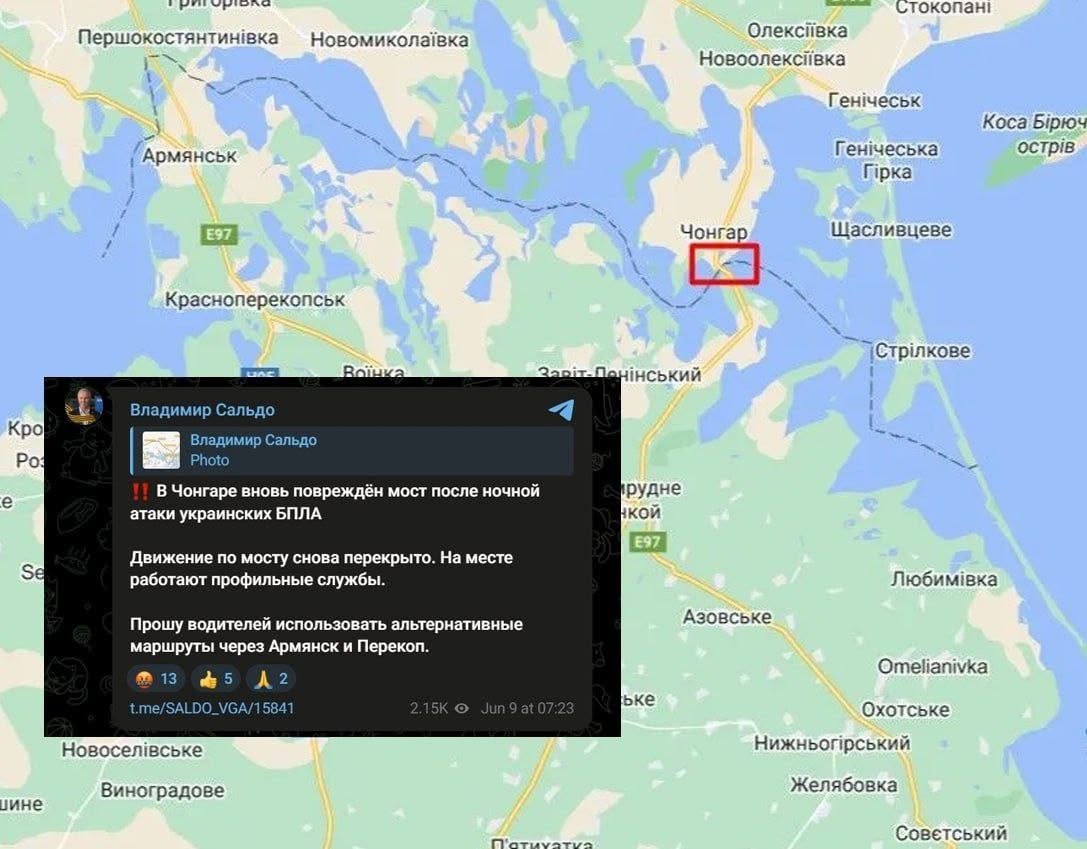
On the night of June 9, Ukraine’s armed forces delivered the second consecutive devastating strike on the Chonhar Bridge, bringing all traffic across this critical crossing to a complete halt. At 7:20 AM, the collaborator Saldo officially confirmed the damage. He also announced that the remaining military transport was being rerouted through Armyansk and Perekop.
Moreover, the operation is starting to resemble what happened to the Antonivka Bridge crossing – there, systematic strikes made repairs impossible. Each new strike inflicted more damage than the occupiers could repair, eventually rendering reconstruction efforts futile.
The strikes used FirePint UAVs and Behemoth drones. The Behemoth carries a dual warhead with a bunker-busting effect. First, one charge penetrates the concrete surface. Then, a second charge detonates deep inside the structure. Meanwhile, Russian command claims it can rely on alternative supply routes through Chaplynka. However, those routes pass just 50 kilometers from the front line. As a result, every enemy logistics column remains within range of Ukraine’s cheap long-range DARS drones. These drones cost about $2,000 per unit and they can strike targets at distances of 60 to 70 kilometers. Ukraine produces them in the tens of thousands.
The operation was carried out by drone pilots of the 1st Separate Assault Regiment named after Dmytro Kotsiubaylo and the 475th Separate Assault Regiment “CODE 9.2”.
Russian Buk, Pantsir, Osa, and Tor air defense systems are simply not present in this area anymore. The enemy is forced to scatter them to protect socially significant oil refineries deep in its own rear and major cities like Moscow and St. Petersburg. USF¹ “Raid” Regiment 413 commander Yevhen Karas commented to the BBC on Ukraine’s “long-range sanctions” — his words:
We fly in Russia like it’s our own territory. Almost no resistance, not hard to reach a target. And this looks like a very encouraging forecast for what we can do in occupied territories or on Russian territory to force Putin to stop the war.
Three Arteries, All Failing
Crimea depends on three main logistics routes: the Kerch Bridge, sea connections, and the land corridor through temporarily occupied southern Ukraine.
The Kerch Bridge, already softened up by previous strikes not unlike the Chonhar Bridge strike pattern, operates at severely limited capacity and has demonstrated a complete inability to support regular troop rotation — the risk of sudden collapse is simply too real.
Sea connections have effectively ceased to exist. The ferry Conro Trader now lies on the bottom of the Black Sea. The ferry Slavyanin no longer operates, the ferry Avangard suffered critical damage. In theory, Russia could repair the Avangard, but that would require two things. First, sanctions would have to disappear, because Russia cannot restore a vessel of this class without foreign components. Second, Ukraine would have to lose fire control over the Kerch shipyard. Neither condition is currently met, which means the ferry route is also out of the picture.
That leaves the land corridor through temporarily occupied Ukrainian territory, which has been under Ukrainian fire control for several weeks. Autonomous drones are methodically destroying military vehicles and fuel trucks along the E58 highway with such consistency that on June 7, enemy command banned all military cargo traffic on that section of the route.
The Numbers Behind the Blockade
USF Commander Robert Brovdi announced a 71% reduction in truck traffic — here is his statement:
The freedom-loving Ukrainian Birds (USF, AF, NGB, SOF, SBU, and other units) appeared in concentrated force at the operational depth in question. They delivered a number of fire strikes, as a result of which cargo traffic on the above-mentioned route has decreased by 71% over the past 14 days according to official sources — and has now been banned outright by the Khrobaks² command.
The numbers:
11,000 vehicles/day — total traffic on the relevant section of the “Novorossiya” highway, including 3,800 cargo vehicles/day.
As of early June: 6,500 vehicles/day total, including 1,100 cargo vehicles/day.
1,100 ÷ 3,800 = minus 71%.
What Comes Next
Today’s second strike on the Chonhar Bridge makes one thing clear: alongside the ongoing blockade of Russia’s land corridor to Crimea, a methodical campaign of bridge destruction has begun. Chonhar is first on the list — but the elimination of the two remaining crossings through Armyansk and Perekop is a matter of time, and probably not much of it.
¹USF – Unmanned Systems Forces, Ukraine’s newly established branch of the Armed Forces. No, not the U.S. Navy — in Ukraine USF means those who destroy Russian bombers, not those who park aircraft carriers.
²Khrobak – term used by Madyar and USF pilots for the Russian war criminals. Literally “vile worm” or “maggot” in Ukrainian. In nature, worms are food for birds; in war, Madyar’s Birds annihilate the Khrobaks.
Related posts:

Missile Strike on the Fleet HQ: Destroyed for the Second Time
By midday, more details emerged about the missile strike on the fleet HQ building on Gogol Street in temporarily occupied Sevastopol. For those who have already forgotten the [...]
Why Russia Uses Small Group Tactics and How to Counter
It looks like Russia’s top military command has concluded that the tactics its occupation army used before no longer deliver the results Pootin keeps demanding. So they changed [...]