

To Light a Fire in Moscow: The Song Came True
The unfiltered truth from Ukrainian soldiers and volunteers. Just war as it is. Reader-supported.
Support →
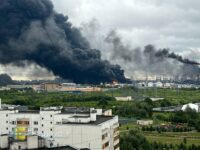
Even before today’s fire in Moscow, Orc¹ moods had been getting noticeably worse, especially after the strike on the Moscow refinery. The strike on the Kapotnya plant hit harder than just the fuel supply for the capital’s cars and, more importantly, its aircraft. What matters is the location — right in the middle of Moscow’s layered air defense perimeter.
As we know, the enemy built three complete rings of air defense systems around the city. Each ring overlaps the others, creating multiple layers of coverage. In recent weeks, they have even started building a fourth ring. Moreover, they are doing it openly and in full view of the public.
Pantsir on a Pedestal
One fashionable new solution has been mounting Pantsir air defense systems on raised platforms several dozen meters above ground level, or on rooftops of buildings. However, there is something particularly interesting about this approach.
The Pantsir is fundamentally a mobile system — its ability to quickly change position is the whole point. In military evaluation there is a specific parameter for this: “deployment and redeployment time”. The ability to move rapidly is critical. On the one hand, it allows a system to escape incoming strikes. On the other, it enables operators to establish air defenses in unexpected locations or reinforce sectors that suddenly require protection.
Also, when a system operates under sustained combat conditions, the ability to leave the target area immediately after exhausting its ammunition becomes critical. Kyiv residents know exactly what we mean. Everyone else can easily understand the logic as well. Once the missiles are gone and before reloading begins, the system turns into a large and vulnerable target. Mobility is survival. A Pantsir bolted onto the roof of a building loses that mobility completely, along with all the advantages that come with it.
Reloading is another problem
Even reloading becomes dangerous. Given the height of these platforms, ammunition will likely travel upward using some kind of crane or winch. Throughout that process, both the system and its crew remain fully exposed. If spare ammunition is pre-stacked on the platform itself, the entire setup becomes something resembling a giant gingerbread cookie for Ukrainian strike assets. At that point it does not matter where exactly the strike lands — secondary detonation takes care of everything on the platform. Even the blast wave alone could throw the Pantsir from its perch and effectively destroy it.
Yet dear Muscovites can look up and admire their wonder weapon towering above them. The result is not security but the illusion of security.
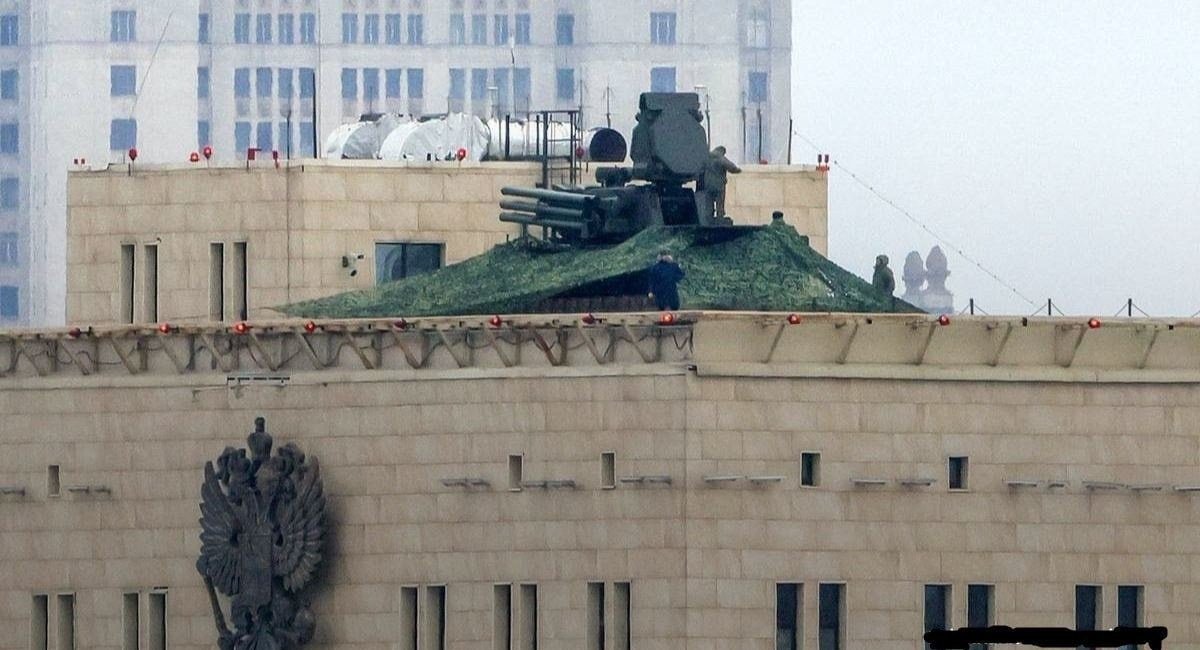
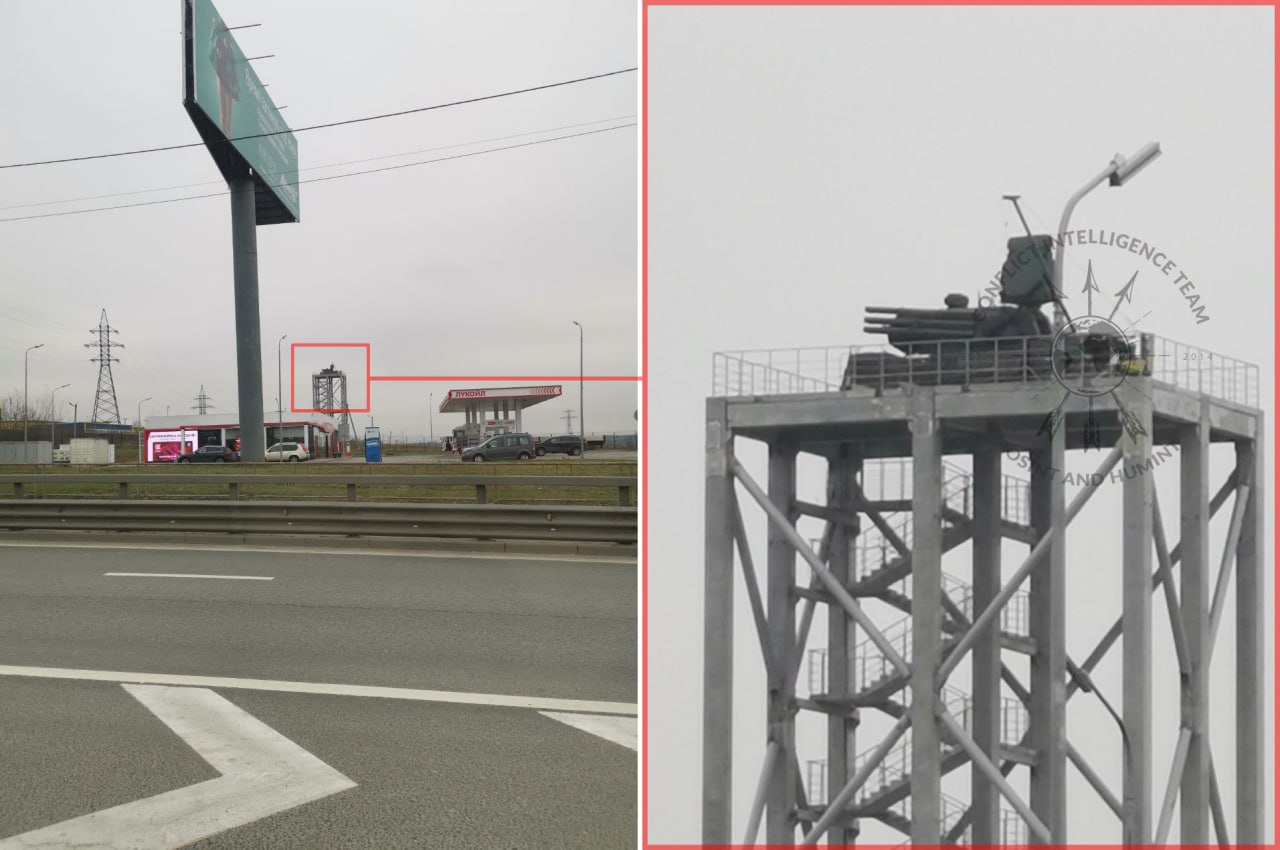
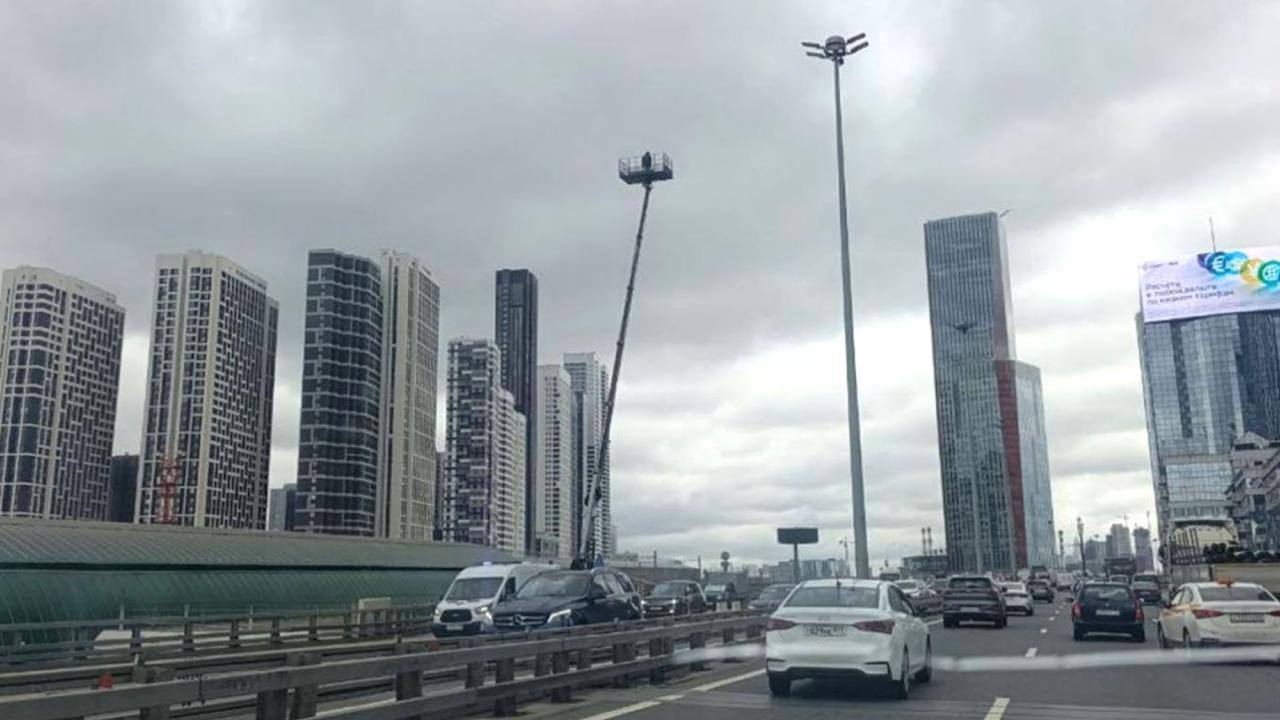
The Orcs took things further and started doing something genuinely remarkable. They placing riflemen on aerial work platforms and raising them into the air to shoot down drones with AK-74s. From a military standpoint this is not just unusual, it is pointless. But this is not a joke. This is their reality, and it is documented:
Still, seeing towers and Pantsirs is one thing. Seeing the actual effectiveness of Russian air defenses is something else entirely. A few days ago, a drone struck the Gazprom refinery in Kapotnya during daylight hours, and the public filmed everything clearly and up close — the drone type, its speed, and the complete absence of any air defense response in the area.
The strike was not particularly spectacular, but it shut the plant down entirely. We noted at the time that the drone hit the ATB-6 distillation unit right next to a large tank farm, and suggested the tanks would be next. Last night, that prediction came true:
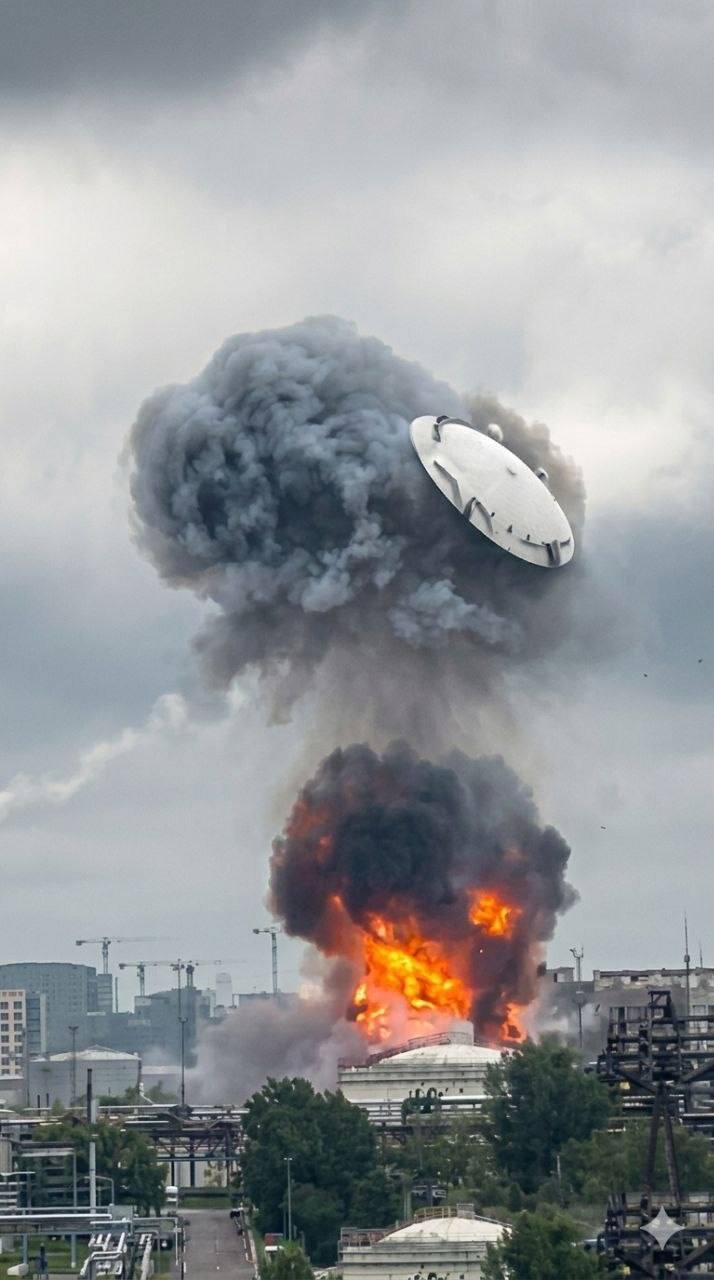
The Fire Everyone Can See
Judging by the numerous videos, no fewer than a dozen Good Birds² reached the refinery. At least that many explosions can be heard on the recordings. If those blasts were not secondary detonations and not another case of Pantsir missiles wandering off on adventures of their own, then Ukraine launched a concentrated strike package designed to disable the facility not for weeks but potentially forever.
Local residents filming the fires describe the scene in simple terms: “the entire refinery is burning” or “they destroyed the whole refinery”. The fire has spread across an enormous area, and it genuinely looks like the whole site is ablaze. That kind of coverage can only come from fuel spilling out of a ruptured tank and igniting.
At this stage, it remains difficult to determine exactly what was hit and how severe the final damage will be but one thing is already clear: the scene looks epic. It is safe to say that the words “To light a fire in Moscow” have finally become reality.
Judging by the footage, lighter petroleum products are burning rather than crude oil or heavy fuel oil. As a result, Moscow is unlikely to experience the oil rain that many people joked about after the strike. Nevertheless, the sight itself sends a powerful message.
For four years, many Russians treated the war as a distant inconvenience. To them, it meant slower internet, difficulties buying sanctioned goods, or the occasional disruption to daily life. Now all of that has changed. They can watch how “the special military operation is going according to plan” from their own apartment windows.
When Propaganda Runs Out of Answers
An even more interesting development is unfolding inside the enemy’s information space. Russian propaganda still has not figured out what it should tell the public — or how it should tell it. Social media is overflowing with photos and videos that speak for themselves. Under these conditions, the usual explanation that “everything was intercepted but falling debris caused a fire” becomes much harder to sell.
But telling the truth carries a prison sentence in Russia. As of Thursday morning, around 11:00 Kyiv time, Russian propaganda appeared completely frozen, like a Windows 95 computer that suddenly stopped responding.
Officials and propagandists continue announcing fantastic interception numbers. Depending on the source, they supposedly shot down one thousand Ukrainian drones overnight — or perhaps ten thousand. Nearly five hundred, they claim, were destroyed on approach to Moscow alone.
Meanwhile, fire in Moscow keeps burning — and that matters enormously, because every political catastrophe and transformation in Russia starts in the capital. While Moscow sleeps, nothing changes. Right now someone has jolted it awake, hard. But the most important thing is the conclusion that everyone has already reached: Ukraine can punch through Moscow’s air defense. And if an oil refinery is possible, other targets are too.
¹Orcs – a common term for Russians who support or participate in the armed aggression against Ukraine. Dehumanizing? Yes. Accurate? Also yes.
²Good Birds – slang for strike drones. Why “good”? Because they bring “warmth and light” to enemy military factories, ammunition depots, and oil refineries. Sarcastic? Of course. Effective? Even more so.
Related posts:

Ukraine Strikes Moscow Refinery With Drones
Today’s Ukraine Strikes Moscow Refinery hit the primary distillation unit in Kapotnya. As anyone following these strikes already knows, knocking out primary distillation shuts down everything downstream. If [...]
St. Petersburg Oil Terminal Attack: Pootin Gets a Slap on SPIEF
On June 3, 2026, Ukraine’s General Staff confirmed the St. Petersburg oil terminal attack by Ukrainian drones — along with a string of other high-value targets. The list [...]